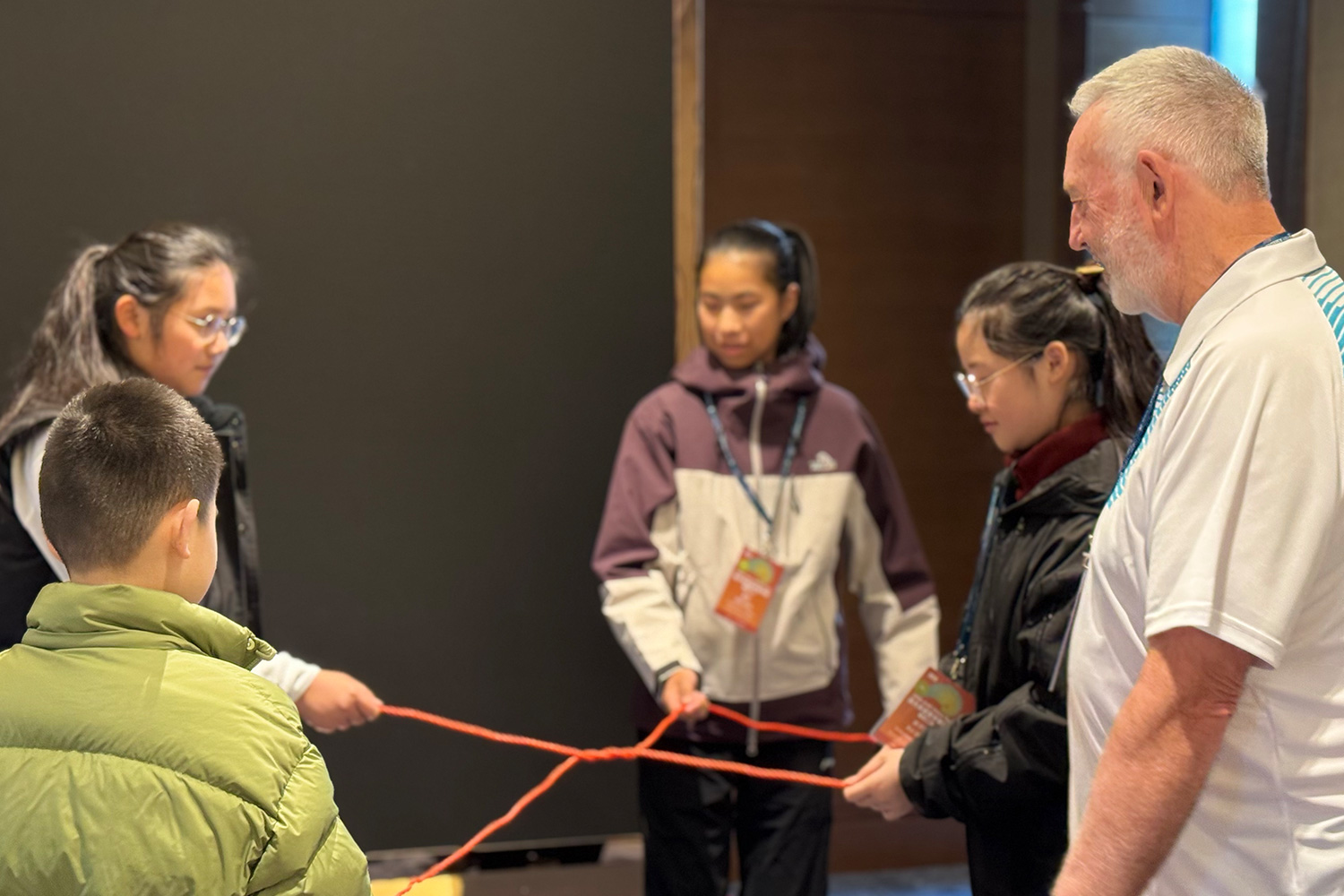
Award Winners in AMC / CAT by Invitation
Qualification
Award Winners in AMC / CAT& by Invitation
Date
Feb. 2027 (TBD)
Location
Shanghai, China
Language
EN
Place
120 students in Grades 4-6
80 students in Grades 7-9
Program Introduction
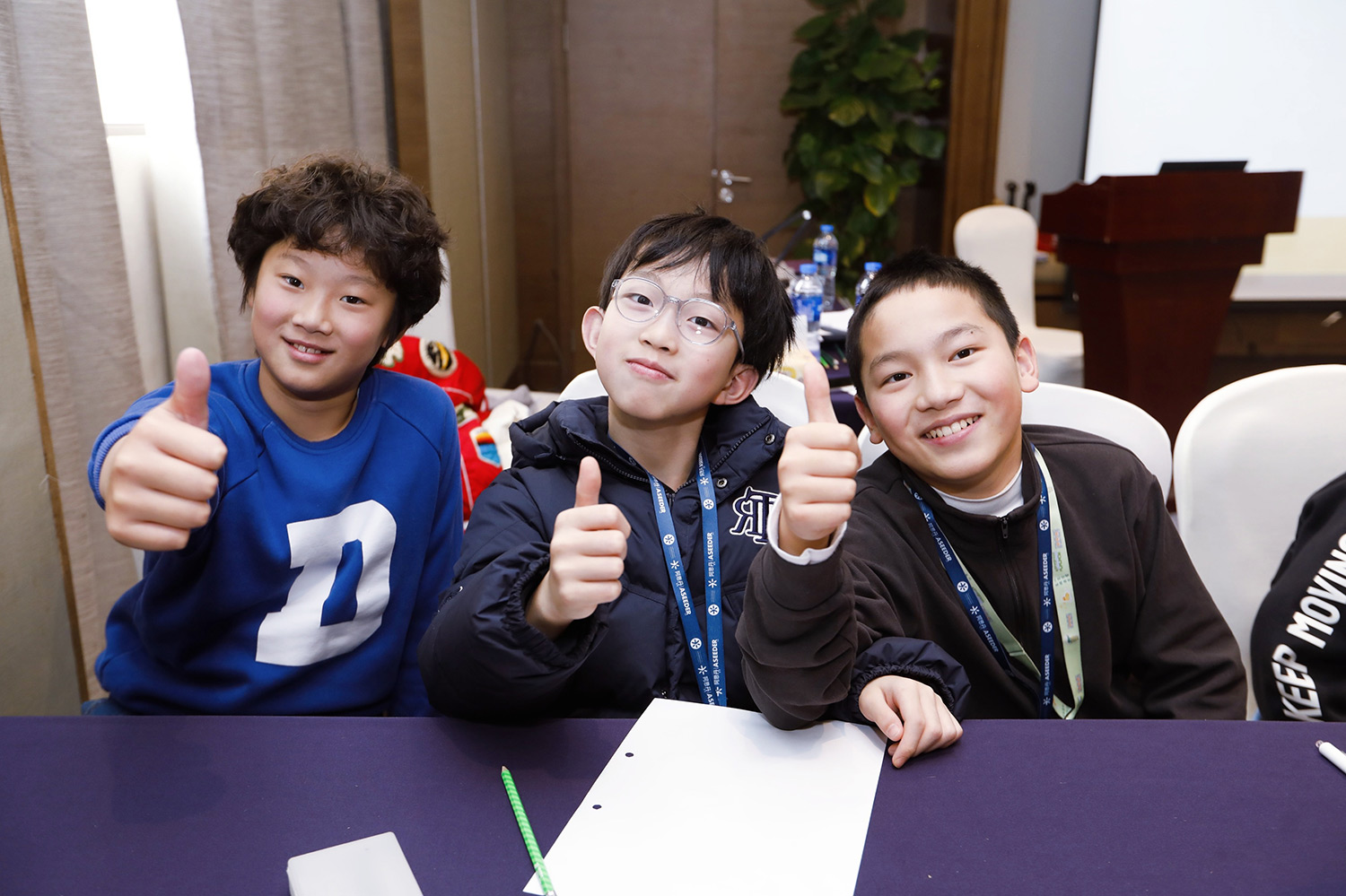
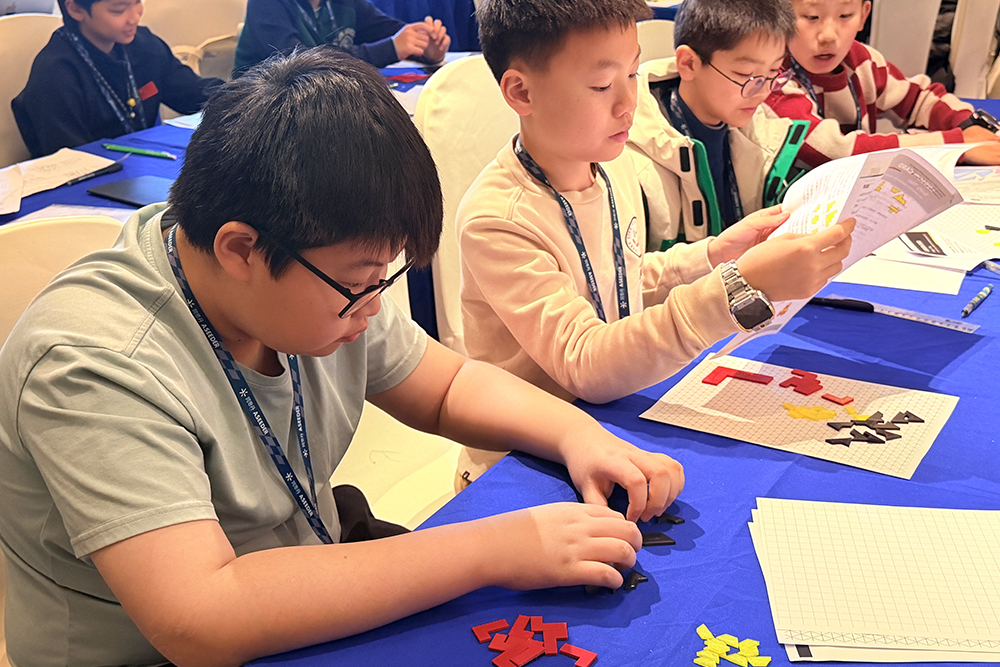
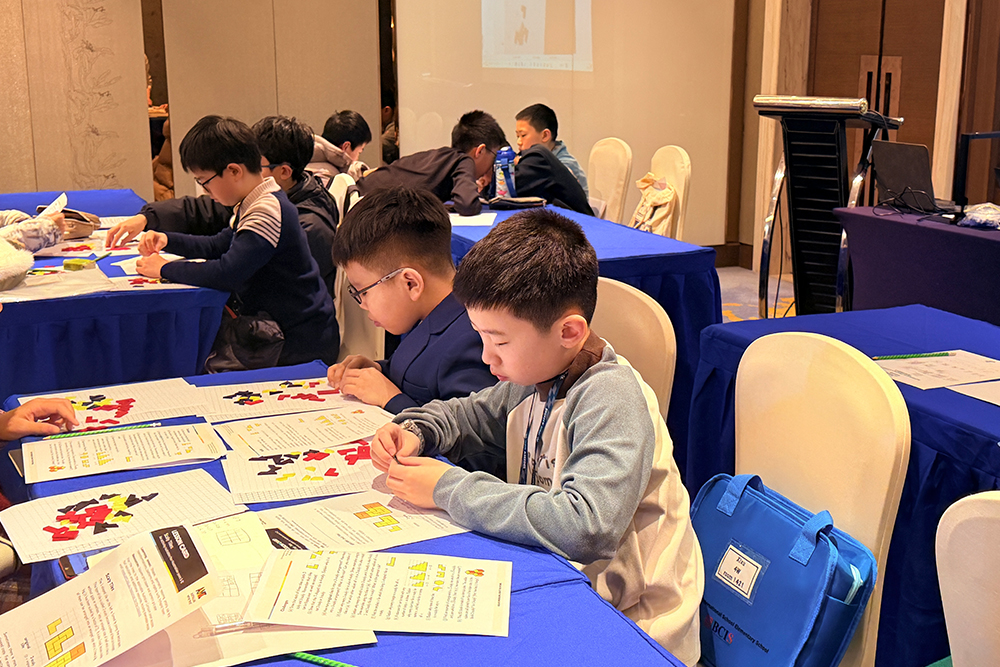
The AMC China Camp offers challenging, cutting-edge, and engaging mathematics and informatics courses tailored separately for students in Grades 4-6 and Grades 7-9. Under the guidance of an accomplished instructional coaching team, students will explore the dynamic relationship between geometric figures and automata, uncover the beauty of similarity and fractals, learn fundamental methods in graph theory and network analysis, tackle logical number puzzles, and experience the full process of algorithmic design and problem creation.
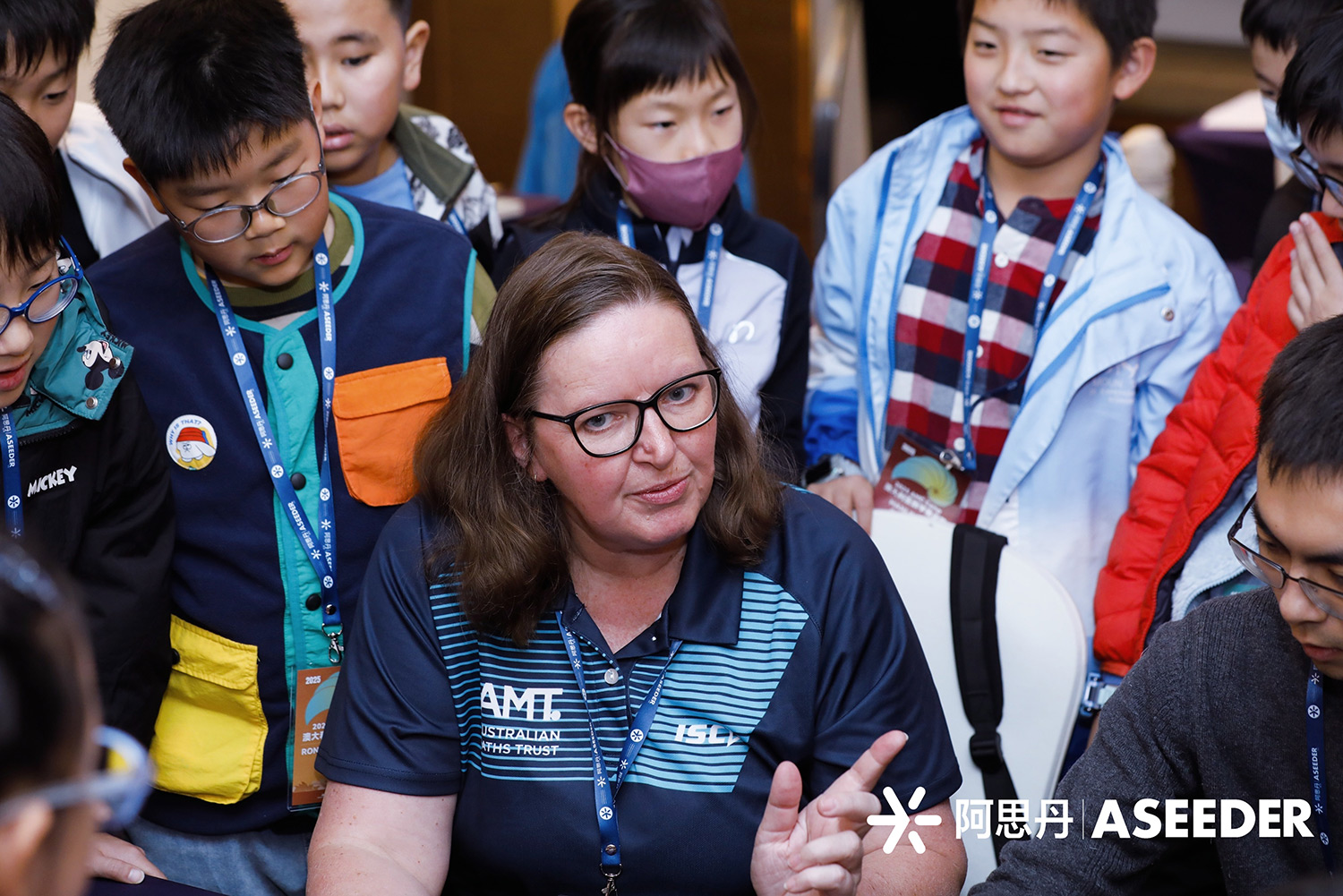
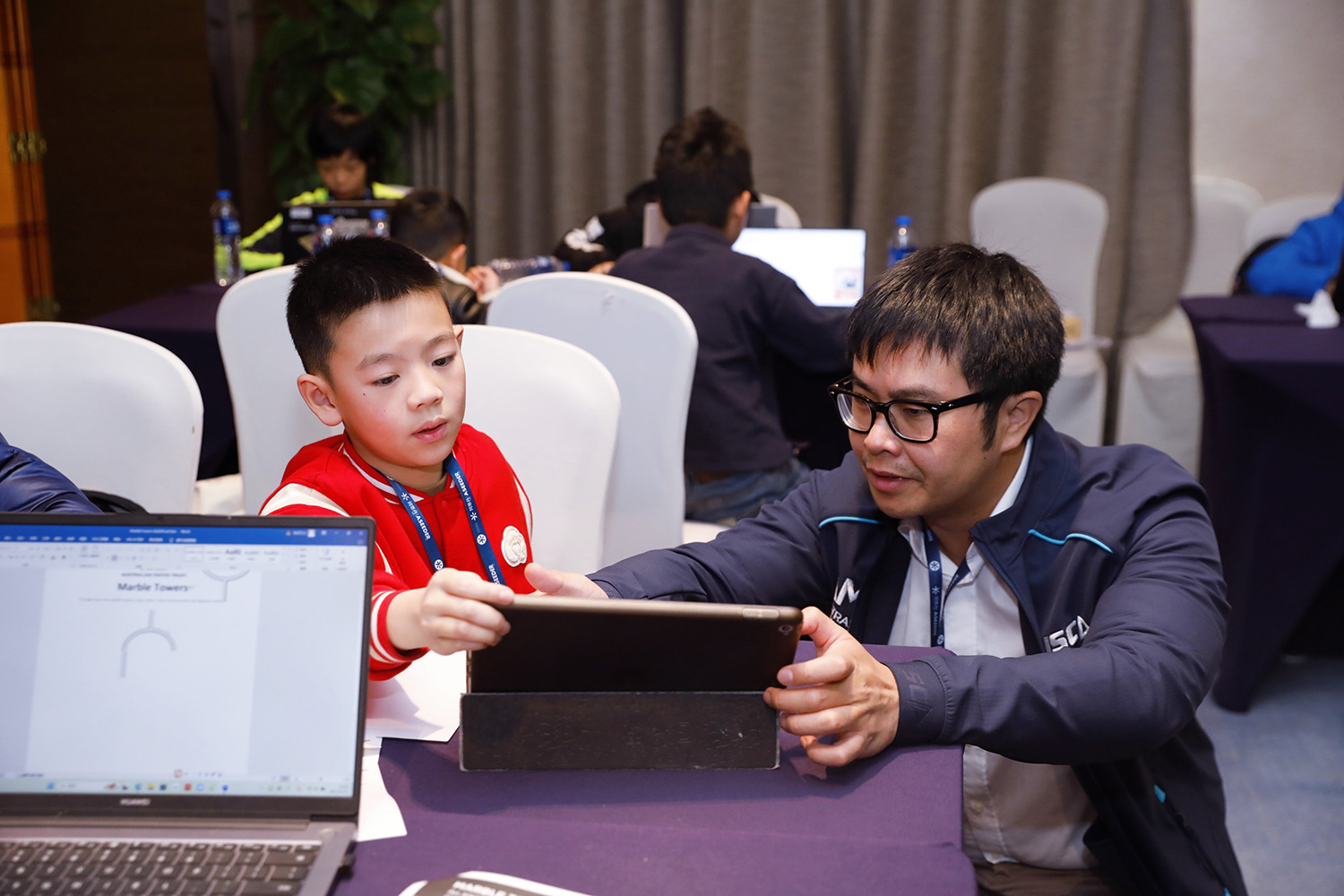
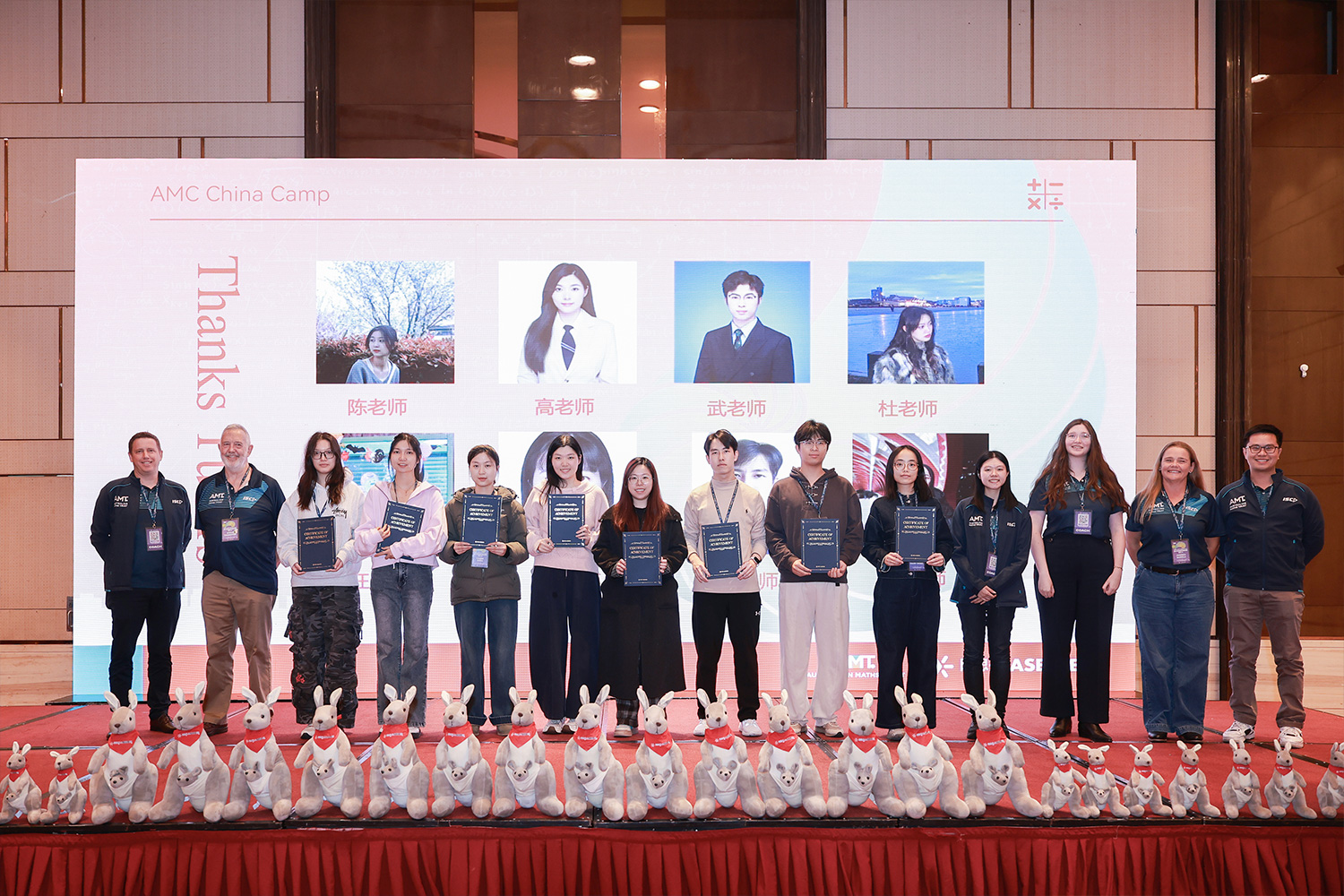
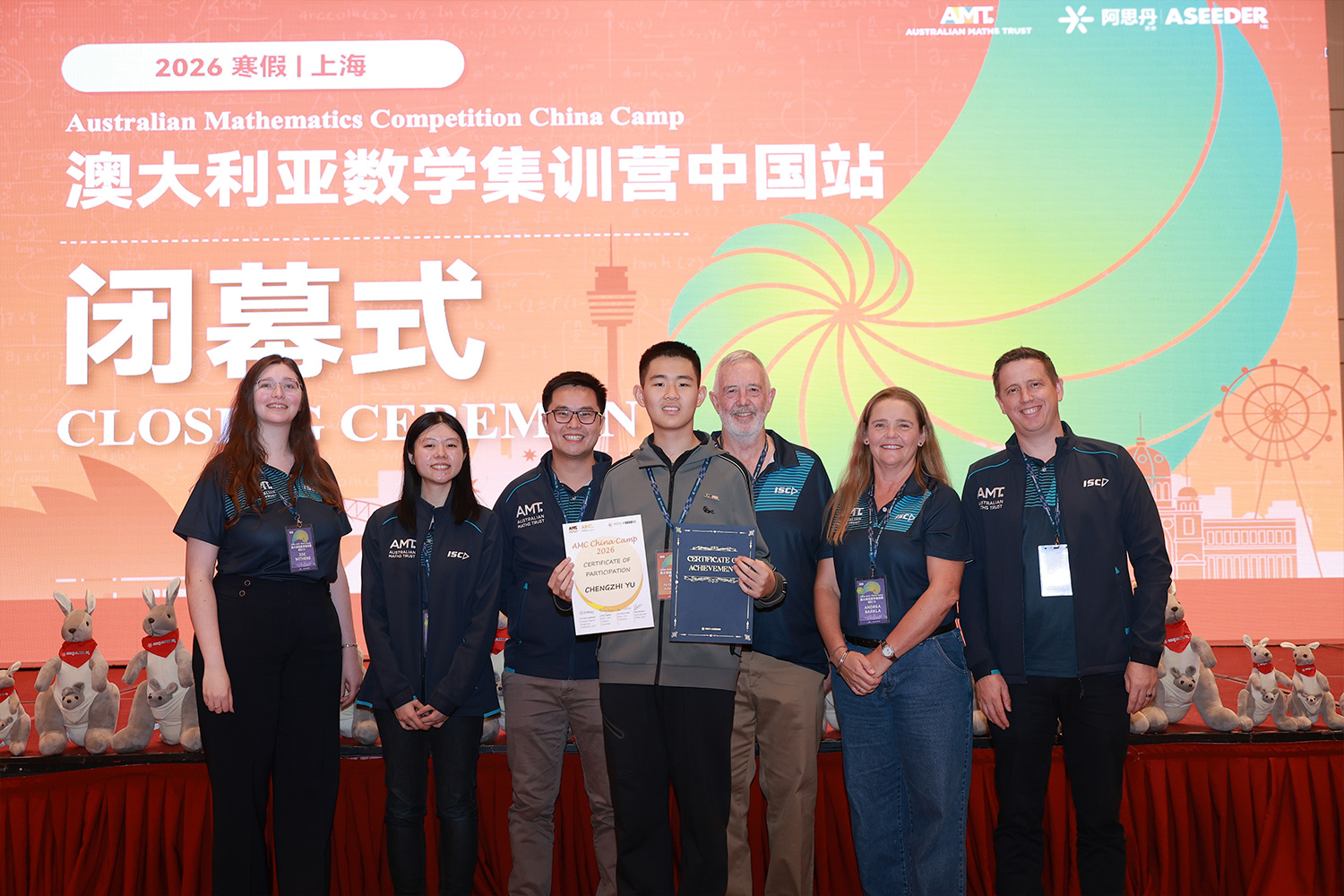
From 2025 on, the AMT has partnered with the AMC China Organizing Committee — ASEEDER — to launch the Australian Mathematics Camp (AMC China Camp). Designed for outstanding Chinese students who excelled in the AMC, the camp will be taught directly by AMT’s star coaches and will follow the same curriculum framework used in Australia’s national-level training camps. Students will gain an immersive experience in a world class math camp and have the valuable opportunity to collaborate and learn alongside other high-achieving peers from AMC.
Pre-Assessment
Australian Mathematics Competition (AMC) : Oct. 11, 2026 (Sun.), Grades 1-12
Pre-Assessment
Computational and Algorithmic Thinking (CAT) : May. 23, 2027 (Sun.), Grades 1-12
Academic Highlights

1. Taught by Elite Coaches from Esteemed Mathematical Institution-AMT :
Taught by a distinguished team of master mathematics teachers from the Australian Mathematics Trust (AMT), this program brings together top-tier global mathematics education resources. The curriculum is both professional and engaging, fostering mathematical interest while delivering an authentic experience of mathematical thinking !2. Cutting-Edge Curriculum Based on World-Renowned Competitions:
Featuring themes that are both cutting-edge and engaging, the curriculum covers pivotal areas of mathematics. It is tailored to align with the cognitive development of different age groups: Grades 4-6 focus on foundational logical thinking, while Grades 7-9 emphasize advanced algorithms and structures. The comprehensive and systematic design spans from basics to frontiers and from theory to application. This ensures that every student, regardless of their current level, finds the optimal learning path to build holistic mathematical capabilities.
3. Interdisciplinary Fusion of Math and Computing: Stepping into Algorithmic Thinking and Future Tech:
The camp tightly integrates core mathematical skills with computational thinking, laying the groundwork for future exploration of high-level tech applications. The curriculum naturally blends mathematical logic with computational / algorithmic thinking.- Introduction to Advanced Algorithms: Part of the content dives into pseudo-code logic and dynamic programming, introducing students to the core fundamentals of modern computer science and AI algorithm design.
- Exploration of Frontier Applications: Students in Grades 4-6 will develop initial awareness of computational thinking and spatial logic through exploring symmetry and patterns. By studying topics such as graph theory and network analysis, students will gain exposure to fundamental mathematical tools related to data structures and complex system optimization, which will have broad applications in future cutting-edge fields like data science, AI, and engineering.
4. Young Math Elite Community and Diverse Learning Experiences:
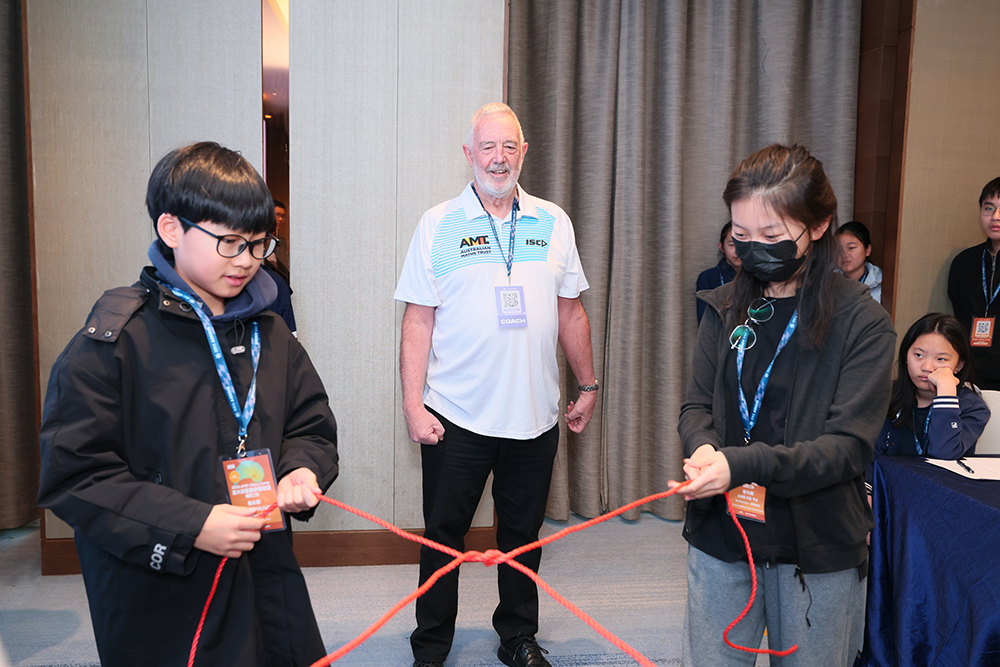
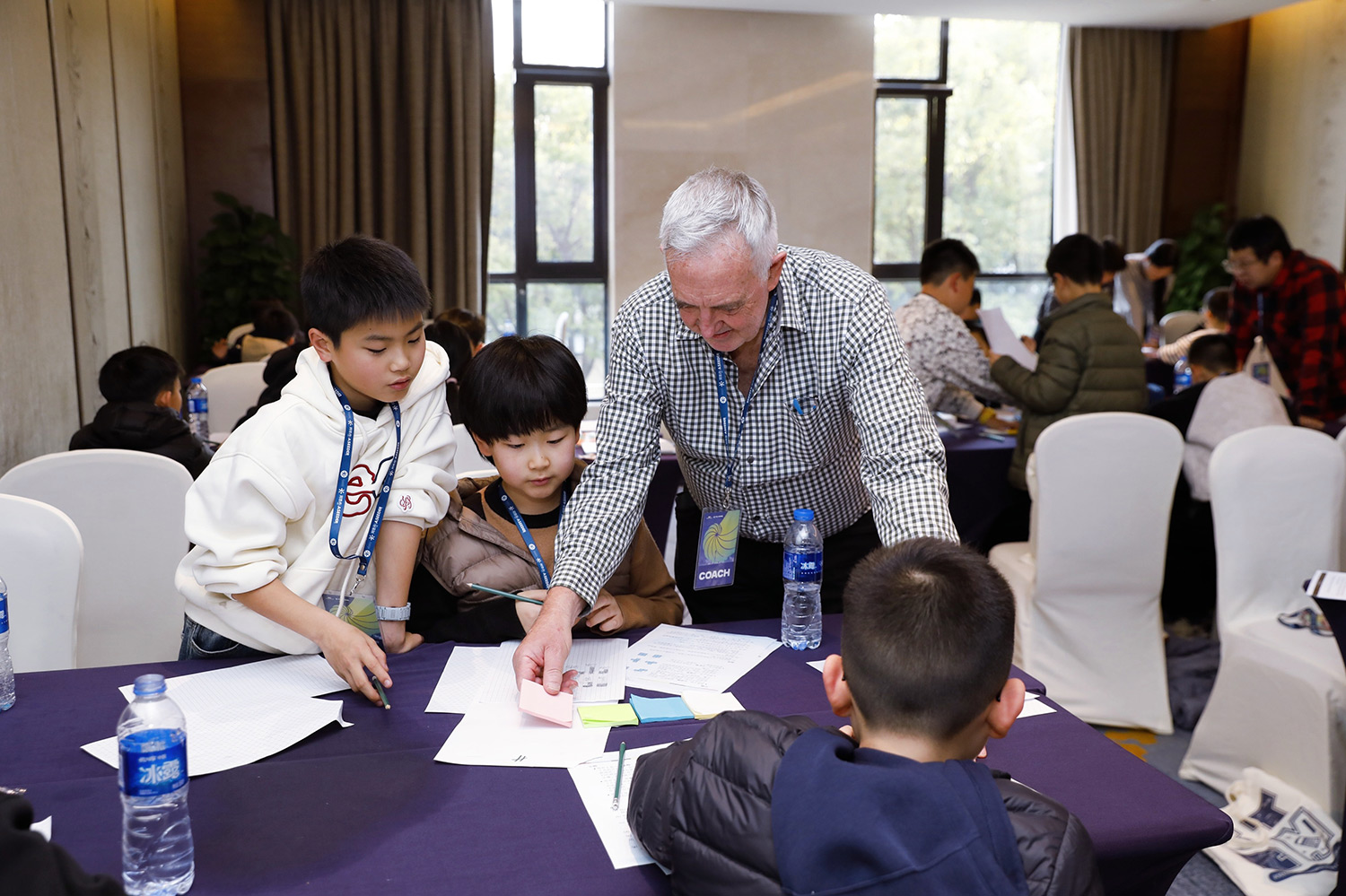
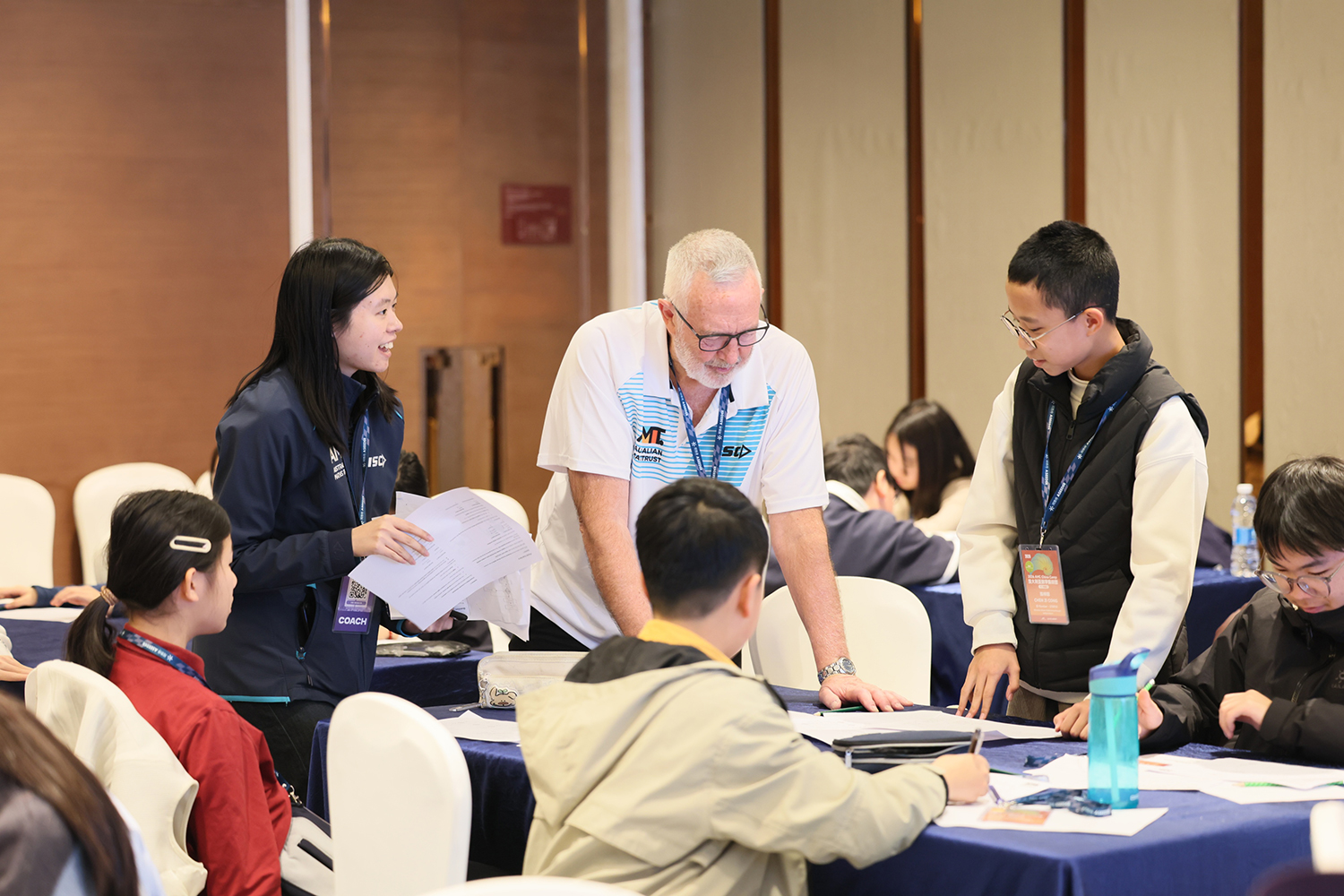
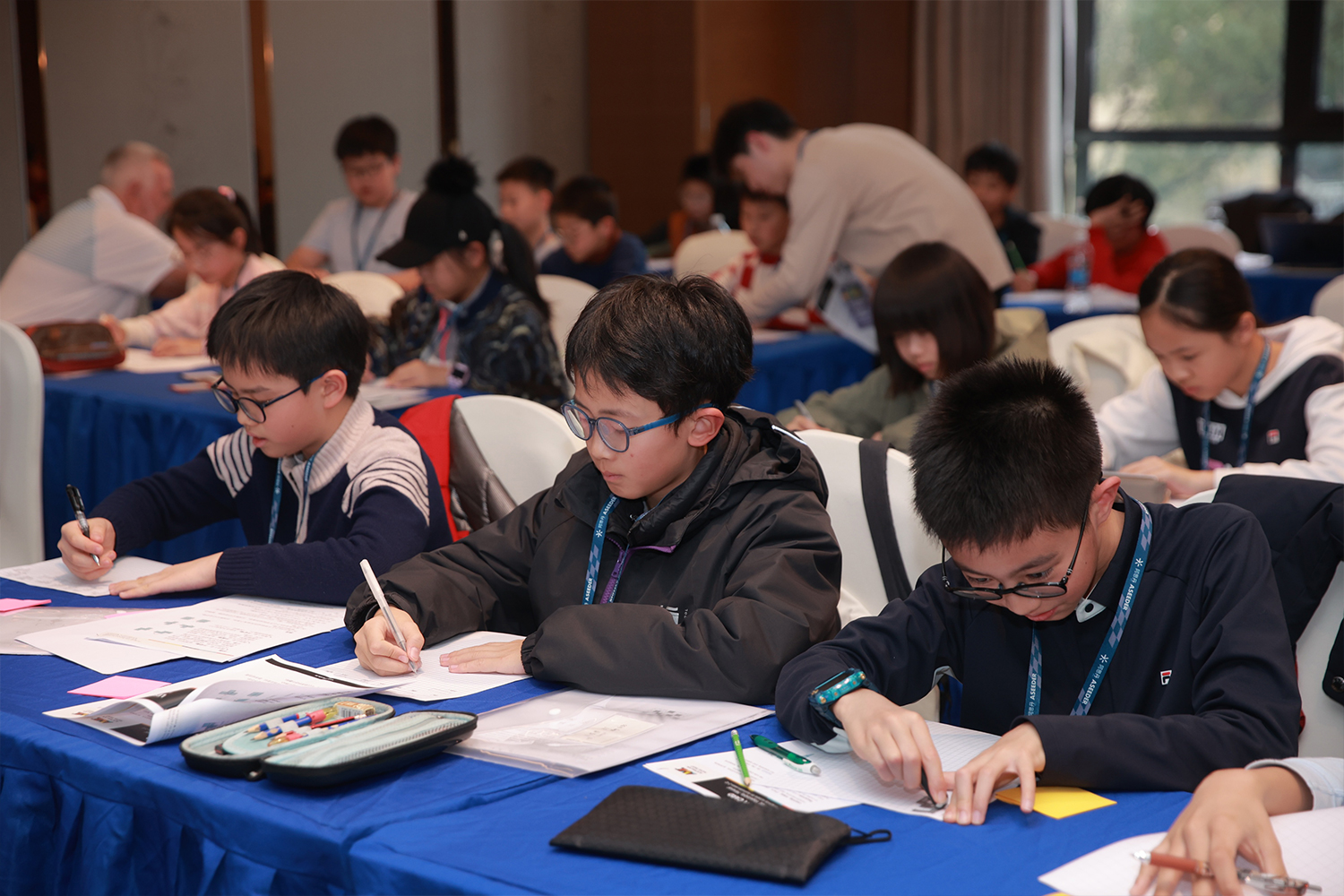
Students will engage in innovative learning methods such as group discussions and problem co-creation, exchanging ideas with talented peers. Through deep interactions like group seminars and collaborative problem design, they will cultivate a complete mathematical thinking chain from application to creation. A variety of formats—including lectures, games, specialized coaching, team challenges, workshops, and hands-on practice—makes the learning process both fun and challenging, sparking interest in math while building a valuable academic social network.
5. Anchored in Top Competitions to Boost Future Competency:
Based on the problems and knowledge points of the Australian Mathematics Competition (AMC) and the Computational and Algorithmic Thinking (CAT) challenge, the curriculum helps students understand mathematical logic from its roots. It cultivates future-oriented problem-solving abilities and comprehensively improves problem-solving techniques, paving the way for higher-level assessments and academic pursuits, empowering you to go further.Introduction to Excellent Program Supervisor
* Reference only

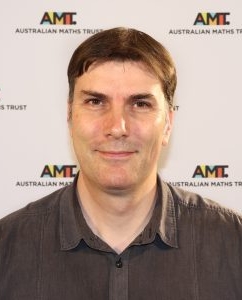
Dr Chris Wetherell
- Chief Mathematician at the AMT
- Head Coach, Australian Mathematical Olympiad Team
Dr Chris Wetherell
- Chief Mathematician at the AMT
- Head Coach, Australian Mathematical Olympiad Team
Dr. Chris, who holds a PhD in Mathematics from the Australian National University (ANU) and serves as the Chief Mathematician at the Australian Mathematics Trust (AMT), brings fifteen years of mathematics teaching experience. He has contributed to specialized mathematics courses in the ANU Extension program and is a recipient of the 2020 B.H. Neumann Award.
His involvement with the Australian Mathematics Competition (AMC) began in 2011 as a volunteer marker. He later joined both the AMC Secondary Problems Committee and the Australian Mathematics Olympiad Committee.
Dr. Chris further expanded his contributions by serving on the AMC Primary Problems Committee, the Senior Problems Committee, and the Computational and Algorithmic Thinking (CAT) Committee.
In 2017, he officially became a member of AMT, taking primary responsibility for revising the Enrichment Series. Since 2020, he has also been responsible for curating mathematical and algorithmic thinking content for the Problems program. A prolific and creative problem setter, Dr. Chris is also a highly engaging mathematics educator. He has frequently represented AMT by delivering presentations to mathematics teachers at numerous conferences
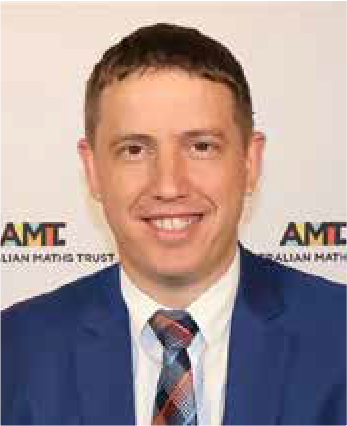
Mat Meriaux
- Chief Executive Officer (CEO) of the AMT
Mat Meriaux
- Chief Executive Officer (CEO) of the AMT
Mat Meriaux, the newly appointed CEO of the Australian Mathematics Trust, brings extensive experience in international project management and mathematics education innovation. During his previous tenure as Deputy CEO of AMT from 2018 to 2021, he was deeply involved in the design and review of the Australian Mathematics Competition (AMC) and led the development of the globally recognized Problemo online problem-solving platform, which has since become a key training tool for mathematical competitions in multiple countries. After successfully overseeing major international projects such as the Paris 2024 Olympic Games, he has returned to the field of mathematics education with a wealth of strategic management expertise.
Mr. Meriaux is committed to fostering the integration of mathematical competitions and educational innovation, guided by the forward-thinking philosophy of “centering on the education community.”

Dr.Steve Thornton
- AMT Coach
Dr.Steve Thornton
- AMT Coach
Dr. Steve Thornton is a senior expert in Australian mathematics education, currently serving as a Fellow of the Australian Academy of Science. As former President and Life Member of the Australian Association of Mathematics Teachers, he has long been dedicated to advancing mathematics education and was honored with the B.H. Neumann Award for outstanding contributions to the field. He remains a core member of the problems committee for the Mathematics Challenge for Young Australians, continuing to exert significant influence in mathematics competitions and gifted education.

Rachel Theunissen
- AMT Coach
Rachel Theunissen
- AMT Coach
Rachel Theunissen is a mathematics education specialist with 31 years of extensive teaching experience. She currently serves as the Learning Coordinator and Mathematics Teaching Administrator at Lesmurdie Senior High School, while also holding positions as a member of the Australian Mathematics Trust (AMT) Academic Committee and the Australian Mathematics Competition (AMC) Problem Setting Committee. Passionate about educational philanthropy, Rachel actively volunteers for AMT, where she participates in organizing various mathematics initiatives. She also serves on the Board of the Mathematical Association of Western Australia, committed to advancing mathematics education both locally and globally. Her teaching methodology is student-centered and characterized by innovation and practical application, earning her recognition and respect from both students and educational peers.

Zoe Wright-Smith
- AMT Coach
Zoe Wright-Smith
- AMT Coach
With extensive expertise in gifted education, Ms. Wright-Smith currently serves as an official committee member of the Australian Mathematics Trust (AMT), deeply involved in developing problems for the Australian Mathematics Competition. As a Mathematics Education Development Editor at Cambridge University Press, she leads the creation of digital question banks for Western Australia's Specialist Mathematics curriculum. At Trinity Grammar School, she designs and delivers specialized extension programs and competition training for highability mathematics students, with a proven track record of guiding students to outstanding academic achievements.

Ringo Mok
- AMT Coach
Ringo Mok
- AMT Coach
Ringo Mok is a high school mathematics teacher in New South Wales, Australia, serving as a member of both the AMT Academic Committee and the AMC Problem Setting Committee. He is dedicated to fostering students' passion for mathematics through innovative and engaging teaching approaches, and has contributed to the development of several mathematics textbooks used across Australia. Ringo excels at designing creative mathematical problems that provide both intellectual challenge and inspiration to learners. His enthusiasm for teaching is demonstrated through the captivating and enjoyable problems he consistently develops for his students.

Andrea Barkla
- AMT Coach
Andrea Barkla
- AMT Coach
With over twenty years of experience in mathematics education, Andrea Barkla serves as a Visiting Teaching Fellow at the UNSW School of Mathematics and Statistics. Additionally, she has volunteered extensively with the AMT. Andrea specializes in fostering mathematical thinking and creativity in students while also being dedicated to teacher professional growth. Through empathetic guidance and a growth mindset, she is committed to co-creating inspiring learning environments that unlock potential for both students and educators.

Academic Module
Core Academic System

1. Geometric Exploration
Students in Grades 4-6 will systematically learn geometry ranging from basic symmetric shapes to complex fractal structures. Through topics like rectilinear polygon measurement and grid geometry analysis, they will build spatial reasoning and graphical analysis skills. Grade 7-9 students will further explore the link between geometry and automata, understanding the logical language behind graphics.
2. Algebra and Number Theory
The curriculum covers core content such as number puzzle analysis, prime factorization techniques, square numbers, and prime number distribution laws. Students will develop precise calculation skills through rational number algorithm design and establish rigorous mathematical logic through the exploration of numerical patterns.
3. Combinatorics and Algorithms
Using the Computational and Algorithmic Thinking (CAT) challenge as a blueprint, this module systematically builds students' algorithmic thinking. Students will master the essence of modern algorithm design through CAT core topics like graph theory, network analysis, greedy strategy optimization, and dynamic programming. Grades 4-6 cultivate foundational computational thinking via flowcharts, while Grades 7-9 achieve complete expression of algorithmic logic through pseudocode, comprehensively enhancing core capabilities for solving complex problems in the information age.
4. Problem Design & Reasoning
From analyzing problems to creating them, students will develop an understanding of the essence of mathematical writing under professional guidance, transitioning from problem-solvers to problem-setters. Through structured training in logical reasoning and hands-on problem-design workshops, they will cultivate critical thinking, creative formulation skills, and the ability to express ideas with clarity and rigor.
* All knowledge modules employ a spiral curriculum design, ensuring that every student gains maximum benefit at their appropriate cognitive level and establishes a complete mathematical knowledge network.
Distinctive Academic Modules
AMC China Camp guides students through mathematical exploration, engaging puzzles, and self-generated problem-posing, encouraging hands-on experimentation, pattern discovery, and explanation of conclusions—achieving a cognitive progression from merely computing answers to understanding underlying principles and constructing rigorous justifications.
Hands-on Mathematical Exploration
Delivered by coaches of the Australian Mathematical Olympiad Team and official AMC problem setters, this course covers core topics including geometry, number theory, combinatorics, logic and algorithms. Students conduct hands-on explorations through interactive mathematical games such as magic squares, graphs and networks, and scaling tiles. They abstract general mathematical rules from concrete cases and verify proposed conjectures systematically.
Algorithms & Logical Thinking Training
With practical tasks involving grid movement, flow charts, pseudocode and dynamic programming, students learn to break down complex problems into clear, executable steps. They explore optimal solutions among multiple alternatives and develop solid algorithmic thinking concerning conditional judgment, loop iteration and path planning.
Crossnumber Team Challenge
Team members are assigned exclusive horizontal or vertical clues and must exchange information and conduct collaborative reasoning to solve interlocking numerical puzzles. This collaborative challenge effectively cultivates students’ logical reasoning, information integration and teamwork competencies.
Build-Your-Own AMC
Starting with “What-if” inquiries, students work in groups to design original mathematical problems by adjusting numerical values, modifying constraints and redefining questioning frameworks. By exploring the criteria for well-designed AMC problems, students rethink problem-solving logic, and gain in-depth insight into critical problem conditions, key breakthrough points and question design principles.
Schedule
* Past schedules, reference only
| Moring | Afternoon | |
|---|---|---|
| Feb. 7, 2026 | Opening Ceremony Geometry and Automata Number Puzzles |
CAT Computational Thinking: Graphs and Networks |
| Feb. 8, 2026 | Similarity and Fractals Symmetry and Number Patterns |
Prime Decomposition Greedy Algorithms |
| Feb. 9, 2026 | Right-angled Polygons Introductory Logic |
Flow Diagrams Problem Writing Workshop |
| Feb. 10, 2026 | Advanced Number Puzzles Similarity and Fractals |
Problem Writing Masterclass |
| Feb. 11, 2026 | CAT—From Contest Participant to Designer Build-Your-Own AMC Challenge |
Closing Ceremony |
| Morning | Afternoon | |
|---|---|---|
| Feb. 7, 2026 | Opening Ceremony Geometry and Automata Square Numbers and Primes |
Graphs and Networks Number Puzzles |
| Feb. 8, 2026 | Similarity and Fractals Grids and Geometry |
Rational Number Algorithms Dynamic Programming |
| Feb. 9, 2026 | Right-angled Polygons Pseudo Code |
Problem Decomposition Problem Writing Workshop |
| Feb. 10, 2026 | Advanced Number Puzzles Dynamic Programming Practice |
Problem Writing Masterclass |
| Feb. 11, 2026 | CAT—From Contest Participant to Designer Build-Your-Own AMC |
Closing Ceremony |
Participant Information
Programme Fee
The programme fee includes tuition and academic materials, but does not cover logistical expenses such as hotel accommodation, meals, transportation, etc.
* ASEEDER will provide logistical services for students. When logistical registration opens, students will be informed by message, email, etc
Registration Deadline
Three weeks before the programme begins.
* Places on the camp are limited and registration will close once all places have been filled. Applications submitted after the deadline will be considered a voluntary withdrawal from participation.