 Teachlink
 APASS-Learning platform

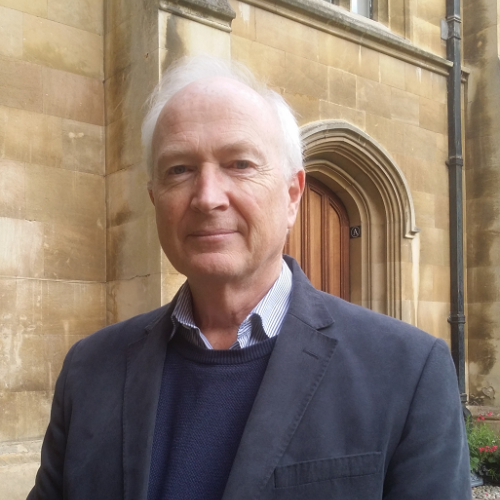
Mr. Robin Hughes
- Chairman of the BPhO Committee for the past ten years
- British National Head Coach, UK Team Leader at IPhO
- British National Head Coach, UK Team Leader at IPhO
- Member of the Isaac Physics team at the Cavendish Laboratory
- Cambridge Fellow & Interviewer
Mr. Robin Hughes
- Chairman of the BPhO Committee for the past ten years
- British National Head Coach, UK Team Leader at IPhO
- British National Head Coach, UK Team Leader at IPhO
- Member of the Isaac Physics team at the Cavendish Laboratory
- Cambridge Fellow & Interviewer
Robin Hughes currently serves as an undergraduate physics supervisor at the University of Cambridge’s Department of Physics. Prior to this, he accumulated extensive experience in high school physics education, teaching for 35 years at the prestigious Kings College School Wimbledon in the UK. Additionally, Dr. Hughes has been the Chair of the British Physics Olympiad (BPhO) for the past decade and has long served as the UK team leader for the International Physics Olympiad (IPhO). The BPhO Committee comprises a team of experienced and dedicated teachers who aim to provide students with more opportunities in physics learning. He also co-founded the online physics learning platform isaacphysics.org. Supported officially by the University of Cambridge, Isaac Physics is widely recommended by both Cambridge and Oxford academics.
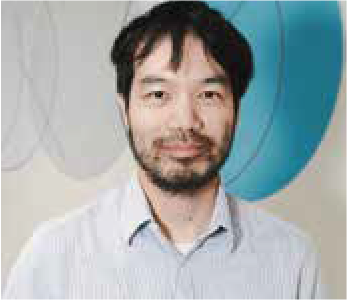
Prof. Anson Cheung
- BPhO Board Member
- Cambridge Lecturer
- Former Cambridge interviewer with 10+ years of experience
Prof. Anson Cheung
- BPhO Board Member
- Cambridge Lecturer
- Former Cambridge interviewer with 10+ years of experience
PhD in Physics and Researcher, University of Cambridge | BPhO Coach | Former Cambridge Physics Interviewer for 10 Years Prof. Anson Cheung studied at St Paul's School, London, one of the UK's academically renowned schools, and represented Anson Cheung is an associate professor in London as well as an affiliated lecturer in Cambridge. He was educated at St Paul’s School London, one of the leading UK academic schools. Whilst there he was a member of the UK Physics Olympiad team at the International Physics Olympiad. He attended Trinity College Cambridge as an undergraduate, studying Natural Sciences, going on to complete a PhD at the Cavendish Laboratory on the quantum behaviour of matter at low temperatures, and being awarded a prestigious Fellowship of Trinity College for his work.
Dr Stephen Martin
- BPhO National Coach
- Physics Educator
- Cambridge PhD
Dr Stephen Martin
- BPhO National Coach
- Physics Educator
- Cambridge PhD
Since graduating from St Johns College, Cambridge with an MA and PhD, Steve has been teaching Physics, Maths and technical subjects in State and Independent Schools in the UK. From 1984- 2012 he was Head of Physics at Hills Road Sixth Form College until retirement. His long teaching career with very able students has been alongside his work as a Principal examiner in Engineering Science (O-level) and Modular Physics A-level, the writer of the BPhO Physics Challenge Paper, juror at 2014 International Young Physicists’Tournament (IYPT), and in the UK in 2014. Between 1990-2001 Steve lead exchange schemes for students at Moscow Lomonossof University (MGU).
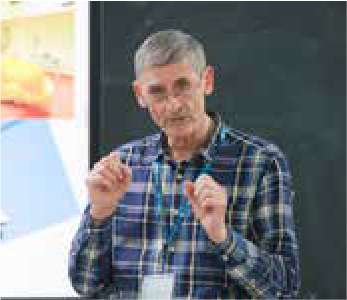
Prof Neil Downie
- Senior Physics Researcher involved in the discovery of the gluon
- PhD & Senior Researcher at Imperial College
- Visiting Professor at the Royal Academy of Engineering
- BPhO Senior Coach
Prof Neil Downie
- Senior Physics Researcher involved in the discovery of the gluon
- PhD & Senior Researcher at Imperial College
- Visiting Professor at the Royal Academy of Engineering
- BPhO Senior Coach
Neil majored Physics at Merton College, Oxford UK, followed by a PhD at Imperial College, London, on Fast Decision Problems in Electron-Positron Collisions at High Energy. As a member of the TASSO team at the DESY accelerator in Hamburg, Germany he was involved in the discovery of the gluon, the particle of the strong nuclear field. He then moved on to a career in industrial R&D in electronics, instrumentation and gases, including British Oxygen (now Linde) and Air Products & Chemicals Inc. He was made a Royal Academy of Engineering Visiting Professor of Innovation at the University of Surrey 2011-2016, recognising his work for a number of years in developing practical engineering projects for students, using electronics, mechanisms, pneumatics and fundamental ideas from physics.
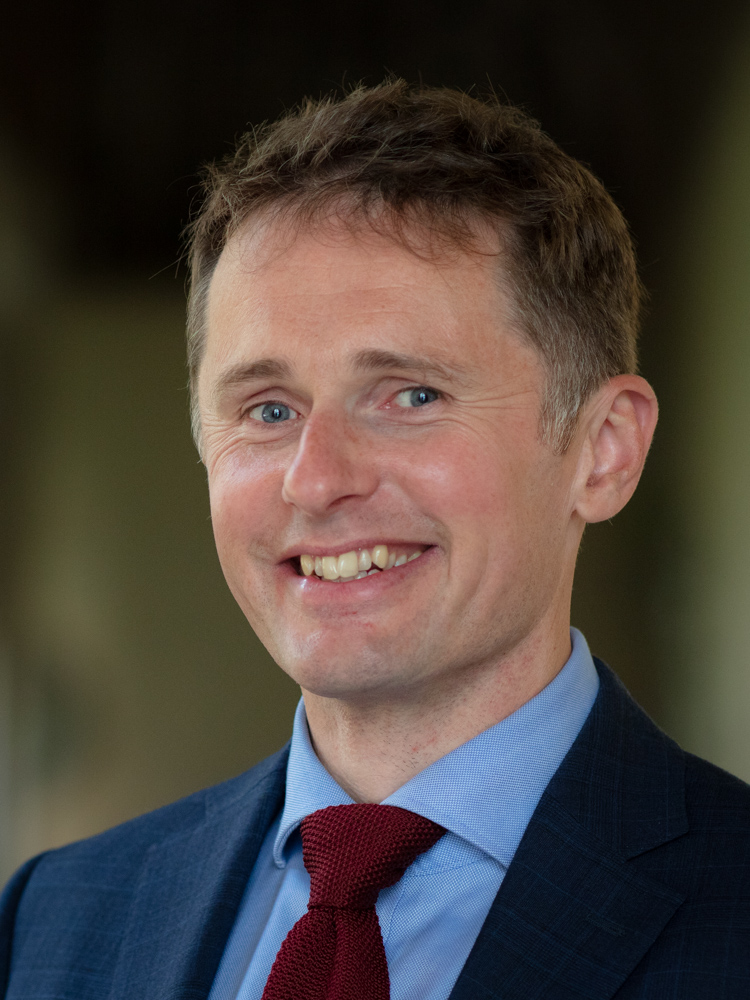
Dr Andrew French
- Senior Engineer (8 years)
- Senior Physics Educator
- BPhO Problem Writer
- PhD, UCL
Dr Andrew French
- Senior Engineer (8 years)
- Senior Physics Educator
- BPhO Problem Writer
- PhD, UCL
Andrew has taught Physics, Mathematics and Computer Science at Winchester College since 2011. Previously he taught at Sherborne School, and worked as a systems engineer for eight years on a wide range of projects, from meteorological sensors, to wind farms, to signal processing algorithms associated with marine and land-based radar systems. While in industry, he completed a PhD with University College London on aspects of phased-arrays. He studied at Christ's College, Cambridge from 1997-2002, culminating in a Masters in Experimental & Theoretical Physics. He also holds a postgraduate Master of Philosophy in Fluid Dynamics from the BP Institute in Cambridge and a PGCE in Secondary Mathematics teaching from Southampton University. Dr French helps deliver the BPhO Round 1 online seminars, and writes the BPhO Computational Physics Challenge.
Vivien Martins
- Experienced Physics Educator
- Doctor
Vivien Martins
- Experienced Physics Educator
- Doctor
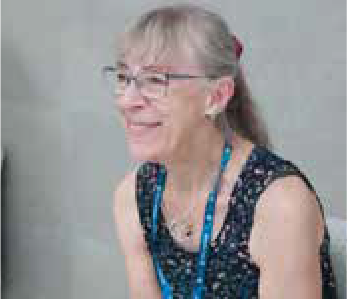
Vivien graduated from Cambridge in Natural Sciences, and has taught Physics at all levels in a wide range of schools in the Cambridge area; from the most highly academic Oxbridge focused schools, to ones giving students the opportunity to use their physics to support their entry to related courses. She has been an examiner for A level physics, and has seen the examination system from both sides. Yearning to do something medical, she studied and trained to become a Podiatrist. Physics/engineering and teaching experience still informs a lot of her specialist work as a Podiatrist, especially in the areas of biomechanics, gait analysis and orthotic therapy, in which she is highly regarded. She is currently studying for an MSc in Clinical Biomechanics which involves application of a whole range of physics and applied maths principles as applied to human structure and movement both in everyday life and in sports and medicine.

Stuart Hindle
- BPhO Coach
- Engineer
- Senior Physics Educator
- Experienced Oxbridge Application Instructor
Stuart Hindle
- BPhO Coach
- Engineer
- Senior Physics Educator
- Experienced Oxbridge Application Instructor
Stuart is currently a physics teacher in a prestigious British independent school, which is part of the Eton group, and has lots of experience in successfully preparing students to apply to Oxbridge, having tutored and sent many students there in the past decade. Prior to becoming a teacher, Stuart studied Engineering Science at St Anne’s College, University of Oxford, specialising in numerical methods for the computation of shakedown loads of engineering structures and other dynamical systems, with applications ranging in aerospace, civil and mechanical engineering. Stuart went on to work as a structural engineering, and an acoustic consultant, working on some of the most exciting civil engineering projects around the world, including the Tottenham Hotspur football stadium and the Louvre Museum, in Abu Dhabi. Stuart has been one of the team leaders for the UK’s IPhO team.
Ingrid Murray
- Teacher trainer at Issac Physics, Cambridge
- BPhO Coach
Ingrid Murray
- Teacher trainer at Issac Physics, Cambridge
- BPhO Coach
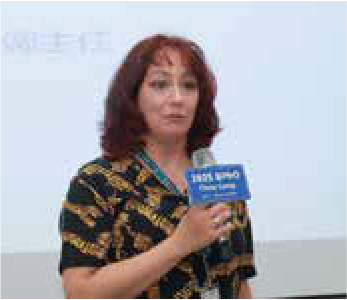
Ingrid Murray graduated from Newnham College, University of Cambridge, where she read Physical Natural Sciences. She currently works at the Cavendish Laboratory, University of Cambridge, serving as the Teacher Support Manager for the Isaac Physics project. In this role, she is dedicated to advancing physics education nationwide and promoting science outreach. With over 20 years of experience in physics and science teaching, Ingrid has taught at multiple schools and colleges across the UK, and has held positions including STEM Coordinator and Head of Physics & Science. Her work focuses on the development of physics teaching and curriculum design.
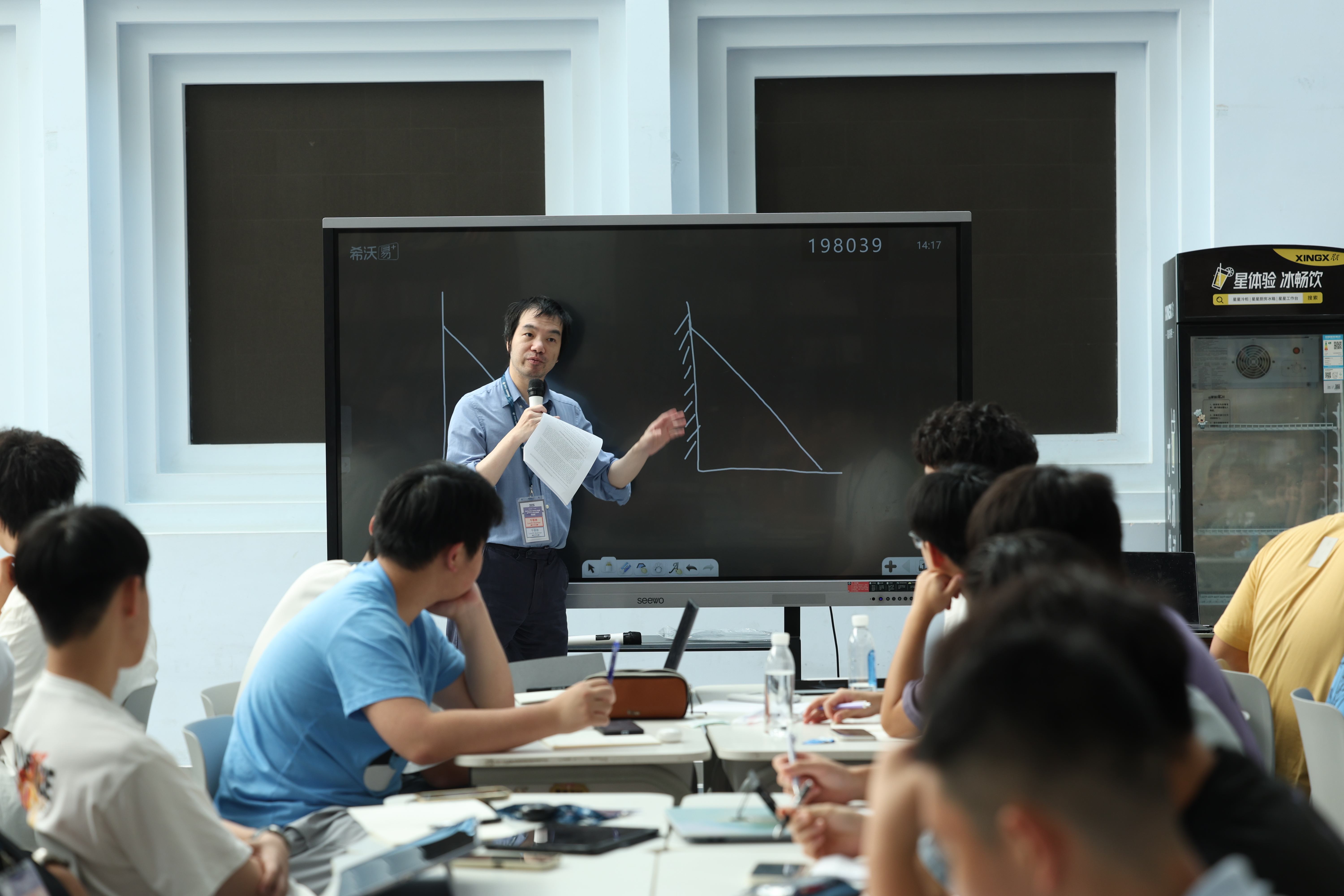
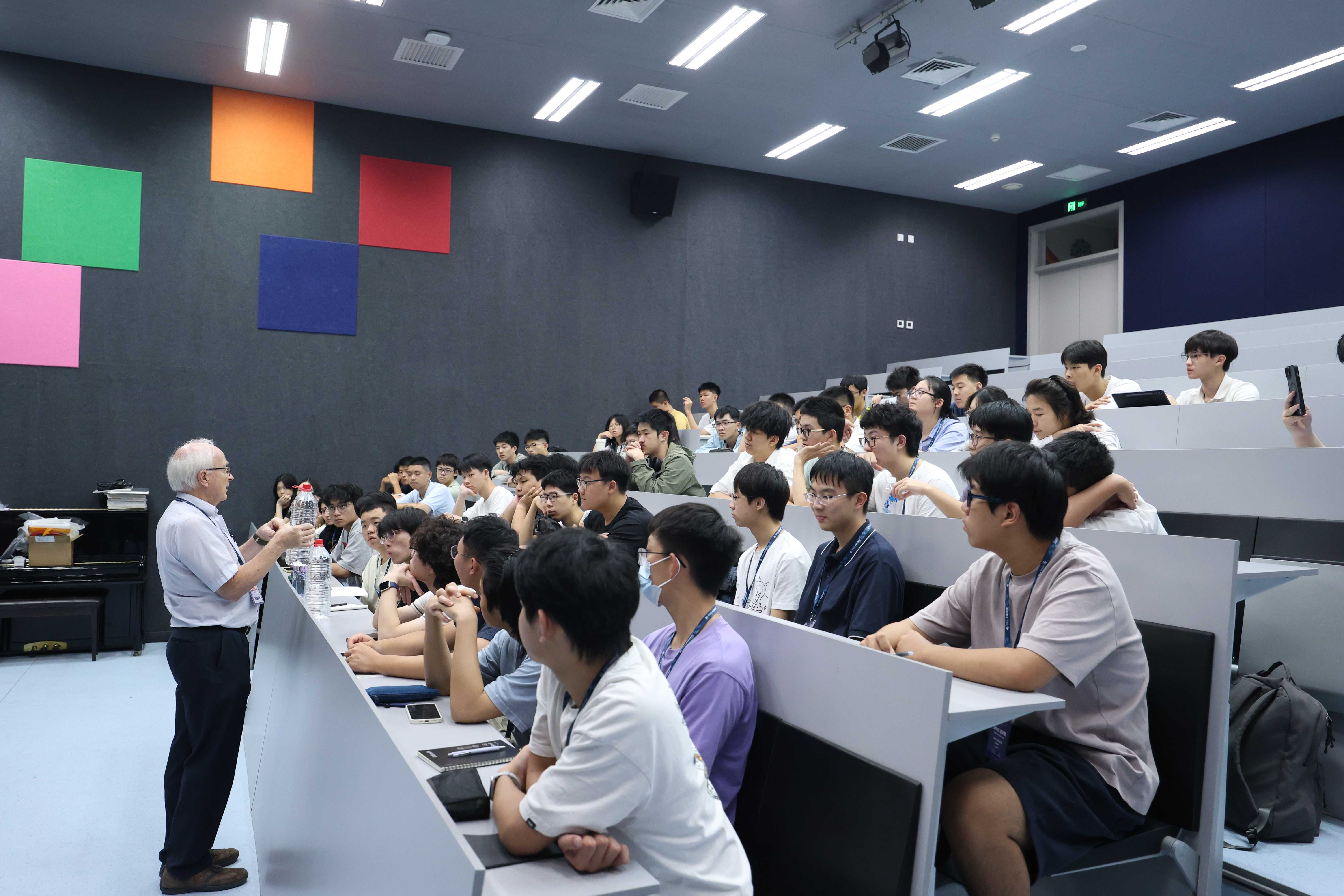
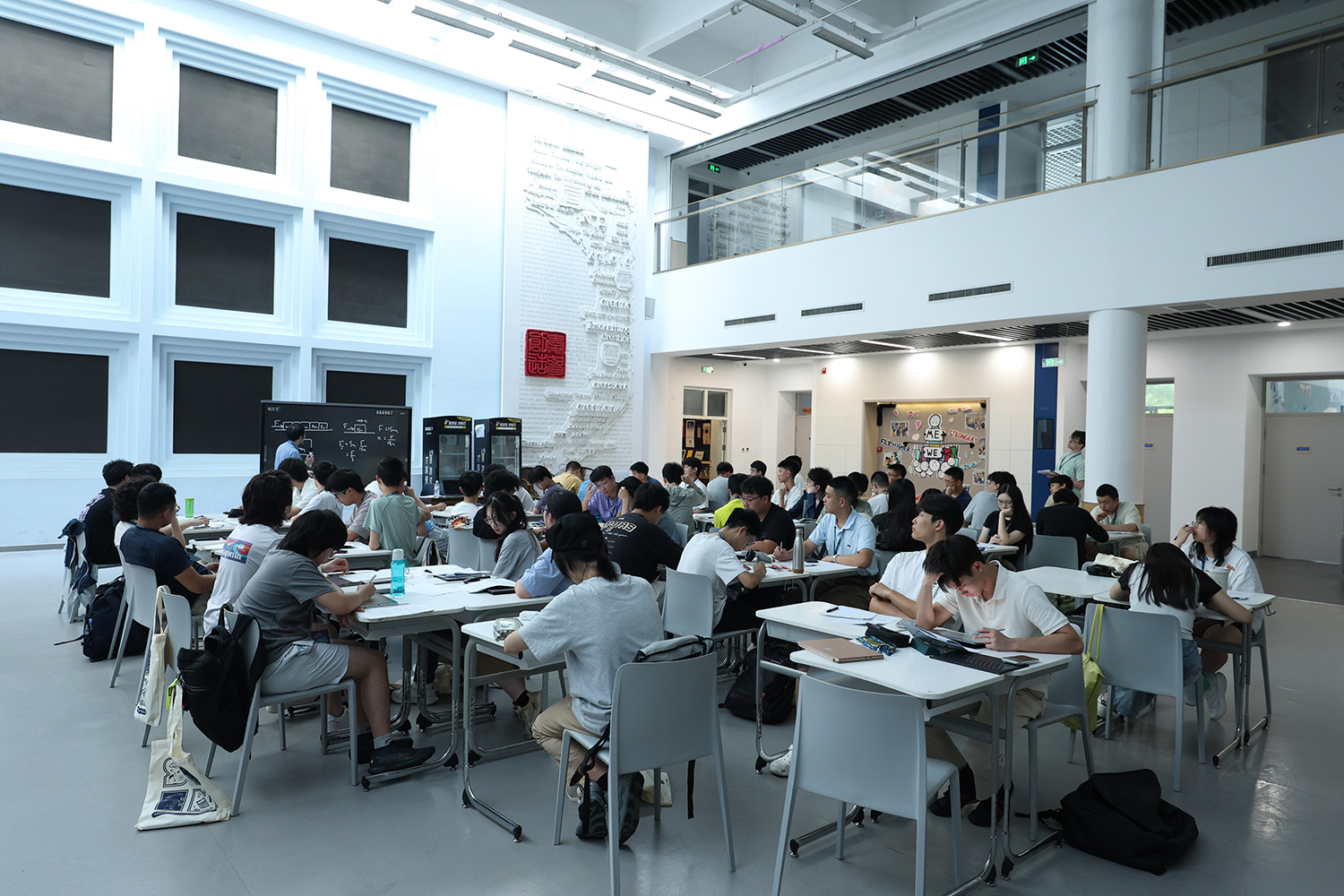
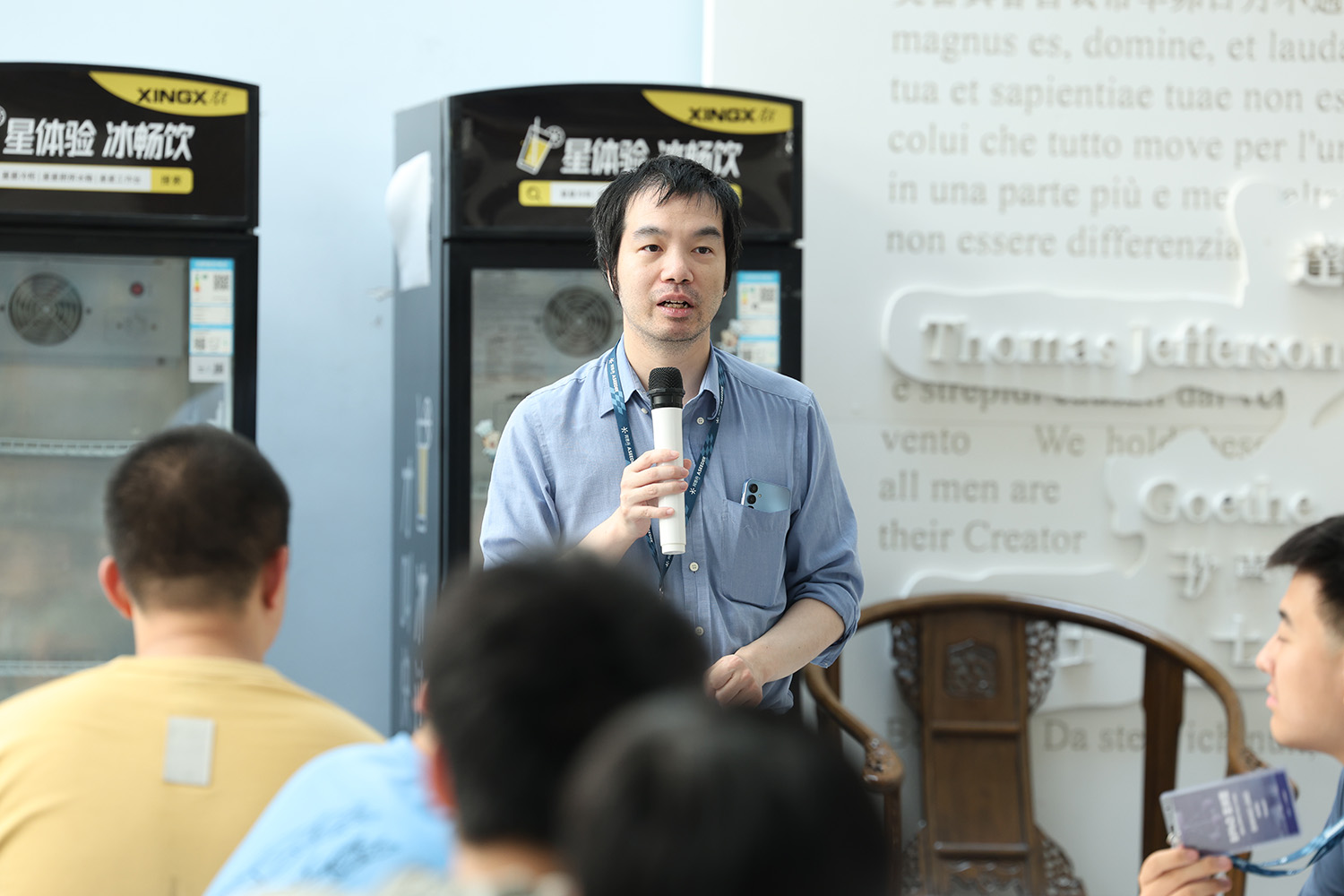
Through a series of cutting-edge lectures, students will broaden their scientific horizons and gain insight into how physics, as a foundational discipline, intersects and integrates with fields such as engineering, biology, and information technology. The lectures are designed to be both in-depth and engaging. Under the guidance of the professors, students will gradually understand how physical ideas and methods can be transferred and applied in interdisciplinary contexts, thereby cultivating their comprehensive thinking abilities.
Previous Lecture Topics

History of Quantum Mechanics
Using the life of the physicist Fermi as the main thread, this narrative explores how theoretical physics and experimental physics have propelled each other forward and developed together. It reviews Fermi’s role in advancing nuclear physics and conveys a core scientific philosophy: major achievements in physics often emerge from the perfect integration of theoretical derivation and experimental validation.

Biomechanics
Applies physical mechanics to human body structure analysis, interpreting the foot as a precise “sensor” and “damper” while exploring the mechanical origins of foot disorders. Through this lecture, students will appreciate the practical value of applying physics knowledge in the fields of medicine and health. This tangible, interdisciplinary interpretation not only breaks down the abstract barriers of physics as a discipline but also helps students realize that physical laws do not exist in isolation; rather, they are deeply embedded in the underlying logic governing the operation of living systems.

Engineering
This lecture provides an accessible introduction to PID control theory—the core of modern industrial automation. It explains the underlying mathematical principles and demonstrates a PID-based self-balancing system in real time, allowing students to see firsthand how abstract equations can successfully “tame” an unstable physical entity. The session bridges knowledge across control theory, classical mechanics, and electronic engineering.

Moire Fringes
This lecture guides students from observing Moire patterns generated by superimposed periodic gratings toward uncovering their mathematical foundations, establishing a complete cognitive framework from phenomenon to principle. Physical phenomena and mathematical tools are mutually reinforcing—mathematics provides the clarity needed to comprehend the underlying patterns governing the physical world.

Optimization Principles in Scientific Research
Starting from the "shortest path" in everyday life and extending to the probabilistic wave phase of quantum mechanics, the lecture guides students to appreciate the elegant simplicity with which nature pursues efficiency. It conveys an important insight: many seemingly complex physical phenomena fundamentally adhere to the principle of optimization.
Previous Lab Project Topics

Observational Circus & Puzzles and Surprises
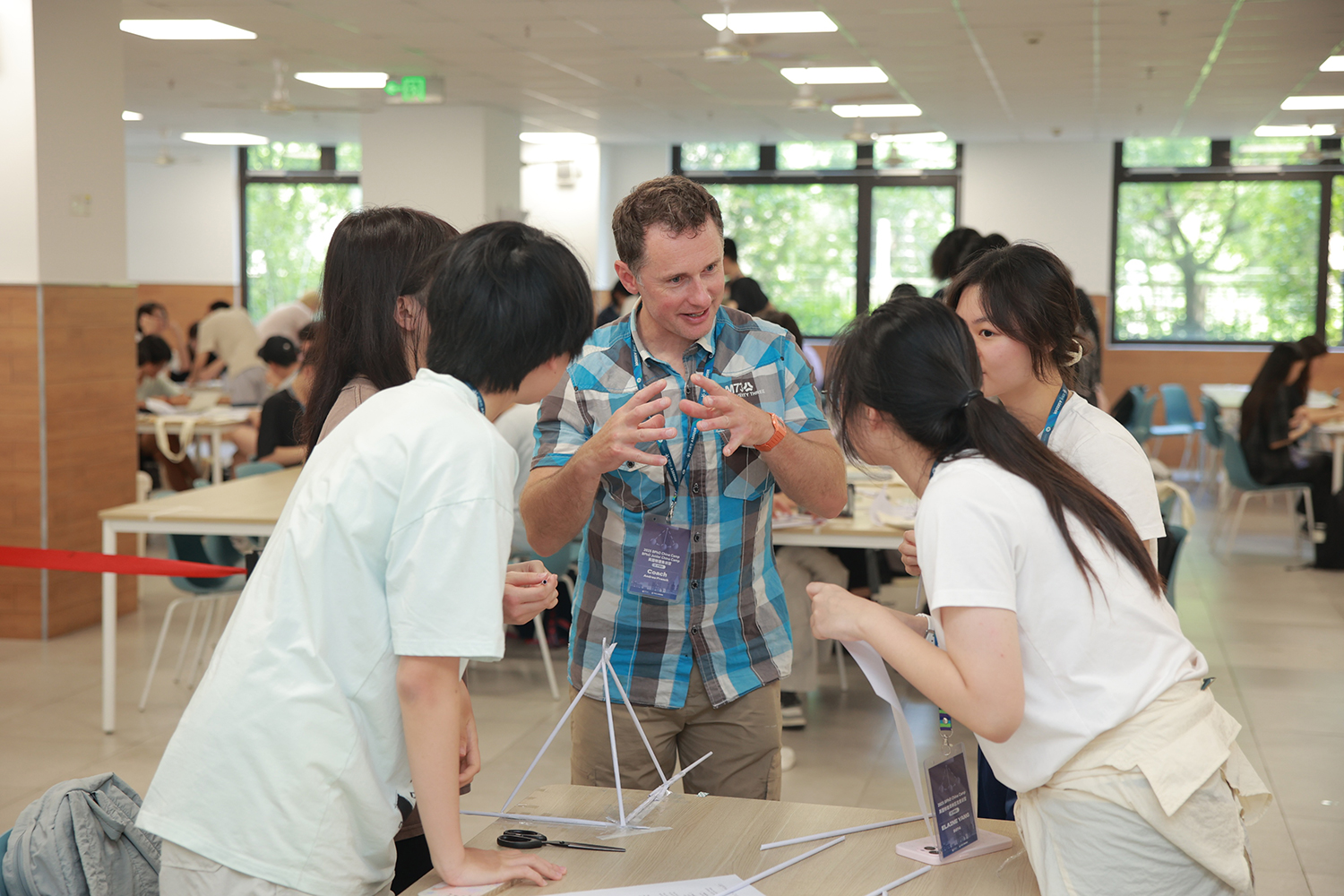
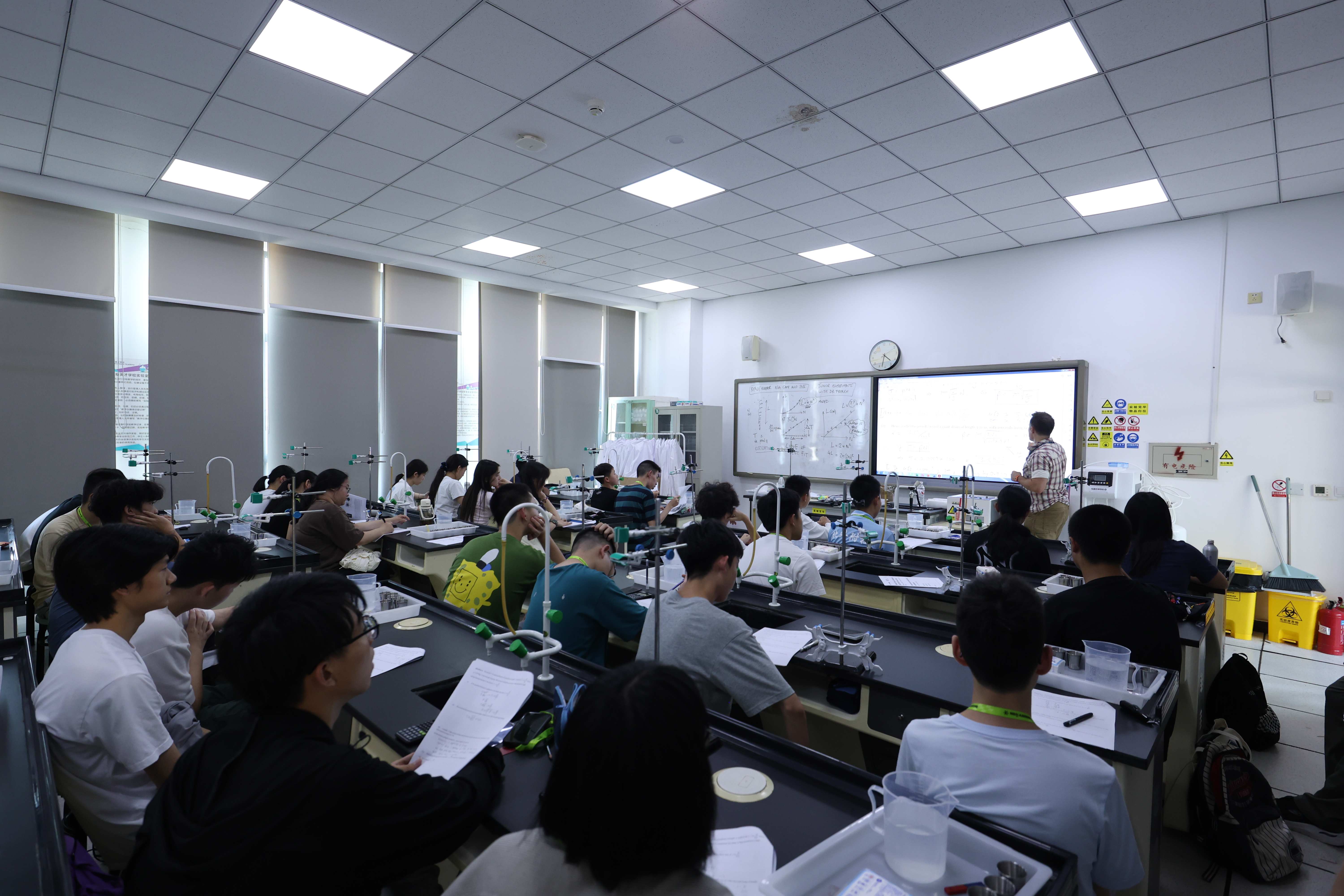
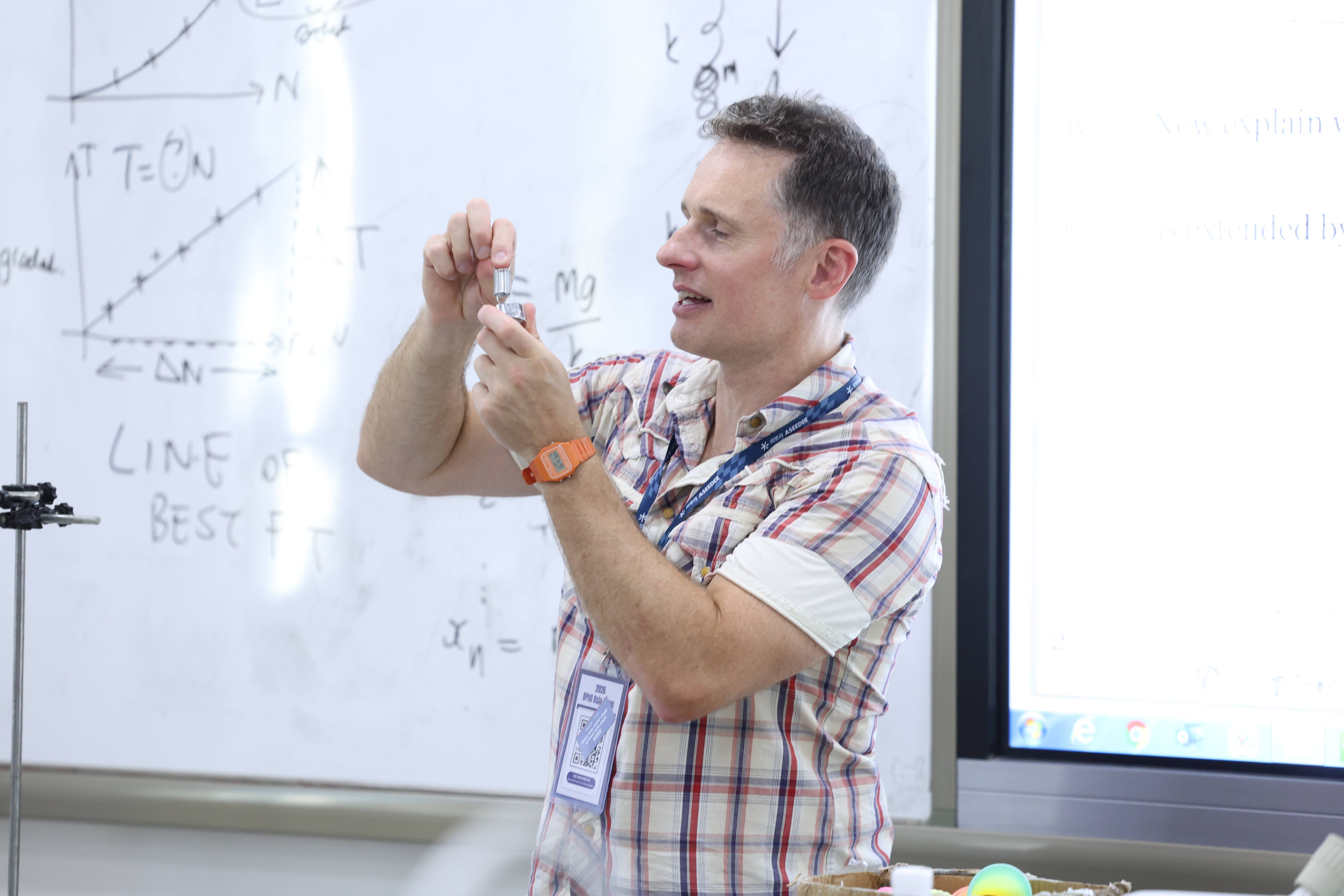
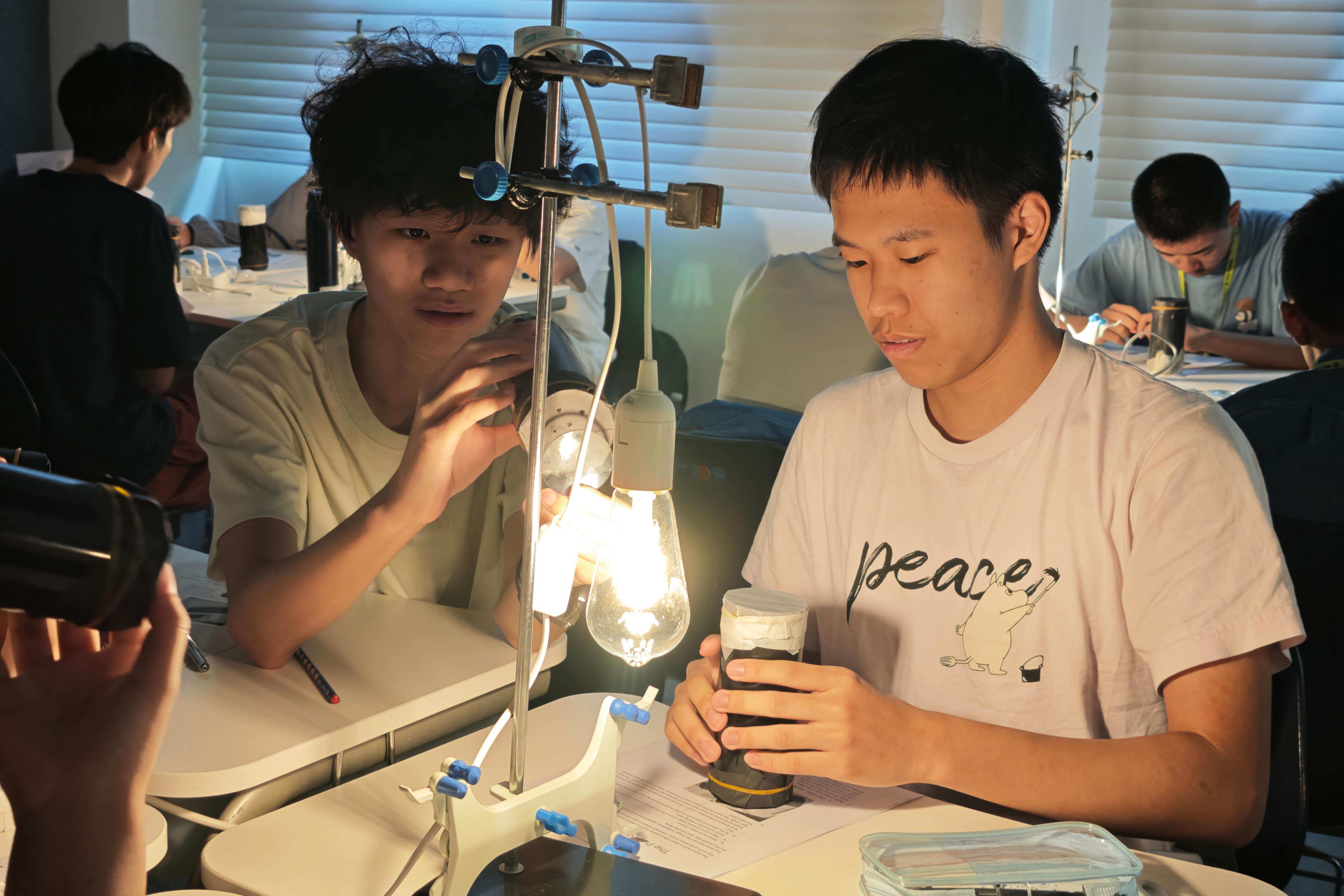
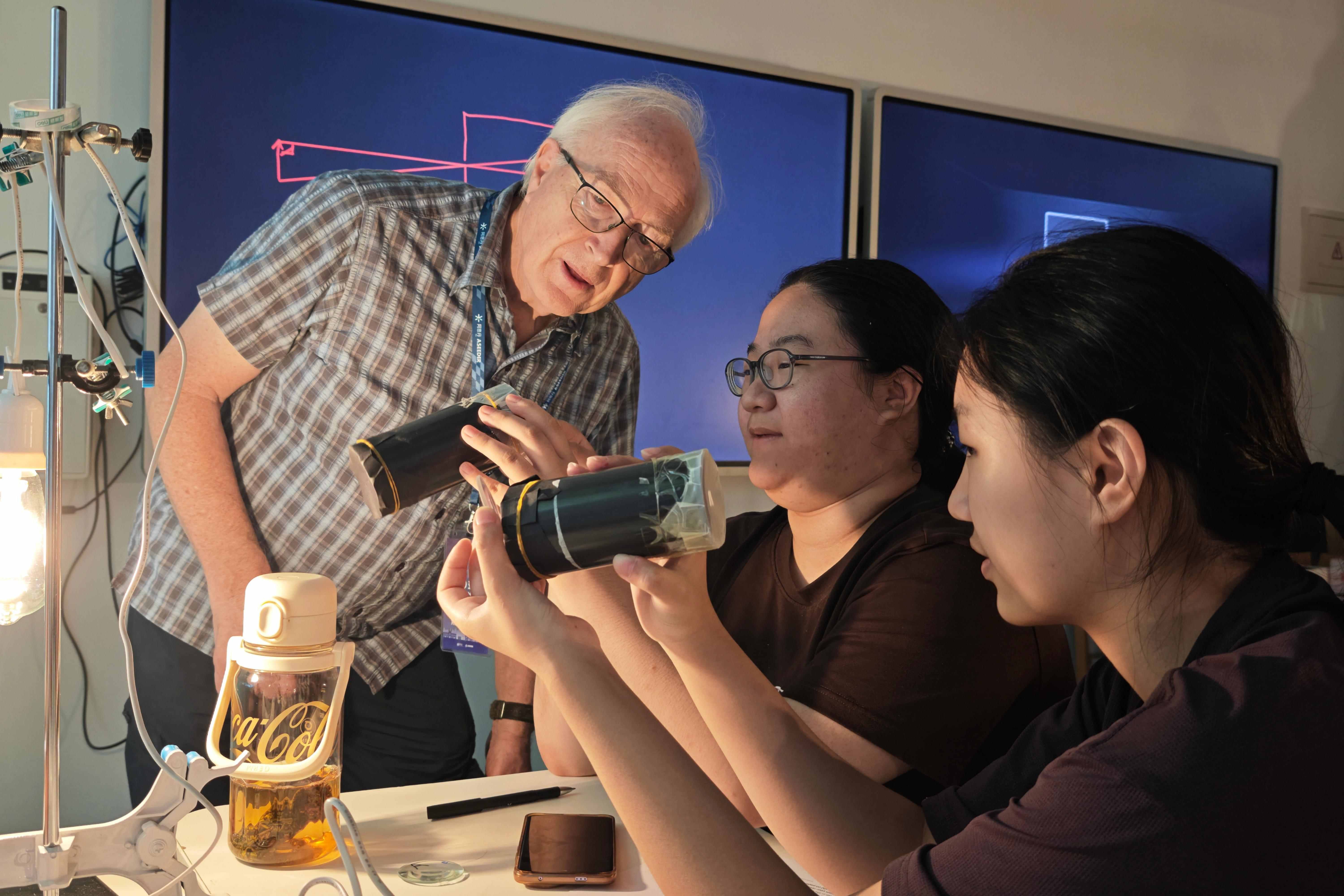
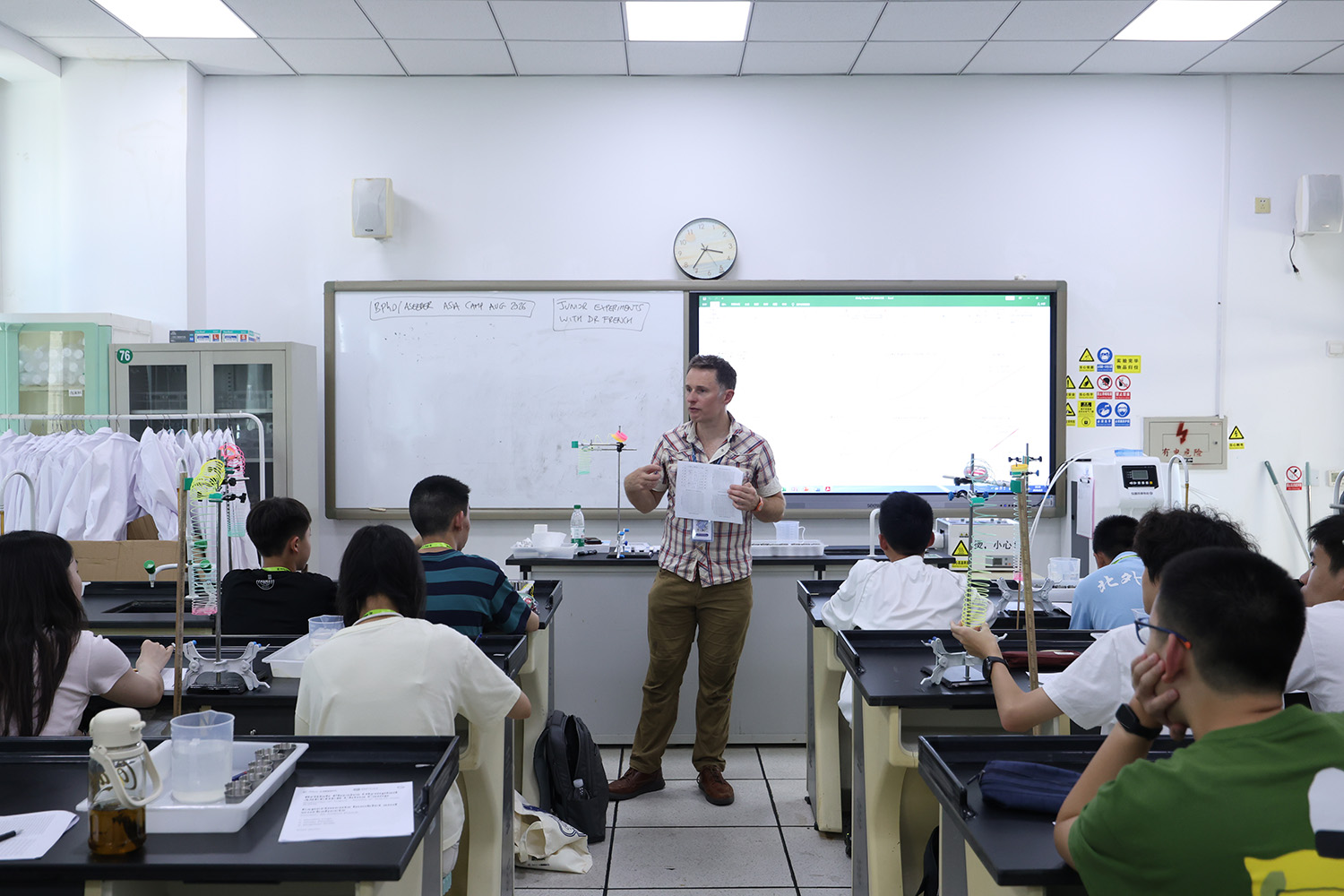
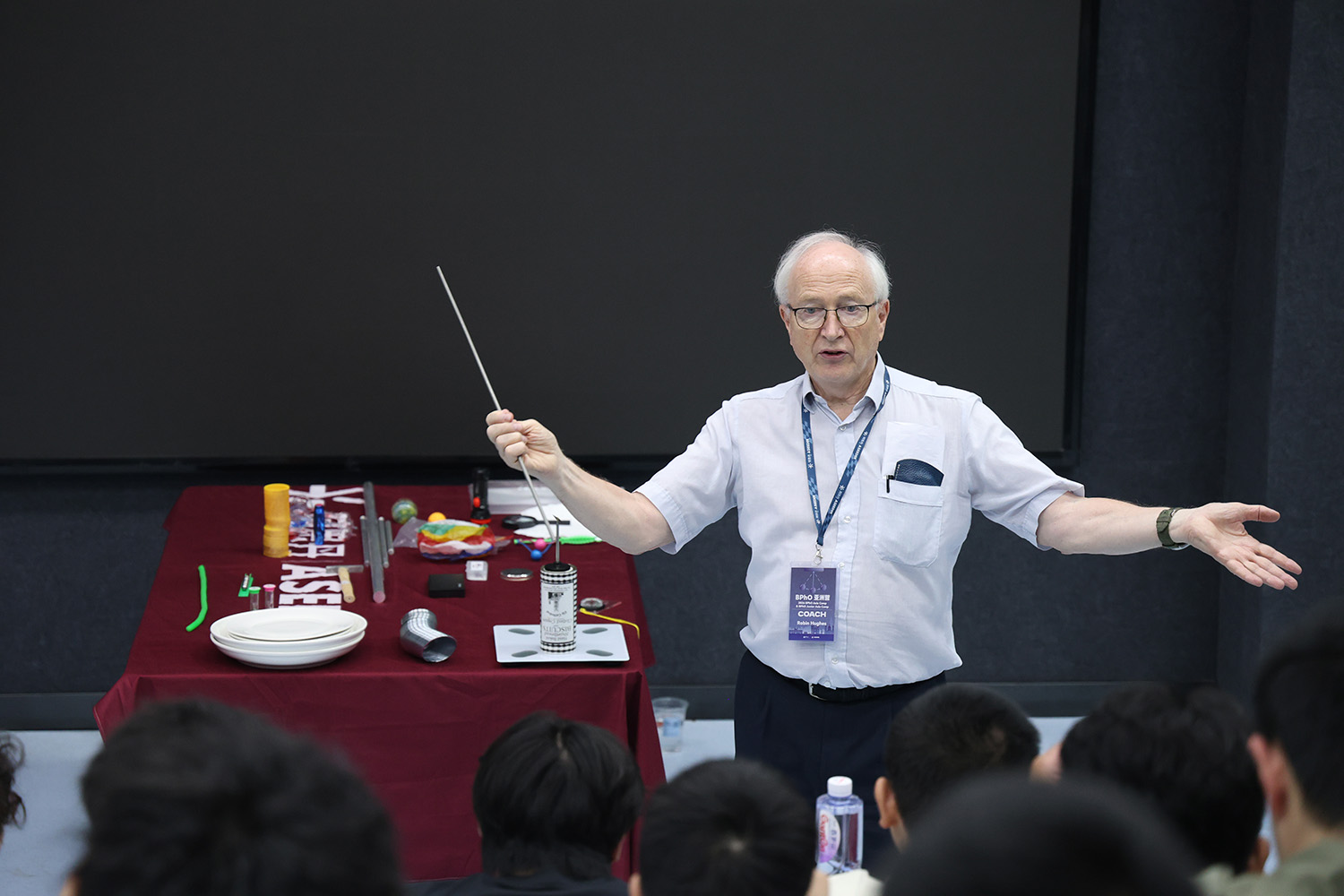
Led by Robin Hughes (Chair and Head Coach, British Physics Olympiad) and Professor Stephen Martin, these mini-experimental demonstrations cover classic topics including gravity, magnetic fields, inertia, and refraction—guiding students to think through observation and uncover physical principles beneath phenomena.
Slinky Practical
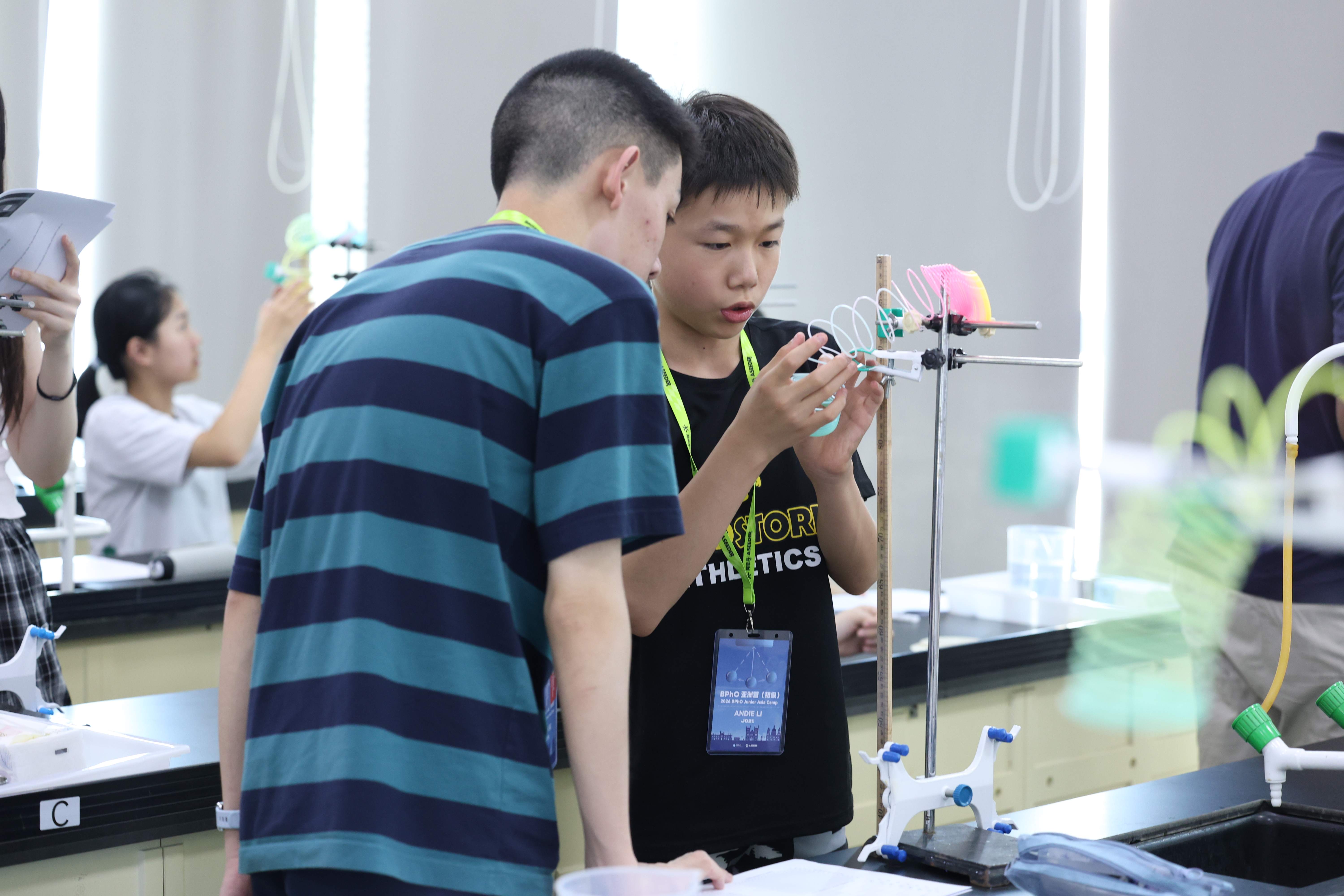
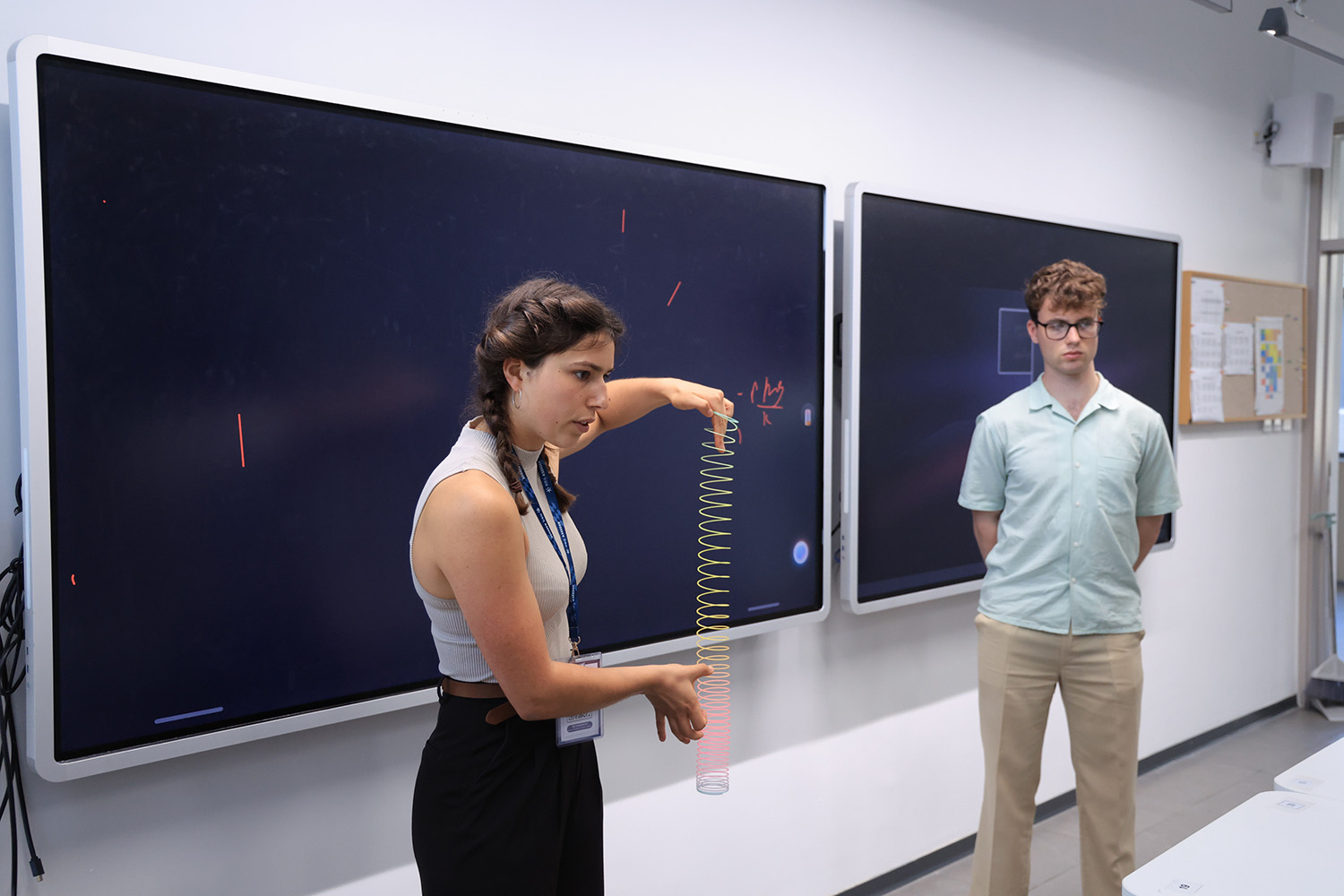
Based on Hooke's law, students will investigate the relationship between the length of a vertically suspended spring and the number of coils through hands-on experiments, helping them establish scientific methods for experimental work and develop the ability to use spreadsheets to record and analyze experimental data.
Radioactive Dice & Newton Cooling
Using dice to simulate the random process of radioactive decay, students will verify Newton's law of cooling with experimental data. Through hands-on activities, they will understand the mathematical model of exponential decay and appreciate the important role of probability and statistics in physics research.
Robots with Neil
Led personally by Professor Neil, a renowned British physics educator with years of experience in engineering research and development, this module guides students through robotics and smart hardware experiments to help them understand the practical application of engineering thinking in scientific research. During the experimental process, students are required to thoroughly document the experimental procedures, analyze the causes of test failures, and complete system improvements by continuously adjusting parameters and optimizing solutions, thereby experiencing firsthand the iterative optimization and trial-and-error process inherent in real scientific research. The course places particular emphasis on the rigorous methodologies and engineering logic in scientific research, helping students establish a complete scientific research thinking framework that encompasses problem analysis, experimental validation, and system optimization.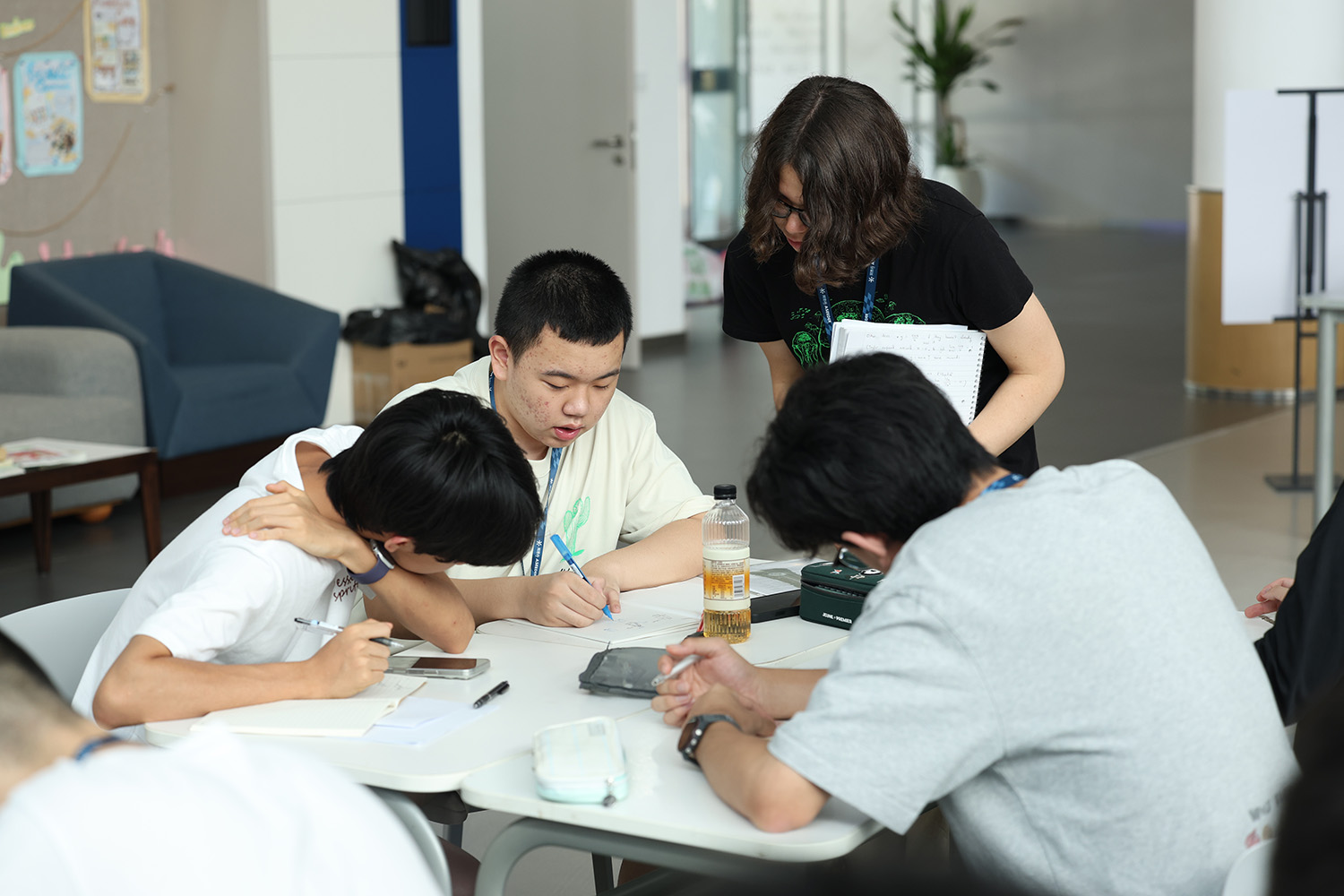
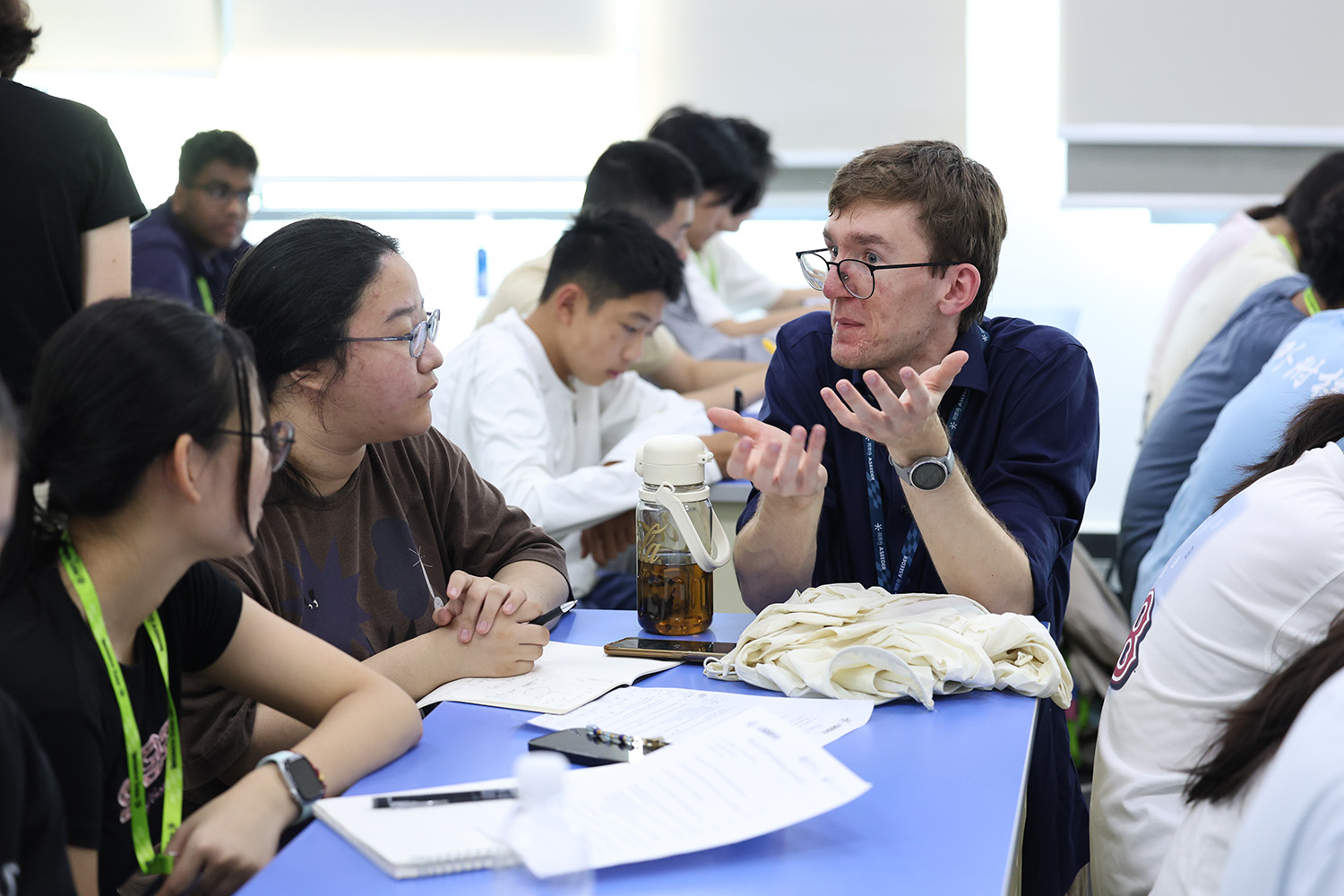
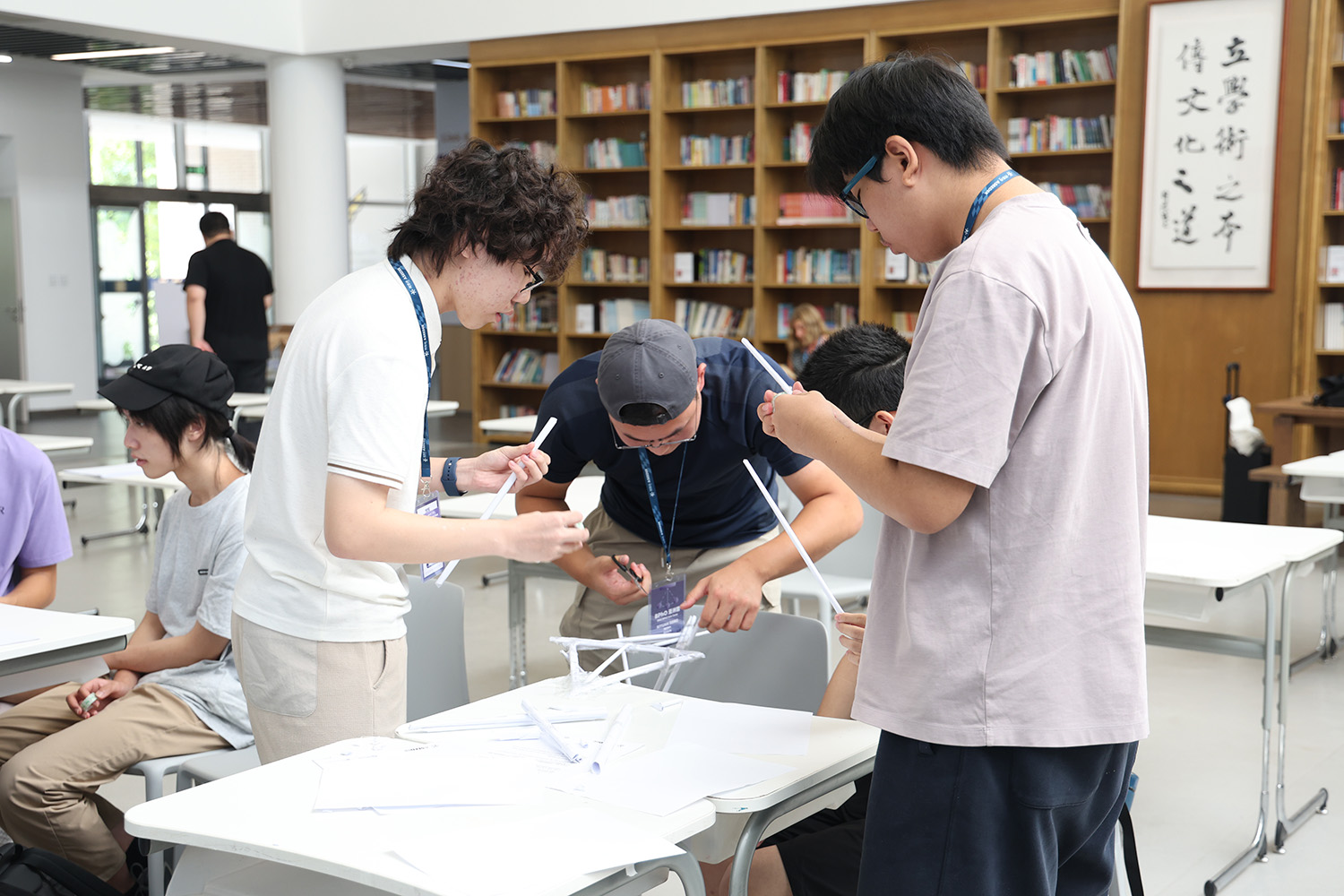
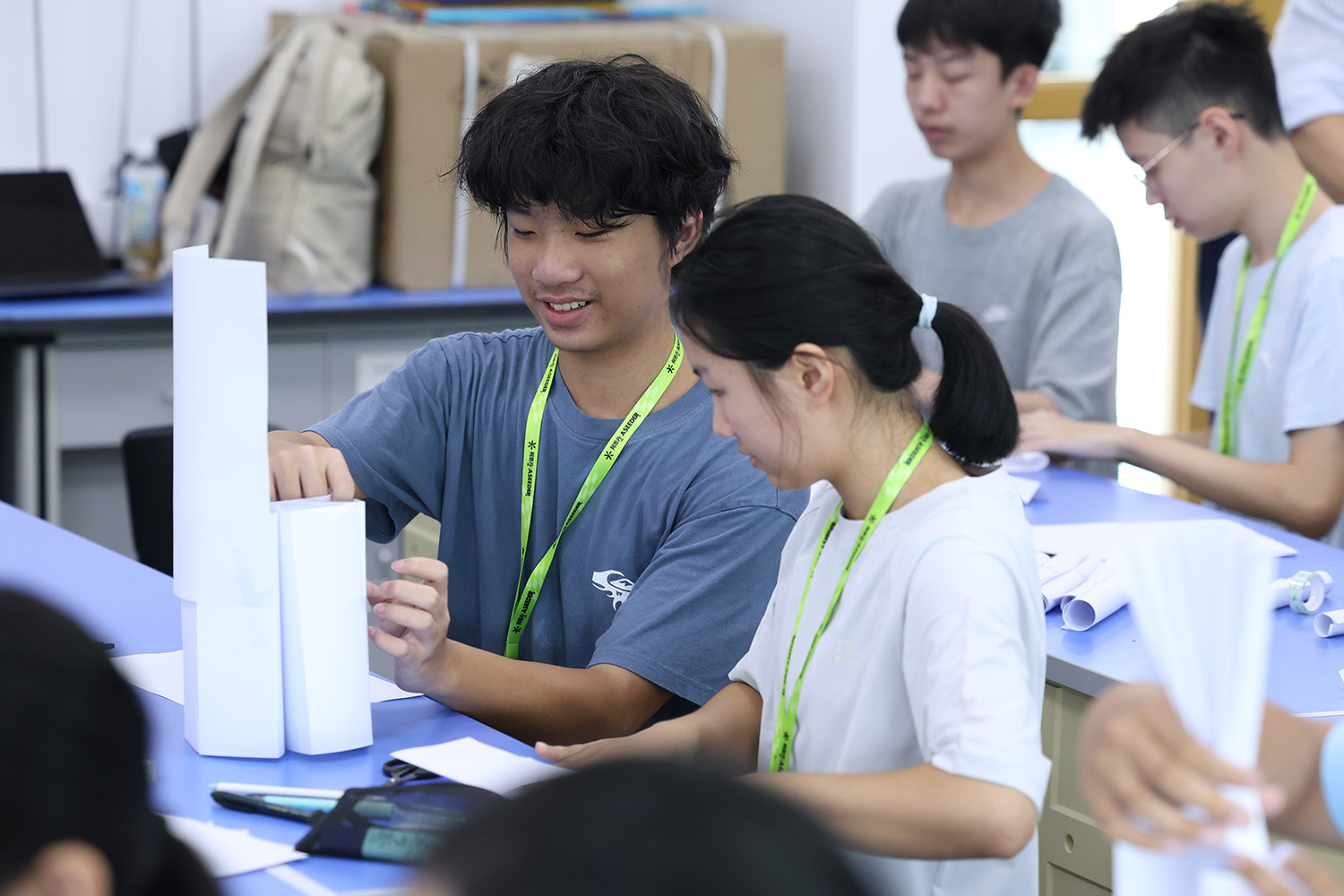
Physical Modeling and Estimation: Cultivating the Physicist's Intuition: Order-of-magnitude estimation is an essential tool for physicists to understand the complex world and one of the most core thinking skills in theoretical physics training. In this module, students will learn how to perform quick and reasonable approximate analyses of complex problems by making simplifying assumptions, constructing physical models, and applying basic physical intuition, thereby grasping the essence of the problems. Through hands-on practice with classic problems, students will master how to extract clear physical models from seemingly chaotic phenomena.
Classical Mechanics in Depth: Physical Modeling and Approaches to Olympiad Problems: Led by BPhO Coach Professor Anson Cheung, this module returns to classical mechanics with focused training in force analysis and mathematical modeling. Through in-depth exploration of classic Olympiad topics—ladder equilibrium, collision dynamics, chain tension—students learn to translate complex physical scenarios into solvable mathematical frameworks, establishing rigorous and efficient problem-solving protocols.
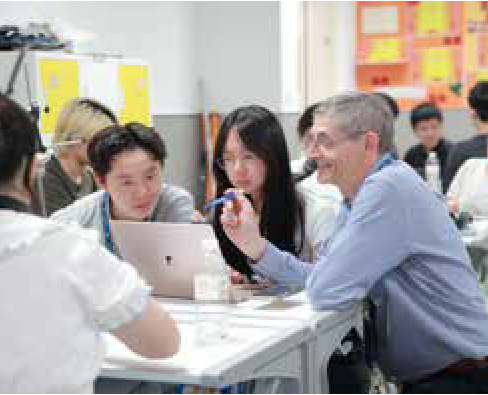
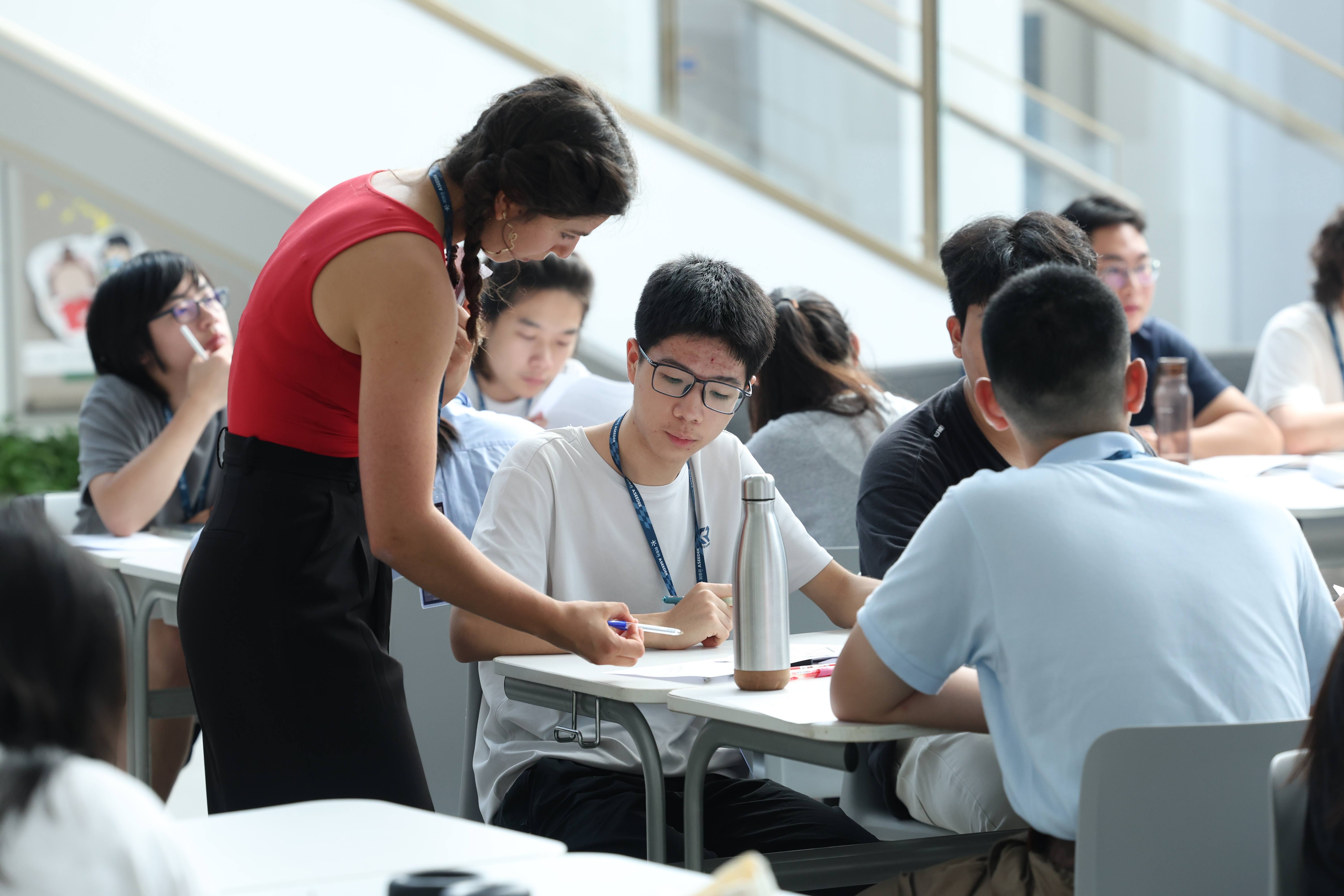
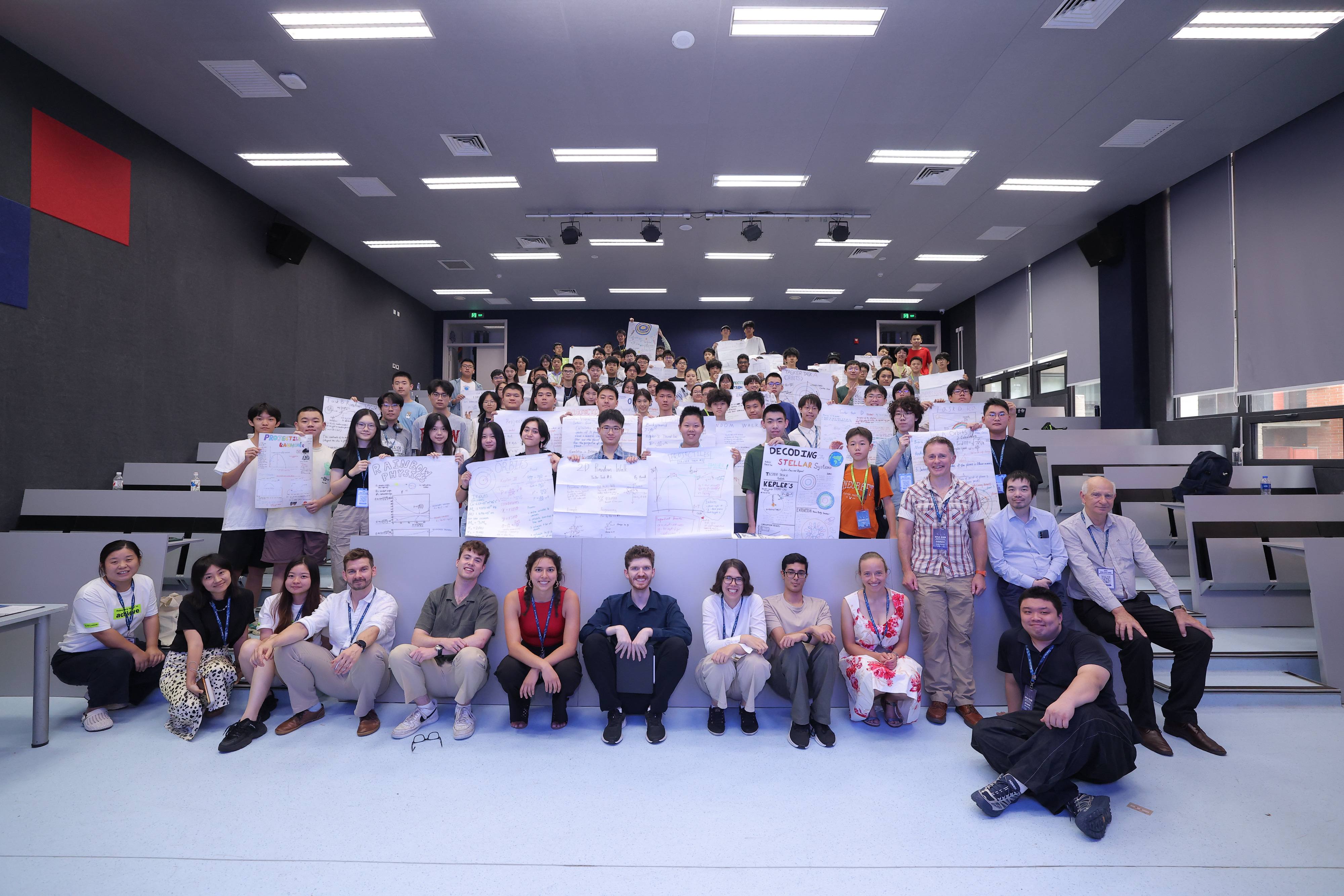
Most sessions are organized around four-person teams, where students learn to listen, articulate, and collaborate through joint problem solving, code logic discussions, and coordinated experiments—thereby transcending individual cognitive constraints. Dedicated Q&A sessions are also integrated, offering timely, targeted guidance on difficulties ranging from theoretical derivations and programming implementation to experimental data analysis. This cycle of “exploration–discussion–feedback–deepening” effectively fosters active and in-depth learning.