 Teachlink
 APASS-Learning platform

GENIUS Olympiad



Terra Science and Education

St. John Fisher University
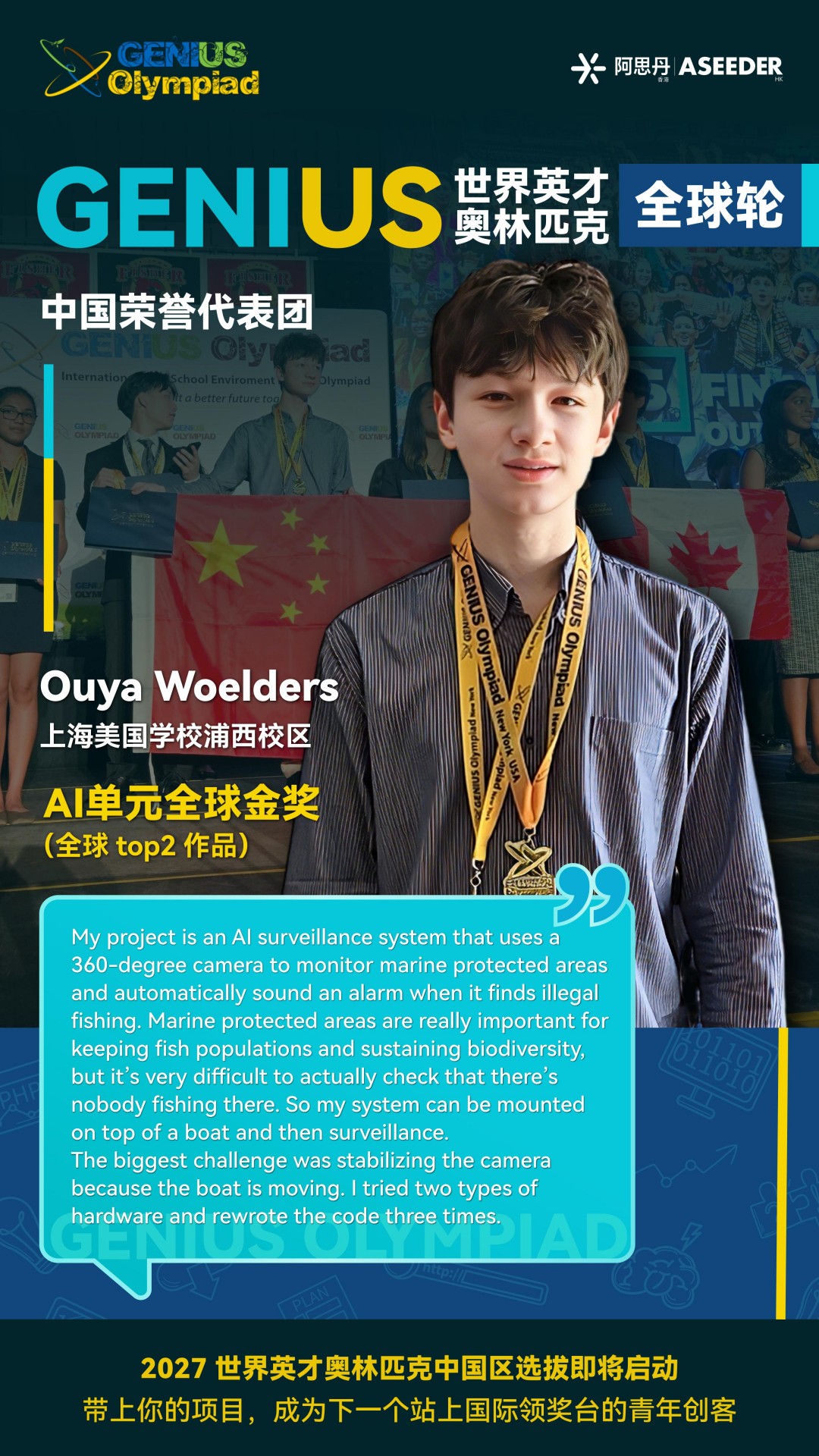
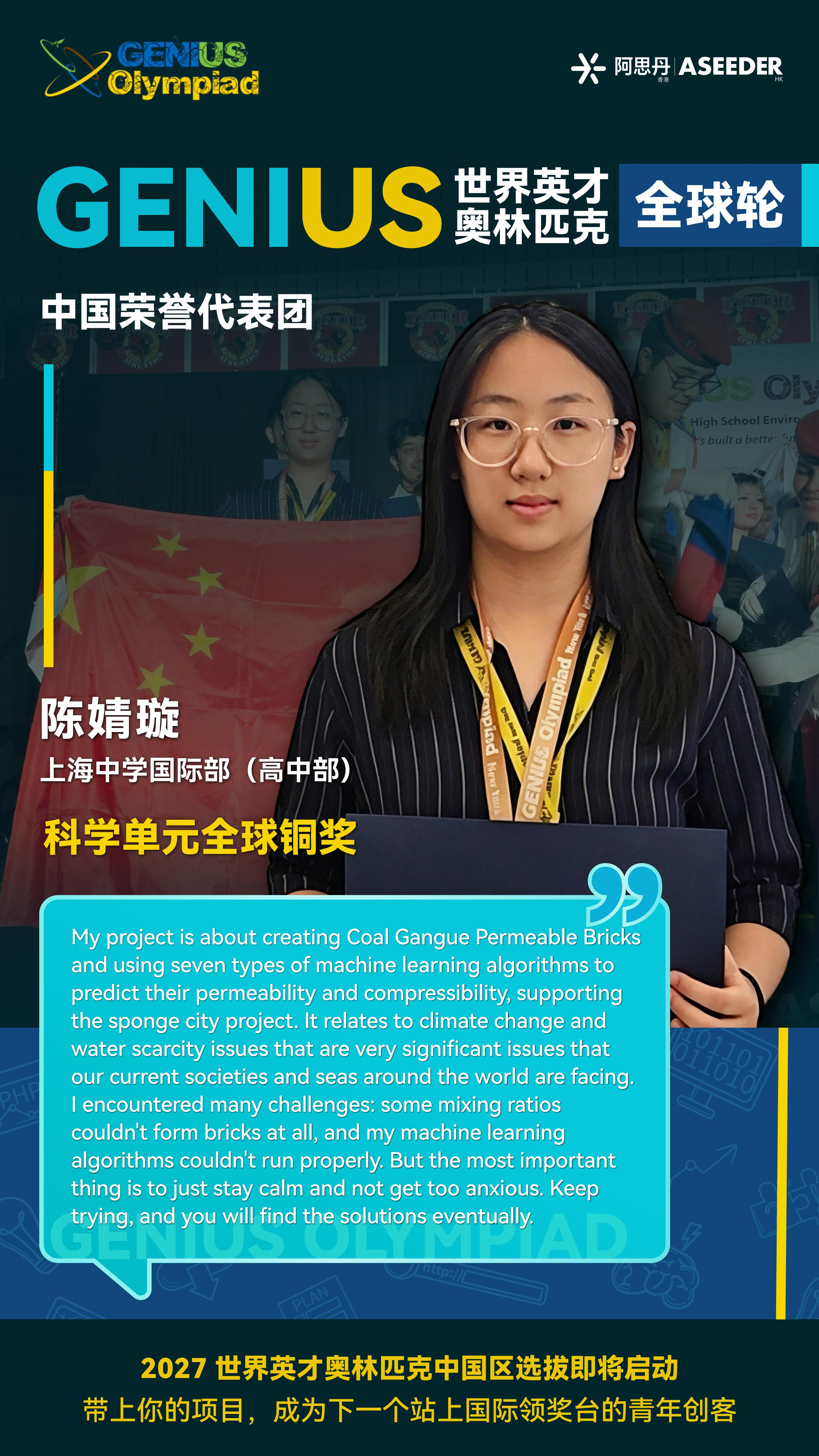
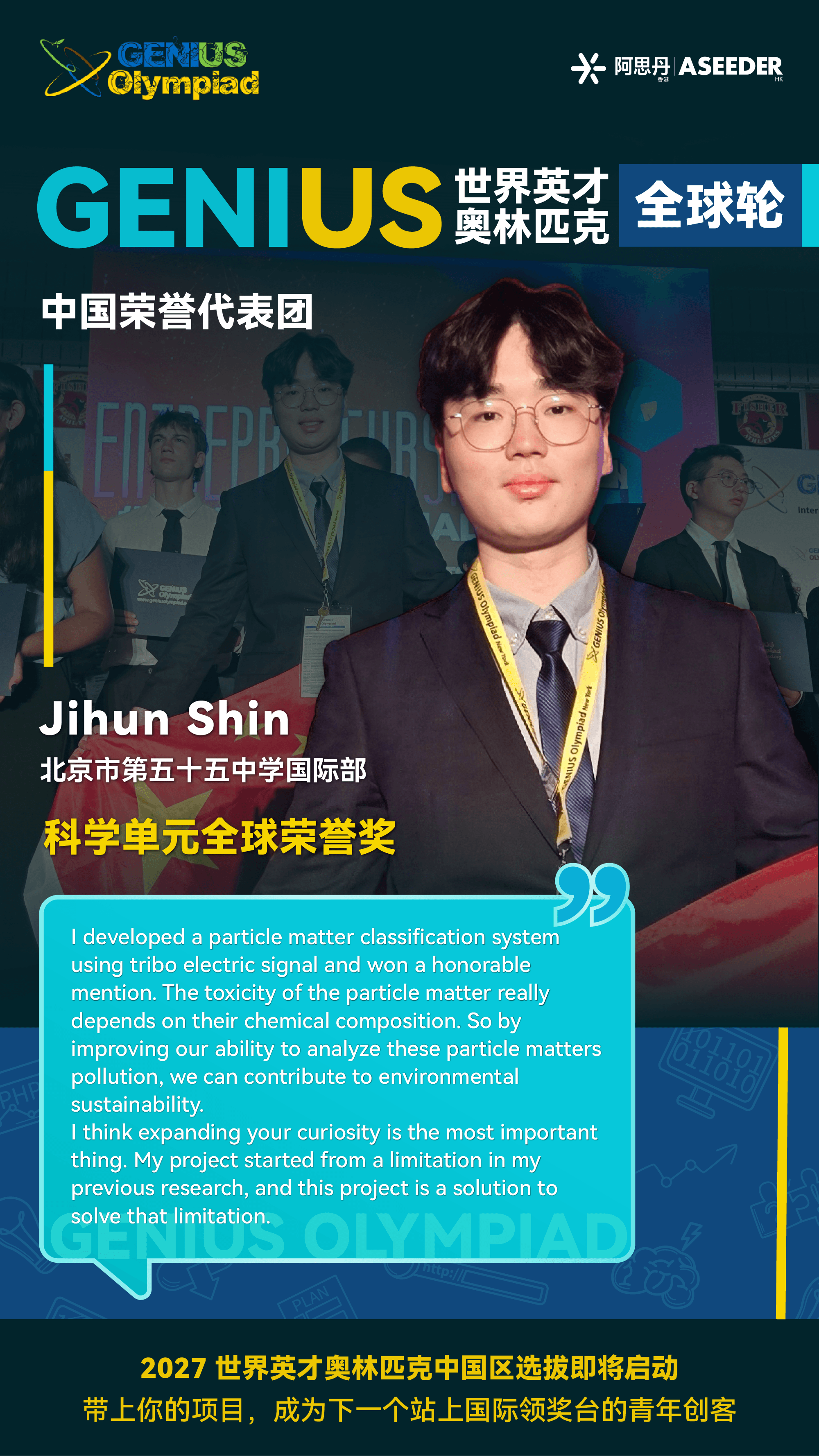
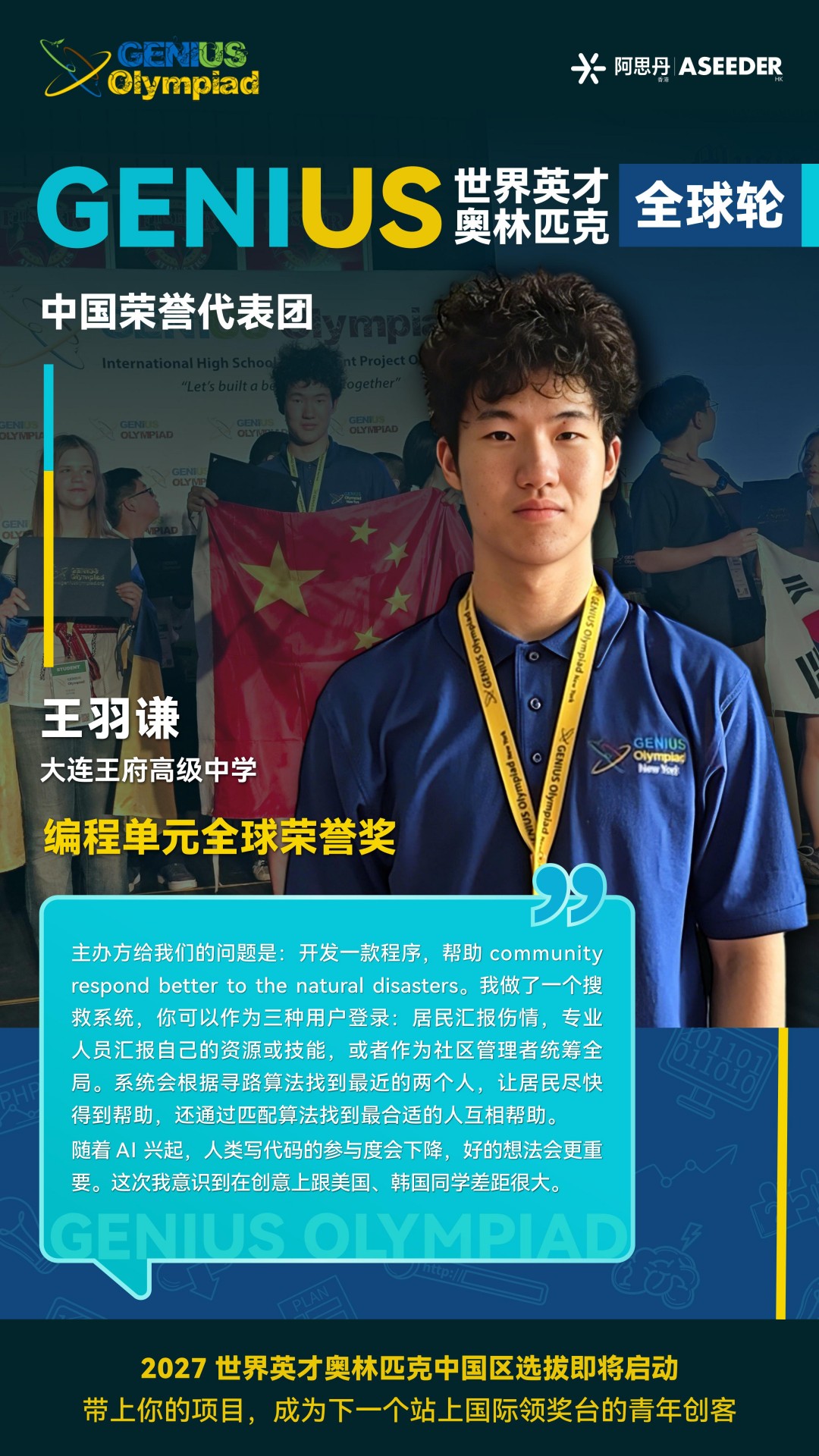

University Admissions & Scholarships
Like ISEF, GENIUS Olympiad offers University Entrance Scholarships. This serves as official academic endorsement from a top US research university. * All scholarships are renewable, provided that the applicant is admitted to RIT through the admissions process. Each student may be awarded only one level of scholarship.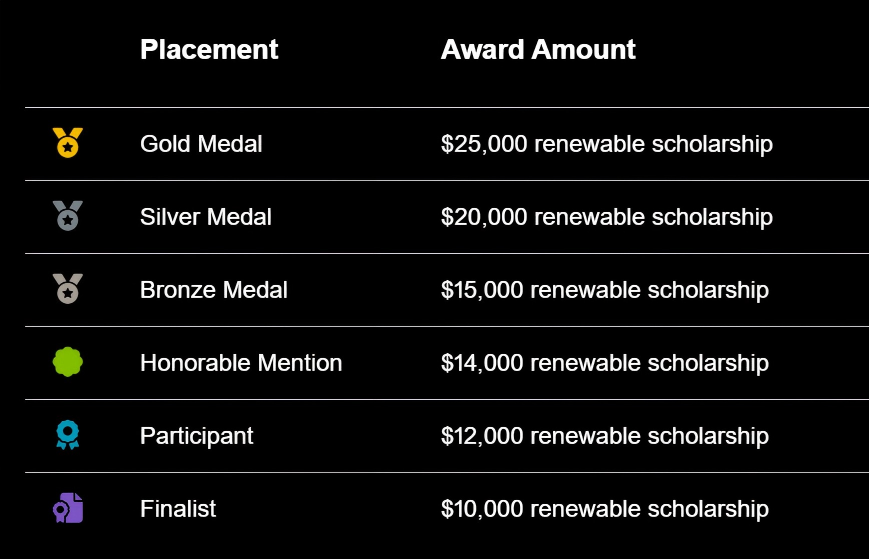

GENIUS Science encourages students to investigate environmental problems using scientific methods and develop evidence-based solutions. Students may conduct experimental, observational, engineering, behavioral, or social science research within one of five science categories to explore solutions that can improve communities and contribute to a more sustainable planet.
5 Research Categories: Environmental Quality Ecology and Biodiversity Resource and Energy Human Ecology and Social Sciences Innovation
● Participants: 1-2 students per team
● Language: English
● Eligibility: Students in grades 8-12 (One must be 13 years old or above on the day of project submission)
RulesNational Round
● Format: Submit an English research paper.
● Content: Submit an English research paper in one of the five Science categories. Projects must include original experimental results or the development and testing of an engineering solution or prototype. Projects based only on hypothetical research questions, proposed experiments, or untested solutions will not be accepted.
● Requirements:
1. The research paper must be submitted in PDF format and written in English. It may not exceed 20 pages, including the cover.
2. Please follow the official Research Paper Guide for content and formatting requirements.
* To safeguard academic fairness and integrity, the organizing committee will conduct a comprehensive originality review of the submitted papers, including plagiarism checks and AI-generated content detection.

Scan the QR Code to
download the Template
RulesGlobal Finals
● Format: Poster presentation
Poster presentation; students present to each judge separately for 6–8 minutes, followed by a 2–3 minute Q&A session in English.
| Criterion | Score | Description |
|---|---|---|
| Presentation Skills | 5 | Communicates the research clearly and professionally and demonstrates strong ownership and understanding of the project during the presentation and judge Q&A. |
| Poster Organization and Content | 5 | Clarity and coherence of the problem, objectives, results, and discussion. Are graphics, charts, and visuals used effectively? Is the poster well-designed with a logical flow? |
| Background Knowledge | 5 | Demonstrates strong understanding of relevant scientific concepts and previous research and uses that knowledge to develop the study. |
| Environmental Relevance | 5 | Clearly connects the research to an environmental challenge and explains its potential significance, application, or contribution to environmental sustainability |
| Scientific Process and Data Management | 10 | Uses appropriate, well-designed scientific methods to investigate the research question. Variables, controls, sampling methods, measurements, and procedures are appropriate to the type of research. Collects sufficient and relevant data and presents results clearly through appropriate tables, graphs, images, observations, or statistical analysis. |
| Creativity and Innovation | 10 | Demonstrates originality in the research question, methods, analysis, design, or proposed solution. |
| Analysis and Critical Thinking | 10 | Thoughtfully interprets results, identifies patterns and limitations, evaluates alternative explanations, and demonstrates that conclusions are based on evidence rather than assumptions. |

GENIUS AI requires students to address a clearly defined real-world environmental problem using AI techniques such as machine learning, intelligent agents, computer vision, NLP, optimization, or predictive modeling. Projects should demonstrate how AI contributes to a sustainable solution and show measurable results or evaluation.
AI Techniques: Machine Learning Intelligent Agents Computer Vision NLPOptimizationPredictive Modeling
* Projects must address a clearly defined real-world environmental problem and demonstrate how AI can provide an effective solution for sustainability
● Participants: 1-2 students per team
● Language: English
● Eligibility: Students in grades 8-12 (One must be 13 years old or above on the day of project submission)
RulesNational Round
● Format: Submit an English research paper and a project video.
● Content: The research paper should explain the environmental problem, AI solution, model development process, and project outcomes. The project video should include problem identification, an explanation of the technologies and AI usage, and a screen recording of the model in operation.
● Requirements:
1. Research Paper (Required): The research paper must be submitted in PDF format, written in English, and may not exceed 20 pages, including the cover. For content and formatting requirements, please refer to the sample AI research paper.
2. Project Video (Required): The video must be no longer than 3 minutes and narrated in English.
3. Simply using a pre-built AI service, chatbot, or API does not by itself qualify a project for GENIUS AI. The project must demonstrate meaningful student work in the design, adaptation, integration, training, evaluation, or validation of the AI system.
* To safeguard academic fairness and integrity, the organizing committee will conduct a comprehensive originality review of the submitted papers, including plagiarism checks and AI-generated content detection.
RulesGlobal Finals
Present the project for up to 5 minutes, using video or PowerPoint to demonstrate the problem and AI solution, followed by a 4–5 minute Q&A session with the judges. No posters are allowed.
| Criterion | Score | Description |
|---|---|---|
| Presentation Skills | 5 | Clarity, organization, and effectiveness of the oral and visual presentation, including the use of demonstrations and engagement with the audience. |
| Knowledge of the AI and Technical Implementation | 5 | Understanding of the AI techniques, models, tools, and frameworks used, including the student's ability to explain why they were selected and how they contribute to the solution. |
| Development & Methodology | 10 | Quality of the model’s development process, including thoughtful iteration, training approach, data handling, and validation methods. Judges will assess how systematically and effectively the model was built and refined. |
| Cost Analysis | 5 | Consideration of cost-efficiency, scalability, and practical deployment of the solution in real-world settings. |
| End Product Quality and Performance | 10 | Overall functionality, user accessibility, and environmental value of the final AI agent or system. |
| Novelty & Innovation | 20 | Creativity and originality in the design or approach of the AI solution; novelty compared to existing methods. |
| Environmental Solution | 10 | Clear alignment of the project with addressing a real-world environmental issue; relevance and potential impact. |
| Overall | 10 | General impression of the project’s innovation, technical strength, presentation, and environmental relevance. How well do all aspects of the project come together to deliver a compelling and impactful AI-based environmental solution? |

GENIUS Coding encourages students to use programming, software development, and computational thinking in any programming language to create innovative solutions for real-world environmental problems. Students may develop web applications, desktop software, mobile apps, simulations, games, data visualization tools, robotic software, educational software, or other software solutions addressing the annual challenge theme.
2027 Application Topic: Extreme Heat & Wildfires
Wildfire Prevention & Risk Prediction Emergency Response & Public Safety Environmental Monitoring & Data Analysis Preparedness, Recovery & Education
* Other innovative software solutions related to the theme are encouraged.
● Participants: 1-2 students per team
● Programming Language: Any programming language is supported
● Eligibility: Students in grades 8-12 (One must be 13 years old or above on the day of project submission)
RulesNational Round
● Format: Develop a software project addressing the annual topic and submit a project demo video (3 mins).
● Submission Materials:
1. GitHub Repository (Required): Submit a public repository containing the source code, README, and running instructions, and keep it publicly accessible through June 15.
2. Project Demo Video (Required): Up to 3 minutes, narrated in English; demonstrate the software solution and its operation, and explain the technologies and AI tools used.
● 2027 Application Topic: Extreme Heat & Wildfires
RulesGlobal Finals
● Format: 24-hour Hackathon
● 2026 Hackathon Theme: Develop an application to help community respond better to the natural disasters.
● Content: Teams must develop a software solution for the announced hackathon topic within 24 hours. All project work must be created during the event; pre-built projects or code are not allowed.
* Teams may use public libraries, frameworks, APIs, datasets, and AI tools, but may not communicate with anyone outside the team.
● Up to 5 minutes for the presentation, followed by a 4–5 minute Q&A session with the judges.
| Criterion | Score | Description |
|---|---|---|
| Presentation Skills | 5 | Clarity, organization, and effectiveness of the oral and visual presentation, including the use of demonstrations and engagement with the audience. |
| Knowledge of the Coding | 5 | Proficiency in programming tools, languages, and frameworks used; quality of implementation and software engineering practices. |
| Development & Methodology | 10 | Quality of the software development process, including problem decomposition, design decisions, testing, debugging, iteration, and effective use of programming tools and technologies. |
| Code Efficiency | 5 | Clean, readable code; use of efficient algorithms; innovative use of technology or AI tools to solve the problem in a unique or effective way. |
| End Product Quality and Performance | 10 | Overall functionality, user accessibility, reliability and completeness, and environmental value of the final product. |
| Novelty & Innovation | 20 | Creativity and originality in the design or approach, with the potential impact of the solution for the given topic; novelty compared to existing methods. |
| Overall | 10 | General evaluation of the project’s creativity, technical execution, relevance to the environmental problem, and team performance. How well does the final product demonstrate innovation, usability, and potential for real-world impact? |

Multi-Round Team Matches
Teams will compete against each other in live matches on the exact same field to complete an annual limited environmental simulation task.
2027 Game: Habitat Rebuilder
Robots must retrieve tree components from the Shared Nursery, cross rocky terrain, transport materials to designated planting areas, and construct completed trees within a limited time to simulate the restoration process of damaged habitats.
Allowed Platforms and Kits: REV Tetrix VEX EXP / V5 / Pro goBilda Arduino VEX IQ Lego
* Unlisted platforms must be officially approved by the GENIUS Robotics committee in advance
● Participants: 1-3 students per team
● Language: English
● Eligibility: Students in grades 8-12 (One must be 13 years old or above on the day of project submission)
RulesNational Round
● Content Requirements:
1. Video must be 3 minutes or less
2. The video must include the following three phases
Planning Phase: Design choices, task analysis, and conceptual plans
Build-up Phase: Robot building process, structural assembly, and calibration/debugging
Demonstration Phase: Demonstrate core robot capabilities for game tasks, such as lifting, grabbing, and transporting.
3. Language: English
* Submitting an engineering book is optional for additional credit
● Engineering Book (Optional):
1. Teams are encouraged to submit an Engineering Book in English. It may include design choices, drawings, experiments, photos documenting the development stages, coding schemes and source code, as well as the system layout of the robot.
2. Submission of an Engineering Book is optional at the project application stage. For the Global Finals, the Engineering Book is included in the GENIUS Robotics judging rubric.

Scan the QR code to
view sample robotics demonstrations
RulesGlobal Finals
● Format: Teams will compete against each other in live matches on the field to complete an annual limited environmental simulation task
● 2027 Game Theme: Habitat Rebuilder
Robots must navigate across the rocky terrain, retrieve tree components from the Shared Nursery, transport them to the planting area, and construct completed trees inside their team's containers to simulate the restoration of the damaged ecosystem. Key missions include:
■ Material Collection: Retrieve different types of tree components from the designated area.
■ Material Transport: Cross the rocky terrain and safely transport tree components to the planting area.
■ Tree Construction: Assemble tree components into completed trees and place them inside the team's planting containers.
● Duration: There will be at least three rounds for each team, with a total time of 3 minutes allocated for a single round.
| Criterion | Score | Description |
|---|---|---|
| Engineering Book | 5 | Engineering book demonstrated the design choices, drawings, experiments, photos for the development stages, coding schemes and source codes, and the system layout of the robot. Inclusion of a Bill of Materials. |
| Teamwork | 5 | Demonstrates that equal involvement of each team member in robot design and answering question during the judging session. |
| Knowledge & Engineering | 5 | Demonstrates the understanding of parts and systems, coding, and mechanical design to address the game. |
| Overall Presentation | 5 | Provides relevant, thoughtful, and insightful answers during the Q&A. Demonstrates understanding all aspects of robot design, building, and testing. |
| Master Game | 10 | Scoring and details are given above. |

GENIUS Olympiad Entrepreneurship does not require a traditional business plan. Instead, projects are evaluated based on three core criteria: Sustainability Relevance + Verifiable Technology or Solution + Feasible Commercialization Path.
Recommendation for team formation: A "Business + Technology" dual-role team structure is encouraged to present a well-rounded and convincing project, making the solution "Technically Viable + Commercially Marketable + Capable of generating measurable impact".
Suggested theme directions:
- Product/Technology Innovation:Propose a new product or technology that promotes sustainable development with low energy consumption, or present an upgrade plan for an existing product, along with a market implementation strategy.
- Industry Tech-Transformation: Design a systematic green and sustainable strategic upgrade plan for an existing organization.
● Participants: 1-2 students per team
● Language: English
● Eligibility: Students in grades 8-12 (One must be 13 years old or above on the day of project submission)
RulesNational Round
● Format: Submit a video presented in English (up to 3 minutes)
● Content:
1. Including a proposed business pitch and screen recording of your PowerPoint presentation (required)
2. A comprehensive business plan and a visual presentation (PowerPoint, Prezi, or similar) (optional)
3. Projects should focus on sustainability and environmental issues, with participants encouraged to explore the following two directions:
Product/Technology Innovation: The plan must describe the solution in detail, define the target market, propose pricing and promotional strategies, and explain how the product will be delivered to the customer.
Industry Tech-Transformation: The plan should assess the current environmental impact of a specific business or industry, outline proposed changes, and evaluate how these changes will affect environmental performance, customer experience, pricing, and the company’s market position.
● Requirements:
All financing should be converted into U.S. dollars (USD).

Scan the QR code to view
sample Entrepreneurship presentations
RulesGlobal Finals
● Format: Present your project as a business pitch using PowerPoint/Prezi presentation. It is HIGHLY recommended that teams bring printed copies of your business plan or a two-page executive summary.
● Time: 5-minute presentation + 4–5 minute Q&A session with a panel of judges
| Criterion | Score | Description |
|---|---|---|
| Business Pitch and Communication | 5 | Presents the proposal in a clear, organized, persuasive, and professional manner appropriate for an investment pitch. |
| Competitive Advantage | 5 | Clearly explains what distinguishes the proposed solution from existing alternatives and why customers, businesses, or organizations would choose it. |
| Market Analysis and Opportunity | 5 | Demonstrates a clear understanding of the target market, customer needs, industry conditions, competitors, substitute solutions, and potential market opportunities. |
| Environmental Impact | 5 | Demonstrates that the proposed business solution addresses a meaningful environmental challenge and has the potential to create measurable positive environmental outcomes. |
| Innovation and Creativity | 10 | Presents an original product, service, technology, improvement, or business strategy and demonstrates creative thinking in addressing the identified environmental problem. |
| Feasibility and Scalability | 10 | Demonstrates that the proposed solution can realistically be implemented and identifies potential challenges, risks, and opportunities for future growth or expansion. |
| Overall | 10 | Demonstrates a strong understanding of the business proposal, thoughtfully evaluates challenges and alternative perspectives, supports assumptions with evidence, and responds effectively to judges' questions. |

With the arrival of short digital video, this art form has exploded, gone viral, and deeply integrated into our daily lives.
GENIUS Short Film encourages students to explore environmental and sustainability issues through visual storytelling. Students create original and engaging films that build emotional connections, encourage deeper reflection, and inspire awareness and action on environmental issues.
Three Short Film Categories:
- Narrative:Tell an environmental story through fictional characters, events, and storytelling.
- Documentary: Explore environmental issues through real people, places, events, communities, or experiences.
- Animation: Use 2D, 3D, hand-drawn, stop-motion, or other animation techniques to present environmental stories, concepts, or solutions.
● Participants: 1-2 students per team
● Language: English or with English subtitles
● Eligibility: Students in grades 8-12 (One must be 13 years old or above on the day of project submission)
RulesNational Round
● Format: Submit a short film online, either in English or with English subtitles.
● Categories: Narrative, Documentary, or Animation.
● Requirements:
1. Films must be between 2 and 6 minutes in length.
2. Films should primarily consist of original student-created content. Up to 20% of the imagery may come from external sources, provided it can be legally used and is properly credited at the end of the film.
3. Short films made mainly from online materials will not be accepted.

Scan the QR code above to
view outstanding short films
RulesGlobal Finals
● Format: Film screening on a large screen + project presentation + Q&A with judges
● Duration: Film screening (2–6 min) + presentation of up to 2 min + 2–3 min Q&A
● Presentation Requirements:
1. Presentation equipment will be available. Students may also use their own computer and should bring any necessary adapters.
2. Students must bring their film on a USB flash drive in MP4 format. A backup copy is recommended.
3. Students may continue improving their film after applying until judging day.
4. No posters or PowerPoint presentations are allowed during judging.
| Criterion | Score | Description |
|---|---|---|
| Storytelling and Structure | 5 | Presents a clear, engaging, and well-organized story or message. The film effectively uses pacing, sequencing, characters, information, or narrative development to maintain the audience's attention. |
| Emotional Impact and Audience Appeal | 5 | Creates a meaningful connection with the audience and uses visual storytelling to generate interest, emotion, curiosity, concern, or motivation. |
| Visual & Technical Quality | 10 | Effectively uses cinematography, animation, editing, sound, lighting, graphics, and other technical elements to strengthen the film and communicate its message. |
| Environmental Connection | 5 | Demonstrates a clear understanding of the environmental issue and communicates its significance effectively. The film should encourage viewers to think more deeply about the issue and, where appropriate, inspire awareness or action. |
| Creativity & Originality | 10 | Demonstrates an original approach to the environmental topic and uses creative ideas, perspectives, or filmmaking techniques to distinguish the project. |
| Overall Artistic Quality | 10 | As a complete work, it stands out as a meaningful, coherent, and well-executed piece of art regardless of specific technical elements. |

March 1, 2027
National Round
Submission Deadline

March 25, 2027
Global Finalist
Announcement
01
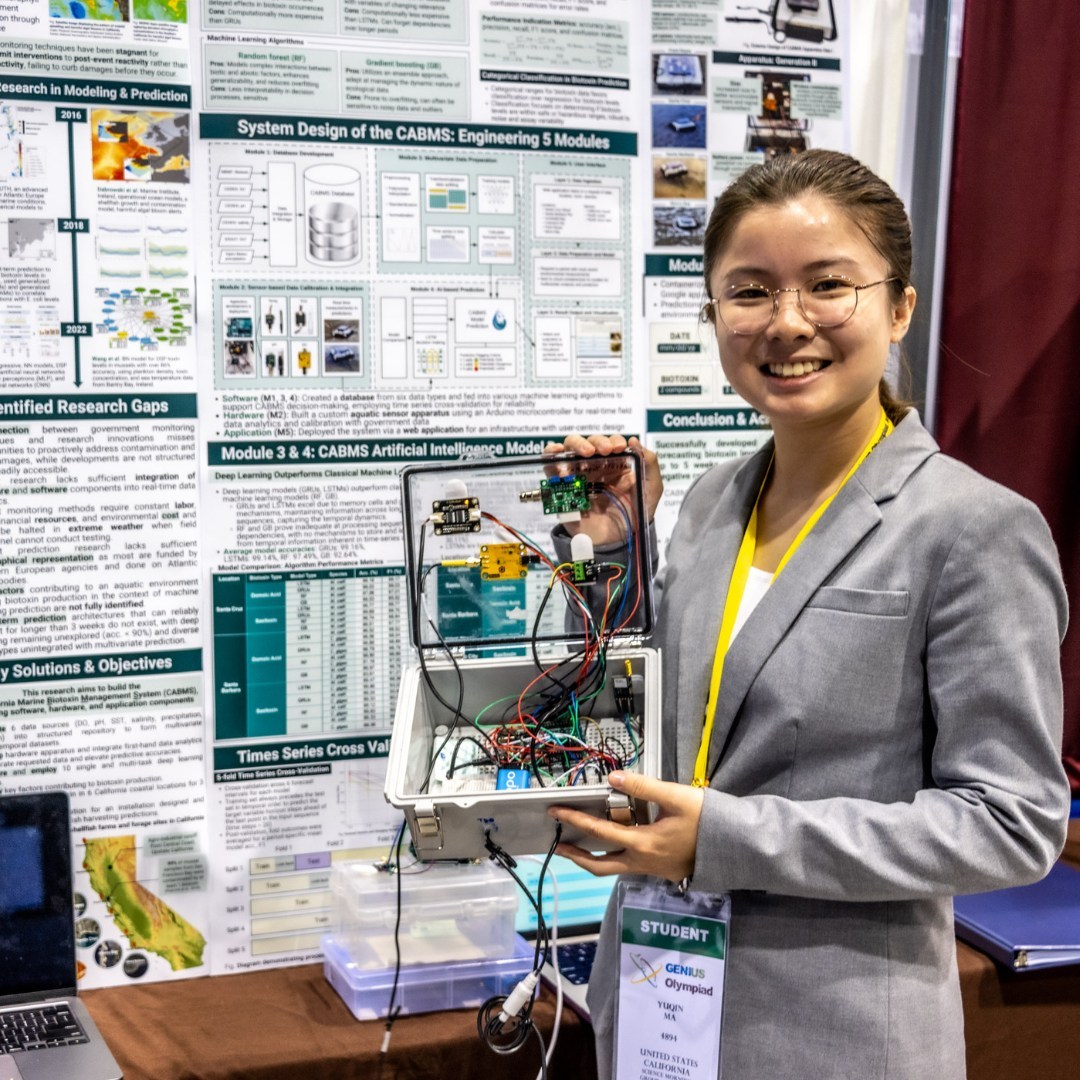
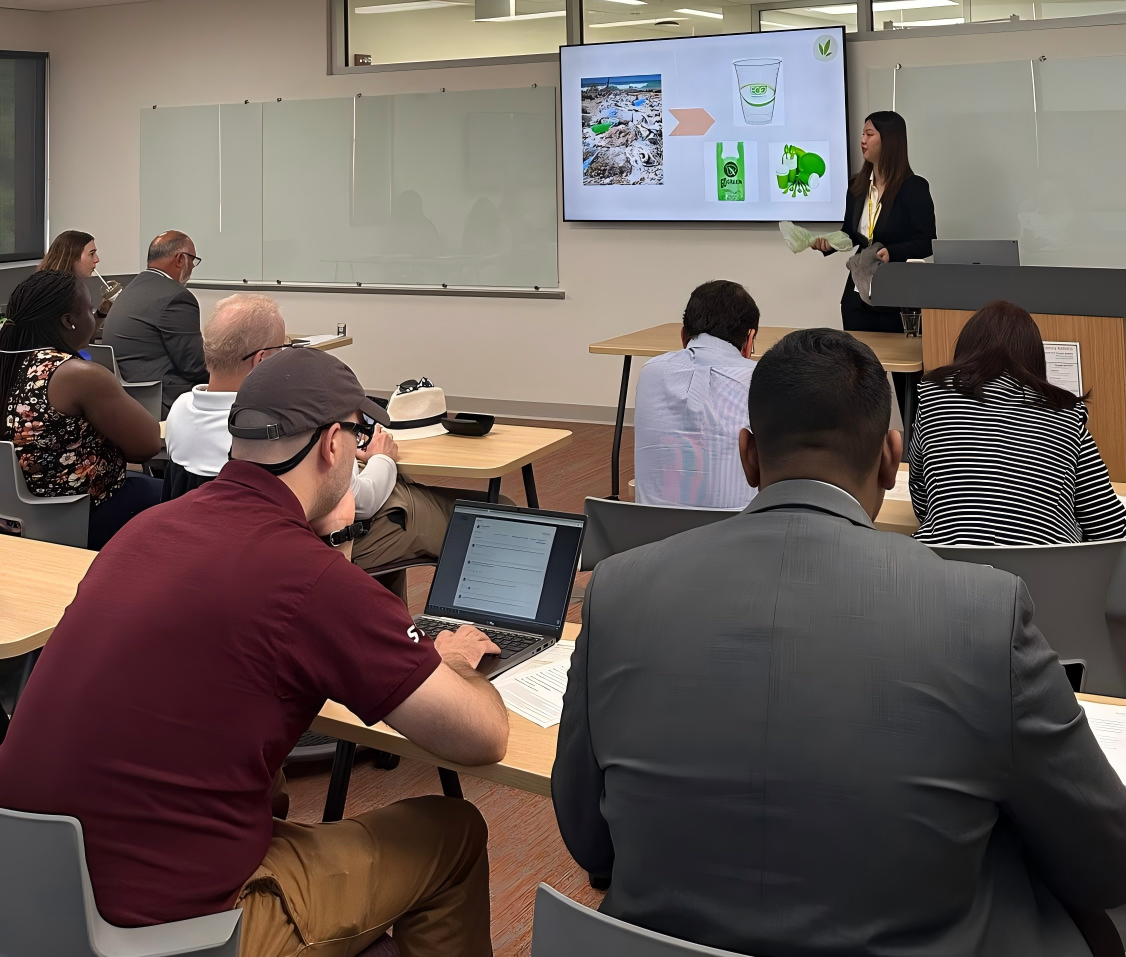
Science: Global Scientific Poster Session
The Science Category follows the Poster Presentation format of leading international academic conferences. Format: On-site scientific poster presentation + multiple rounds of English Q&A with expert judges. Assessment Focus: Poster logic and visual communication; presentation quality and delivery; scientific reasoning under rigorous questioning. Academic Benefits: Build an Ivy League-caliber research portfolio while strengthening research design, data analysis, interdisciplinary thinking, and academic communication. Students gain authentic experience in research presentations and academic defense, while demonstrating their ability to apply science to realworld problems. Outstanding projects may also be recommended for publication in IJHSR.
02
AI: Live AI System Demo
The AI category mirrors product demonstrations and technical reviews at leading tech companies and AI labs. Students develop AI models and applications using machine learning, data analytics, and intelligent systems to address real-world environmental challenges. Format: AI project presentation + video/PowerPoint demonstration + expert Q&A.
Assessment Focus: Model innovation and performance; system architecture and product-level delivery; real-world environmental impact.
Academic Benefits: Build a strong AI and Computer Science portfolio through the full development cycle—from problem identification and data processing to model training and system deployment. Students strengthen computational thinking, technical communication, and system integration while demonstrating their ability to apply AI to real-world sustainability challenges.
03
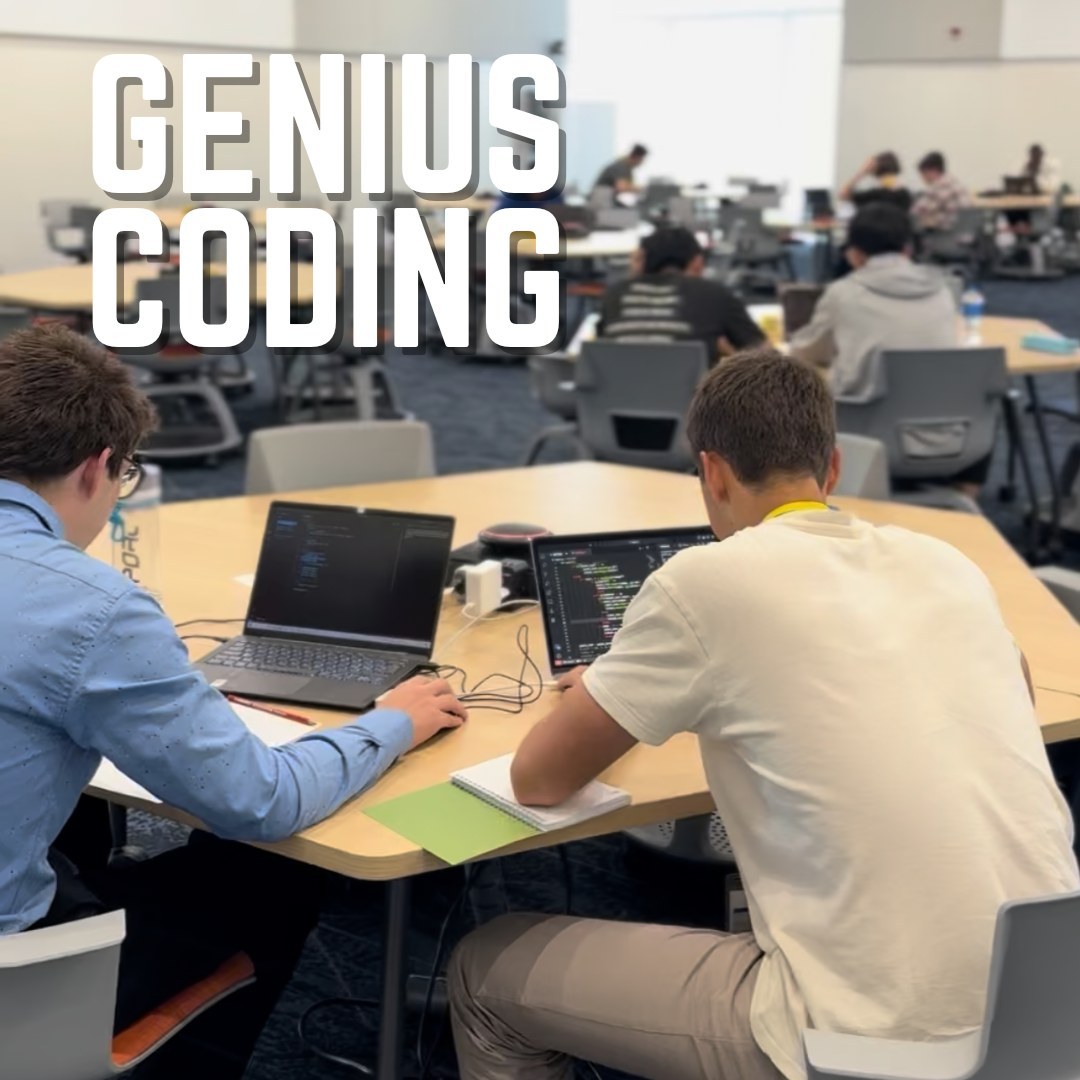
Coding: 24-Hour Environmental Hackathon
The Hackathon mirrors the Agile development workflows of real-world tech companies. Students go beyond “writing code” to act as product managers and software engineers solving real environmental challenges. Format: 24-hour on-site software development + final presentation and Q&A.
Assessment Focus: Rapid problem identification; creative and logically rigorous software solutions; efficient coding and product-level delivery.
Academic Benefits: Build a rigorous technical portfolio valued by top Computer Science programs. Students gain early exposure to university-level Project-Based Learning (PBL) and software engineering practices while strengthening algorithmic thinking, Agile development, and technical communication—creating a compelling “product-level” credential for CS, AI, and Data Science applications.
04
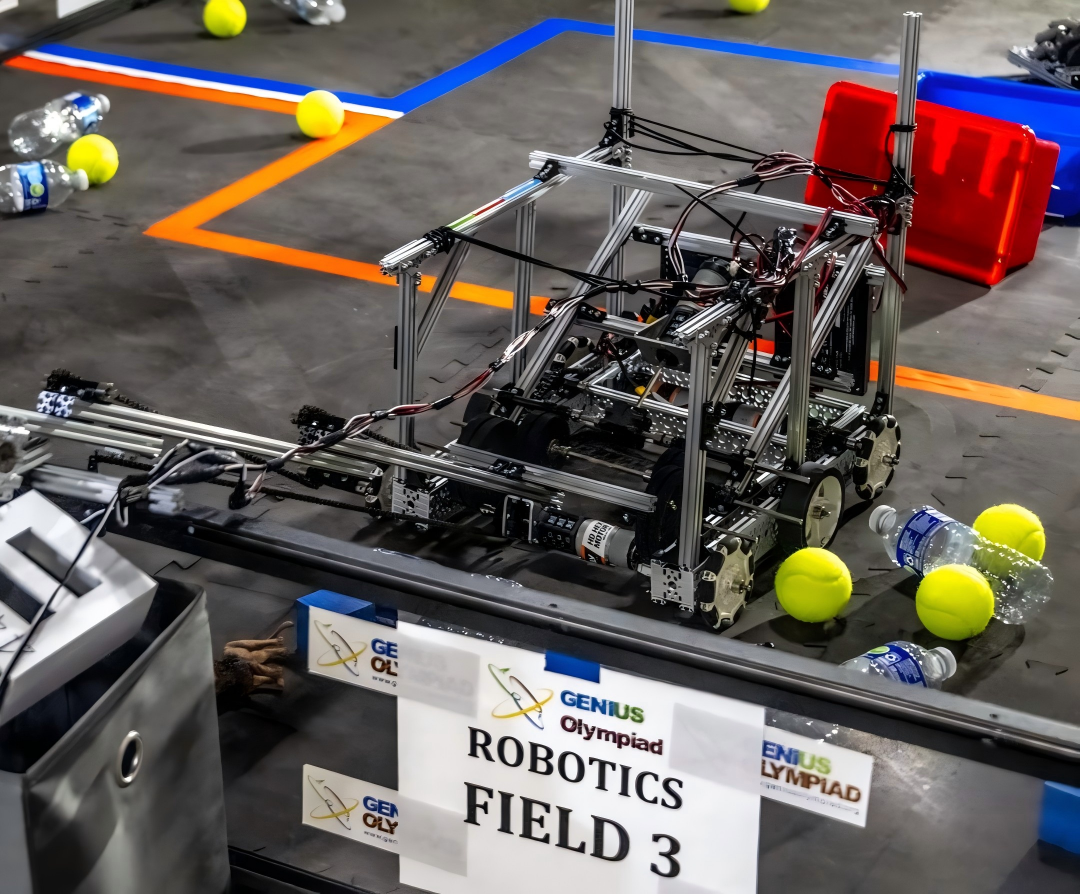
Robotics: Live Robotics Matches on the Field
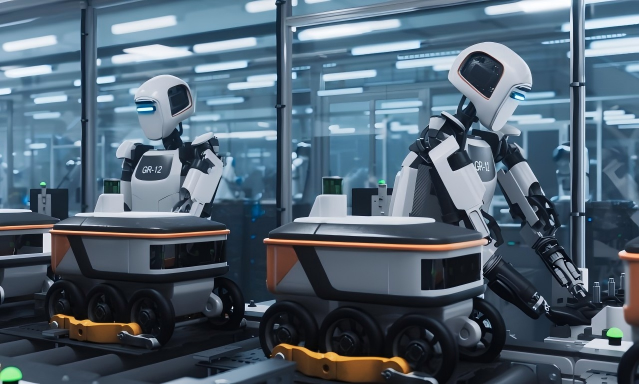
The Robotics category mirrors high-level live robotics competitions, testing mechanical design, programming, and real-time troubleshooting under pressure. Format: Live robot matches + engineering defense.
Assessment Focus: Match reliability; hardware-software architecture; team adaptability.
Academic Benefits: Build a strong engineering portfolio through hands-on experience in mechanical design, electronics, system integration, and agile iteration. Students demonstrate practical engineering skills, troubleshooting ability, and resilience—valuable preparation for Mechanical Engineering, Electrical Engineering, Automation, and AI.
05
Entrepreneurship: Venture Business Pitch
The Entrepreneurship category mirrors real-world angel investment pitches. Students step into the roles of startup CEOs or product leads, presenting their ideas directly to a panel of industry experts. Format: Full business pitch + investor Q&A.
Assessment Focus: Competitive advantage; market analysis and environmental impact; innovation, feasibility, and business communication.
Academic Benefits: Build a strong entrepreneurial portfolio through hands-on experience in problem identification, product design, market analysis, and monetization. Students develop business leadership, social responsibility, and decision-making under pressure—valuable preparation for Business, Economics, and Management programs.
06
Short Film: Short Film Premiere Showcase
The Short Film category mirrors premiere showcases and filmmaker Q&A sessions at international independent film festivals. Students use visual storytelling to raise awareness of environmental issues and inspire reflection and action. Format: Big-screen film screening + project presentation + judge Q&A.
Assessment Focus: Narrative impact; audiovisual quality; artistic resonance.
Academic Benefits: Build a strong social-impact portfolio while developing skills in scriptwriting, visual storytelling, and digital editing. Students demonstrate global awareness, creative expression, and the ability to use digital media to engage audiences and drive social change.

Closed-Door Judging
Process: Students will undergo multiple rounds of defense in front of an international panel of judges from diverse academic backgrounds. This includes a structured project presentation, in-depth academic Q&A, and immediate logical follow-up questioning. All judging sessions are conducted behind closed doors. Coaches are strictly prohibited from entering the judging area and are not allowed to participate in the defense or serve as judges. Presentation Requirement:- Independent: Students must independently face the judges' incisive questions without any external assistance.
- Language: The entire process is conducted 100% in English. It requires students not only to accurately express professional concepts, technical logic, and research conclusions but also emphasizes their ability to think structurally, organize language impromptu, and construct logical arguments under high-pressure conditions.
- Multi-rounds: Outstanding projects typically undergo review by multiple judges from different academic backgrounds. Different judges will pose questions from various perspectives, such as scientific research, engineering, and social impact, forming a crossdisciplinary and multi-dimensional evaluation system. This effectively avoids scoring bias caused by a single discipline or perspective, ensuring objective and fair results

Ice-Breaker Activities
Niagara Falls Park Visit
University Fair