 Teachlink
 APASS- Learning platform

FameLab Youth - The Young Scientist Talk Challenge
FameLab Youth - The Young Scientist Talk Challenge
Originate from the UK,20 Years of History
30 Countries’ Young Scientists Engage with International Audiences
Youth Science Communication Competition
0 Threshold Deliver Your First Academic
Presentation in 3 Minutes
Advancement - Qualifier Round - National Round - International Final
About FameLab
FameLab Overview
Science communication is a core skill for every scientist. Every major scientific breakthrough must be presented to the world through clear and engaging expression. FameLab was created to provide young scientists with a platform to share their understanding and passion for science, enhancing their public communication and presentation skills.
FameLab was created by Cheltenham Festivals in 2005. Since 2007, FameLab has been run in over 30 countries across the world, including the UK, Australia, and Germany, and this vibrant global network has brought together over 40,000 scientists and engineers who are able to engage with international audiences. Prestigious universities such as the University of Cambridge, the University of Oxford, Imperial College London, and the University of Zurich actively organize FameLab to help young scientists build confidence in public speaking.
As one of the world’s widest-reaching science communication competition, FameLab discovers, trains and promotes the best new voices in science, including social sciences, technology and engineering. It has been acclaimed as the “UK’s most inspiring feast of ideas.”
In 2025, the FameLab Global Final was hosted by CERN, one of the world’s largest and most renowned particle physics research centres, and successfully held in Geneva, Switzerland.
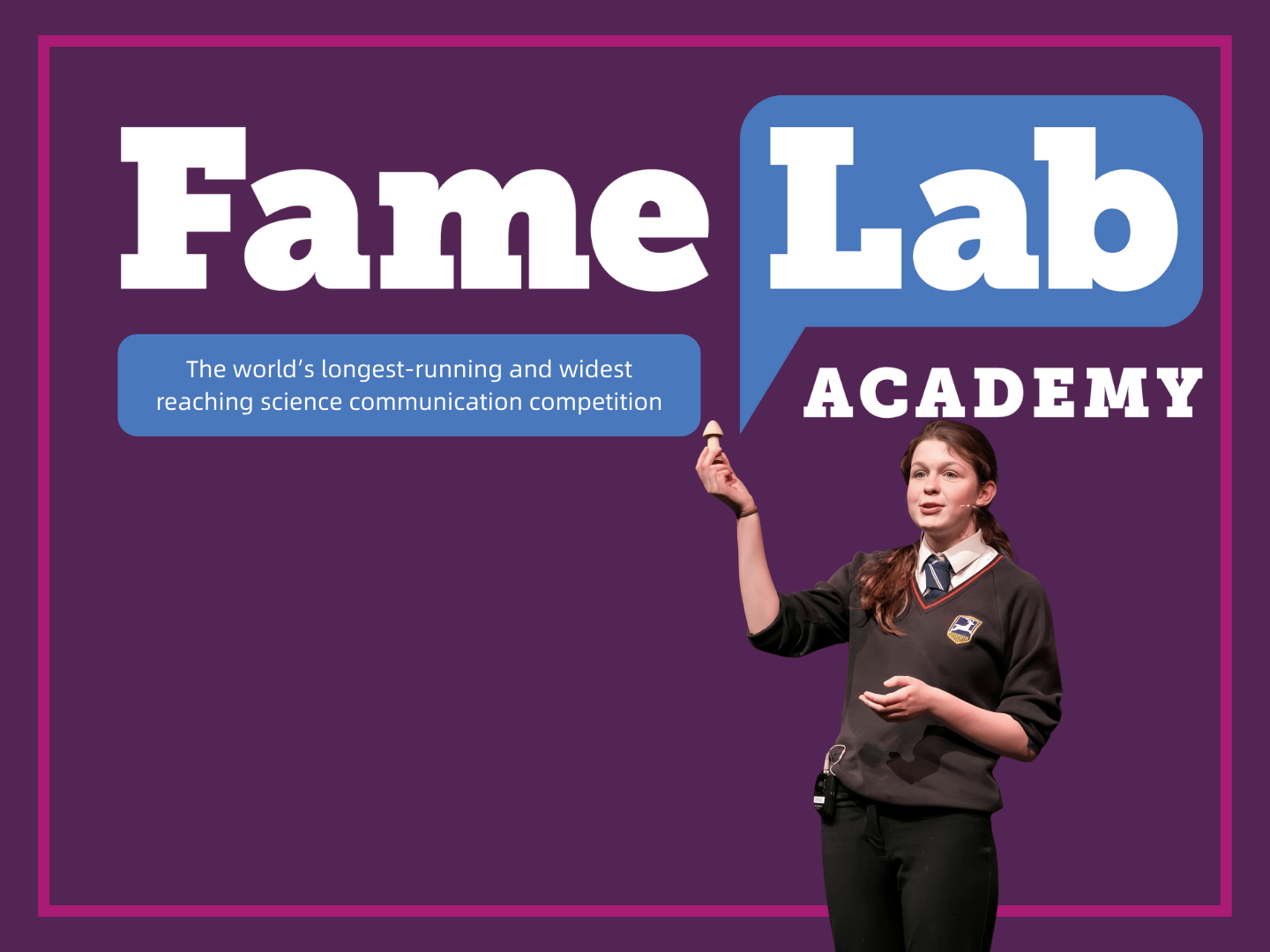
One of the world’s widest-reaching science communication competition
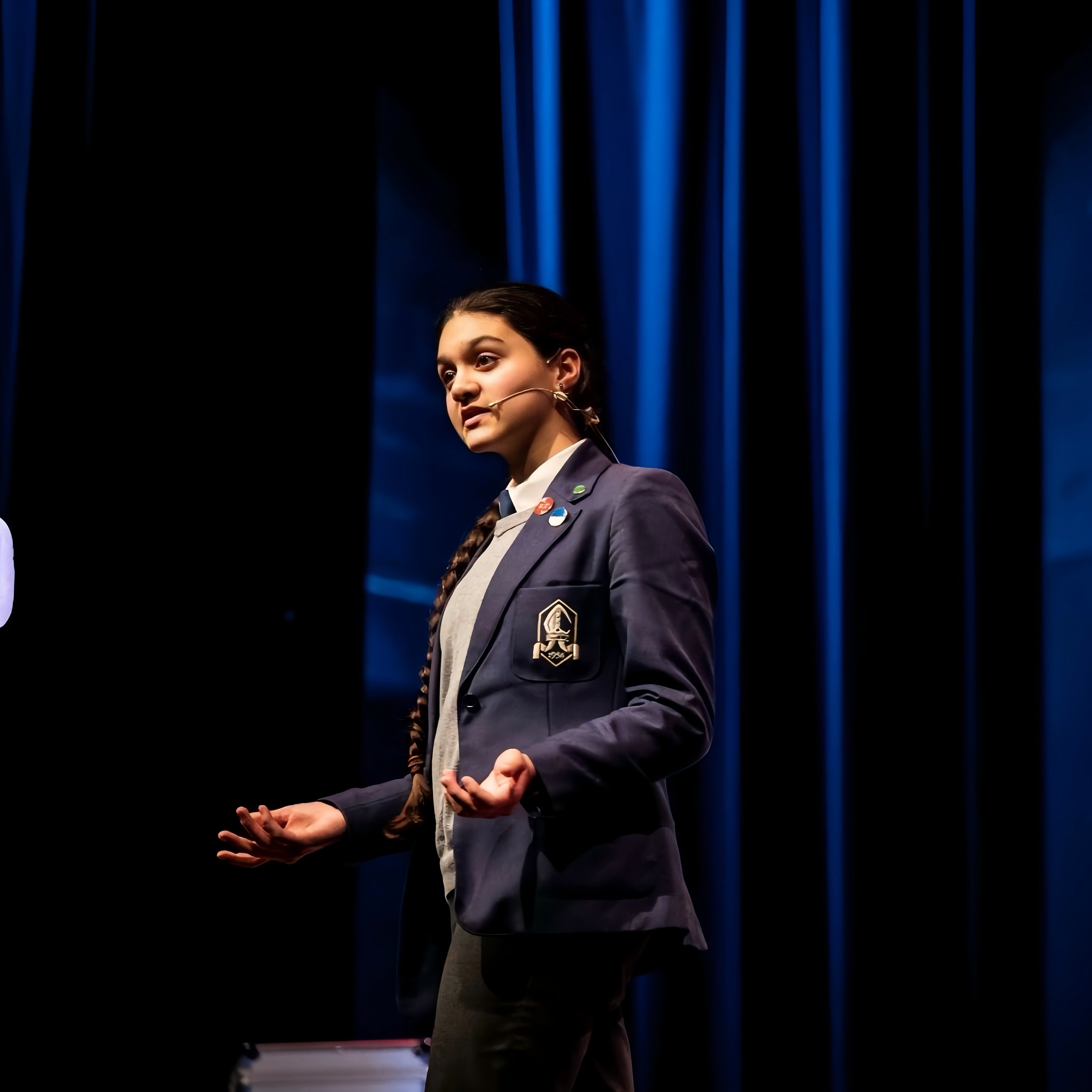
Judged on the 3 Cs of FameLab - Content, Clarity, and Charisma
FameLab Youth – The Young Scientist Talk Challenge
Since 2015, FameLab has launched the FameLab Academy, a branch to encourage future scientists to find their voices and inspire and excite the public imagination, and it takes this successful format and adapts it to a secondary school context. Starting in 2025, ASEEDER has established a strategic partnership with FameLab to introduce FameLab Academy to China for the first time, offering Chinese students an international stage to showcase their scientific thinking and communication skills.
Participants are required to deliver a lively three-minute presentation in either English or Chinese on a science topic of their choice. They will be judged on the 3 Cs of FameLab – Content, Clarity, and Charisma.
Winners of the Qualifier Round will advance to the National Round, where they will compete with outstanding peers from across China. Selected finalists will have the opportunity to represent China at the Cheltenham Science Festival in the UK, joining FameLab Future Scientists from around the world for global showcases and exchanges, and becoming the youngest Chinese voices in the global FameLab community.
Rules
Language
Chinese or English (Only English-track participants are eligible for the global stage)
Categories
- Elementary Division: Grades 1-3
- Intermediate Division: Grades 4-6
- Middle School Division: Grades 7-9
Format
Submit a 3-minute video speech online on any science-related topic (including social sciences, engineering, mathematics, or medicine). Use of Power Point or other electronic presentation tools is not permitted.
Video Recording Guidelines
For optimal recording quality, please position the camera at eye level, record in a quiet indoor environment using a microphone, ensure the device is connected to a power source, maintain soft and adequate lighting with a simple background, avoid clothing with prominent logos or items that may generate noise, and keep the focus on the speech content.
- Content: The content of the presentations must be scientifically accurate. If the topic chosen has controversy or uncertainty around it, then the presentation must acknowledge the opposing views. The scientific topic presented should be well chosen to suit the audience.
- Clarity: Clarity is critical for effective science communication. The structure of the presentation must enable the audience and judges to easily follow the talk, and they should be left with a full understanding of the scientific concept chosen.
- Charisma: The audience and judges should be left inspired and enthused about science. The winner will be a charismatic presenter who makes the science easy to listen to, entertaining, exciting, and who is not only able to communicate the science but who share their passion for it.
Awards
| National Awards |
|
| Advancement Path | 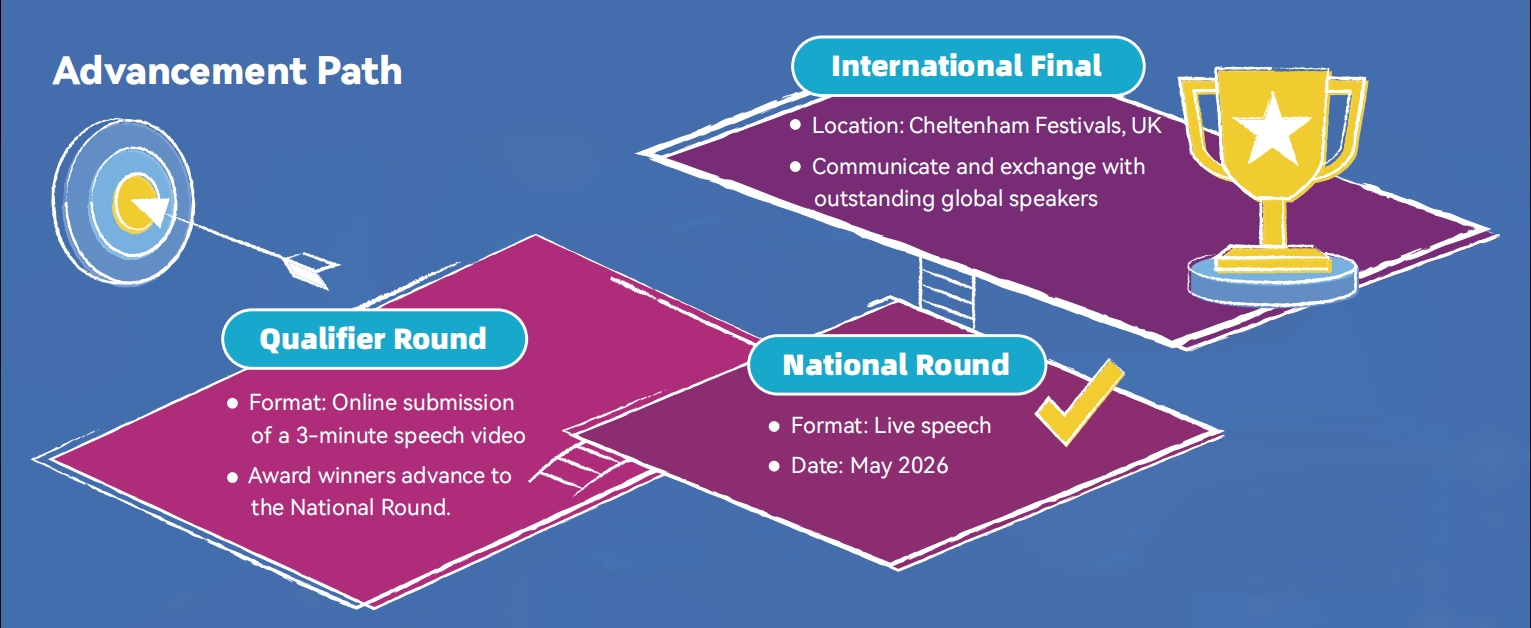 |
| Outstanding Member Showcase |  FameLab 2025 - Testimonial from a Cambridge University PhD Winner FameLab 2025 - Testimonial from a Cambridge University PhD Winner
I would recommend FameLab for anyone who's even a tiny bit interested in knowing what happens to science when it's let out in the wild!
|

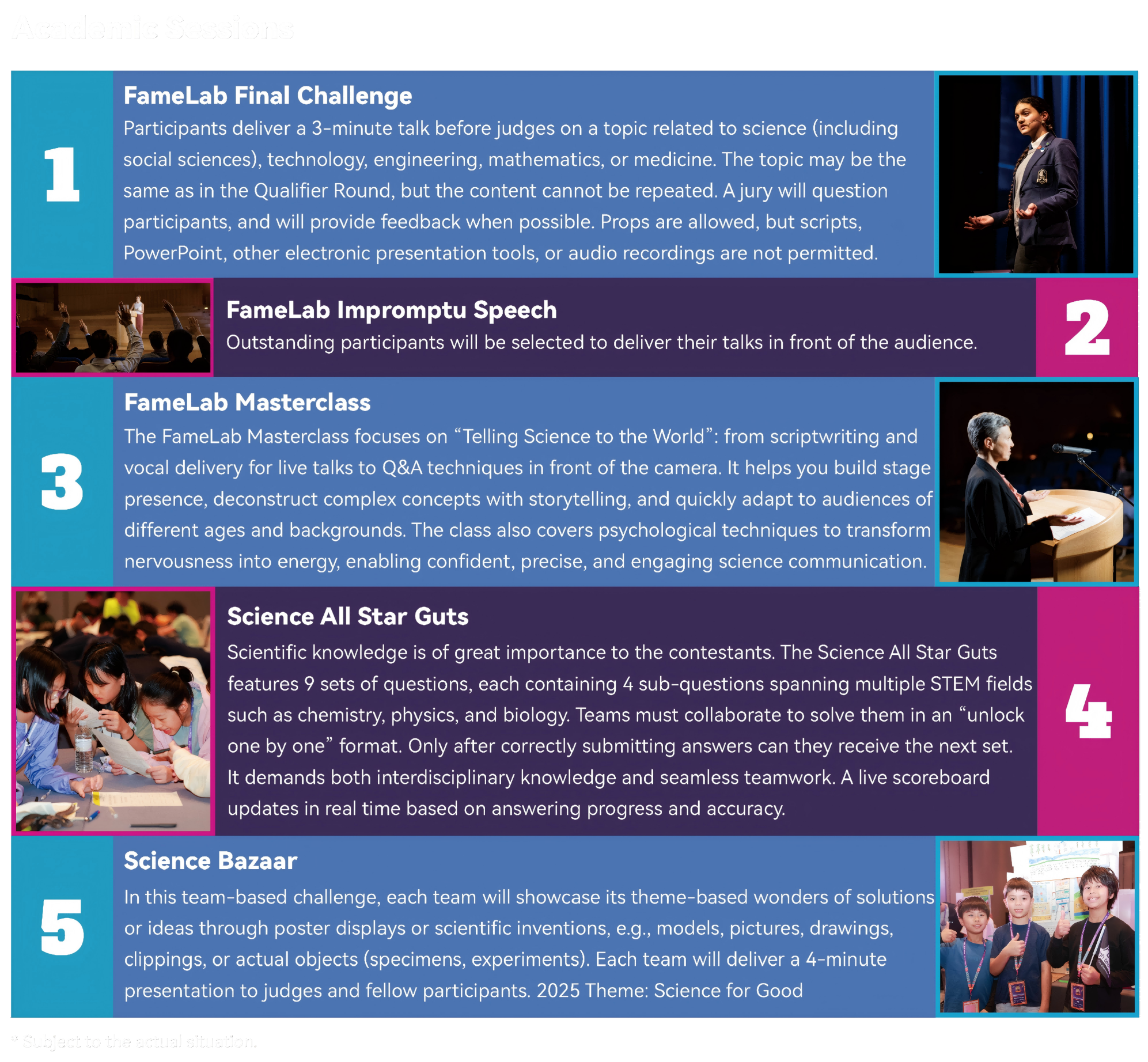
National Round - All Star Science Carnival-Academic Sessions
Qualifier Round-Details
Fee
Including activities, grading, and certificates
Registration DDL
Apr.3, 2026
Video Submission DDL
Apr.7, 2026
Q&A
If, for some reason, the student is unable to attend after paying the fee, please contact us. If you apply before the registration deadline, 25% of the registration fee will be deducted as academic materials and service fees. If you apply after the registrarion deadline, no refund will be given.

Northern Region:
Beijing、Tianjin、Heilongjiang、Jilin、Liaoning、 Heibei、Inner Mongolia、Shanxi、Shandong

Eastern Region:
Shanghai、Zhejiang、Jiangsu
Central Region:
Henan

Southern Region:
Guangdong、Guangxi、Fujian、Hainan、Hongkong、Macao、Taiwan

Western Region:
Chongqing、Sichuan、Yunnan、Guizhou、Shaanxi、Gansu、Qinghai、Tibet、Ningxia、Xinjiang
Central Region:
Hunan、Hubei、Anhui、Jiangxi