Copernicus Olympiad
20,000+ students from 50+ countries participated
Multi-disciplinary coverage to meet different development directions
Advance to the Global Round Challenge
Natural Science | Physics | Astronomy | Math

Introduction

In today's world, scientific progress is increasingly important, and scientific thinking is the key to developing key figures in future innovation. Copernicus Olympiad, originated in the United States, is a world-renowned international academic competition that focuses on providing students at different grade levels with assessments in the scientific and technological fields, such as math, physics, natural sciences, astronomy, and cybersecurity. Since its inception, Copernicus Olympiad has quickly become popular with primary and secondary school students across the United States and now attracts students from over 54 countries around the world.
In 2025, ASEEDER and the Copernicus Olympiad Organizing Committee bring this outstanding academic activity to China, where students will have the opportunity to register for the Natural Sciences, Physics, Astronomy and Math challenges. Students who reach the qualifying score in the preliminary round will also have the opportunity to register the overseas global round challenge, where they can experience the charm of science and expand their international horizons with outstanding students from different countries!
Why is it recommended to participate in Copernicus Olympiad?
Science education activities originated from the United States, competing with students from all over the world to broaden international horizons
Break through the boundaries of traditional classes, deeply explore the mysteries of disciplines, and stimulate students' spirit of active exploration and independent thinking ability.
Foster critical thinking and guide students to think like scientists, encourage them to go beyond learning about science and, more importantly, to develop a scientific mind: learning to observe, question, and conduct experiments.
Build a solid foundation for future academic and professional development through multidisciplinary fields of study such as Natural Science, Physics and Astronomy, and Mathematics.
Subject
Natural Science
The Copernicus Olympiad of Natural Science sets the stage for students to be inspired to explore. It encourages students to stretch their curiosity and apply scientific reasoning to real-world challenges. Students are trained to think like scientists, to observe, question, and conduct experiments in order to reveal the logic of the world around them.
Physics
The Copernicus Physics Olympiad aims to inspire students to explore Physics more deeply, foster curiosity and a love of learning, and apply scientific knowledge and reasoning to challenging problems.Through the competition, students strengthen their logical thinking and problem-solving skills while building a solid foundation for future scientific exploration.Whether you are fascinated by the laws behind everyday motion or the forces that power a rocket launch, the Copernicus Physics Olympiad is the perfect starting point for exploring the world of Physics!
Astronomy
The Copernicus Astronomy Olympiad aims to inspire curiosity and a passion for exploring the universe. Students are encouraged to apply scientific knowledge and reasoning to understand astronomical phenomena, question how the universe works, and develop scientific thinking through observation and discovery.Whether you are fascinated by the stars above or curious about the mysteries of the distant universe, the Copernicus Astronomy Olympiad is the perfect starting point for your journey of cosmic exploration!
Math
This Olympiad isn’t just about formulas and memorization. It’s about the elegance of logic, the beauty of symmetry, and the thrill of unlocking solutions that once seemed impossible. Students dive into challenging problems that stretch their thinking, sharpen their reasoning, and train them to see the world with a mathematician’s eye. So whether you're passionate about solving puzzles, pattern exploration, or using logic and creativity to tackle challenges, the Copernicus Olympiad of Math is the stage for you. Let your curiosity add up, and discover just how far mathematics can take you.
Natural Science
Language
Grade 3-8: EN/CN
Grade 9-12: EN
Date
Oct. 25, 2026 (Sun.) 14:00‑15:15
Participants
Grade 3‑12 (Divided into five levels of different difficulties by grade)
- Level A: Grade 3‑4
- Level B: Grade 5‑6
- Level C: Grade 7‑8
- Level D: Grade 9‑10
- Level E: Grade 11‑12
Location
Paper-based in partnering school (online service application accepted)
Form
Individual test
Scoring System
The total score is 100 points.
The scores for questions of each difficulty level are as follows:
- 5 easy questions – 4 marks each
- 10 average questions – 5 marks each
- 5 hard questions – 6 marks each
Awards
- Gold- Score Percentage: 91%-100%
- Silver- Score Percentage: 75%-90%
- Bronze- Score Percentage: 50%-74%
- Honorable Mention- Score Percentage: 40%-49%
* All participants will receive a certificate of participation
* Students who score 40 points or above in the Qualification Round will qualify for the Global Round. Qualification Round Gold and Silver medalists will enjoy a 10% and 5% registration discount, respectively.
Physics
Language
Grade 7-8: EN/CN
Grade 9-12: EN
Date
Oct. 25, 2026 (Sun.) 16:00-17:15
Participants
Grade 7-12 (Divided into three levels of different difficulties by grade)
- Level A: Grade 7-8
- Level B: Grade 9-10
- Level C: Grade 11-12
Location
Paper-based in partnering school (online service application accepted)
Form
Individual test
Scoring System
The total score is 100 points.
The scores for questions of each difficulty level are as follows:
- 5 easy questions – 4 marks each
- 10 average questions – 5 marks each
- 5 hard questions – 6 marks each
Awards
- Gold- Score Percentage: 91%-100%
- Silver- Score Percentage: 75%-90%
- Bronze- Score Percentage: 50%-74%
- Honorable Mention- Score Percentage: 40%-49%
* All participants will receive a certificate of participation
* Students who score 40 points or above in the Qualification Round will qualify for the Global Round. Qualification Round Gold and Silver medalists will enjoy a 10% and 5% registration discount, respectively.
Astronomy
Language
Grade 7-8: EN/CN
Grade 9-12: EN
Date
Oct. 25, 2026 (Sun.) 16:00-17:15
Participants
Grade 7-12 (Divided into three levels of different difficulties by grade)
- Level A: Grade 7-8
- Level B: Grade 9-10
- Level C: Grade 11-12
Location
Paper-based in partnering school (online service application accepted)
Form
Individual test
Scoring System
The total score is 100 points.
The scores for questions of each difficulty level are as follows:
- 5 easy questions – 4 marks each
- 10 average questions – 5 marks each
- 5 hard questions – 6 marks each
Awards
- Gold- Score Percentage: 91%-100%
- Silver- Score Percentage: 75%-90%
- Bronze- Score Percentage: 50%-74%
- Honorable Mention- Score Percentage: 40%-49%
* All participants will receive a certificate of participation
* Students who score 40 points or above in the Qualification Round will qualify for the Global Round. Qualification Round Gold and Silver medalists will enjoy a 10% and 5% registration discount, respectively.
Math
Language
Grade 3-8: EN/CN
Grade 9-12: EN
Date
Oct. 25, 2026 (Sun.) 16:00-17:15
Participants
Grade 3-12 (Divided into three levels of different difficulties by grade)
- Level A: Grade 3‑4
- Level B: Grade 5‑6
- Level C: Grade 7‑8
- Level D: Grade 9‑10
- Level E: Grade 11‑12
Location
Paper-based in partnering school (online service application accepted)
Form
Individual test
Scoring System
The total score is 100 points.
The scores for questions of each difficulty level are as follows:
- 5 easy questions – 4 marks each
- 10 average questions – 5 marks each
- 5 hard questions – 6 marks each
Awards
- Gold- Score Percentage: 91%-100%
- Silver- Score Percentage: 75%-90%
- Bronze- Score Percentage: 50%-74%
- Honorable Mention- Score Percentage: 40%-49%
* All participants will receive a certificate of participation
* Students who score 40 points or above in the Qualification Round will qualify for the Global Round. Qualification Round Gold and Silver medalists will enjoy a 10% and 5% registration discount, respectively.
Registration Details
Fee
Includes the exam, grading, proctor fee, past-papers, certificates. (ASEEDER doesn't provide any trainings)
Deadline
Natural Science/Physics/Astronomy: Oct. 13, 2026
Math: Dec. 29, 2026
Copernicus Olympiad Global Round
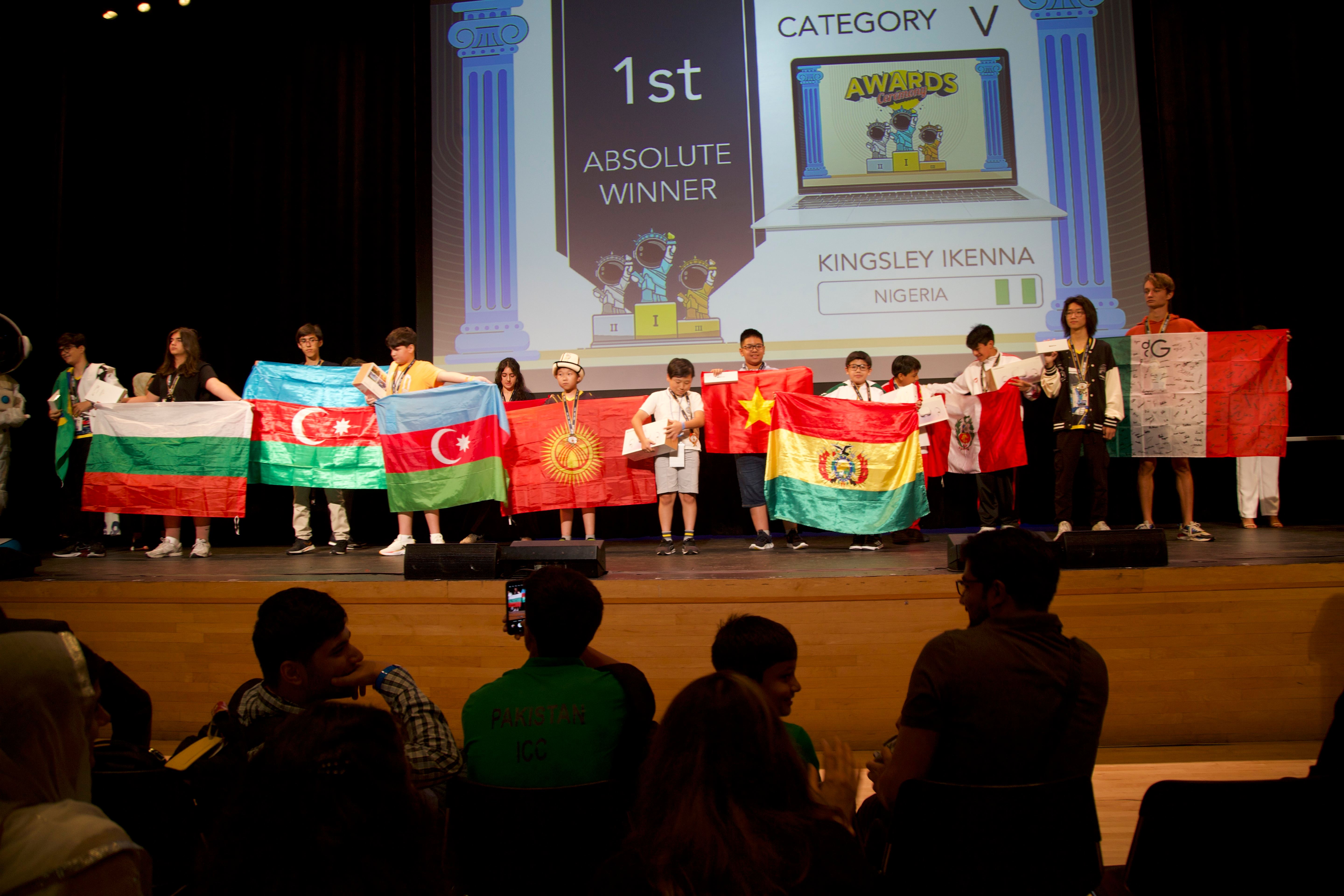
Participants whose scores in the preliminary round meet the advancement line are eligible to participate in the Global Round, which is held in different countries around the world each year and offers students the opportunity to travel to diverse destinations, compete, and interact with peers from other countries.
Language: EN
Time:
● Natural Science & Physics &Astronomy: Jan. 24-30, 2027
● Mathematics: July 25-30, 2027
Location:
● Natural Science & Physics &Astronomy: Orlando, USA
● Mathematics: New York, USA
Participants: Grade 3-12
Eligibility: By invitation only for Preliminary Round medalists meeting the qualifying scoreround meet the advancement line.

FAQ
If, for some reason, the student is unable to attend after paying the fee, please contact us. If you apply before the registration deadline, 25% of the registration fee will be deducted as academic materials and service fees. If you apply after the registration deadline, no refund will be given.